The Minerals Commission and the Tree Crops Development Authority (TCDA) are exploring a strategic partnership to reclaim lands degraded by mining activities and transform them into productive agricultural assets, as part of efforts to restore the environment, strengthen sustainable agriculture and create economic opportunities for mining communities.
The proposed collaboration seeks to ensure that lands affected by mining are not merely rehabilitated but put to productive use through sustainable tree crop cultivation, providing alternative livelihoods and supporting long-term economic development.

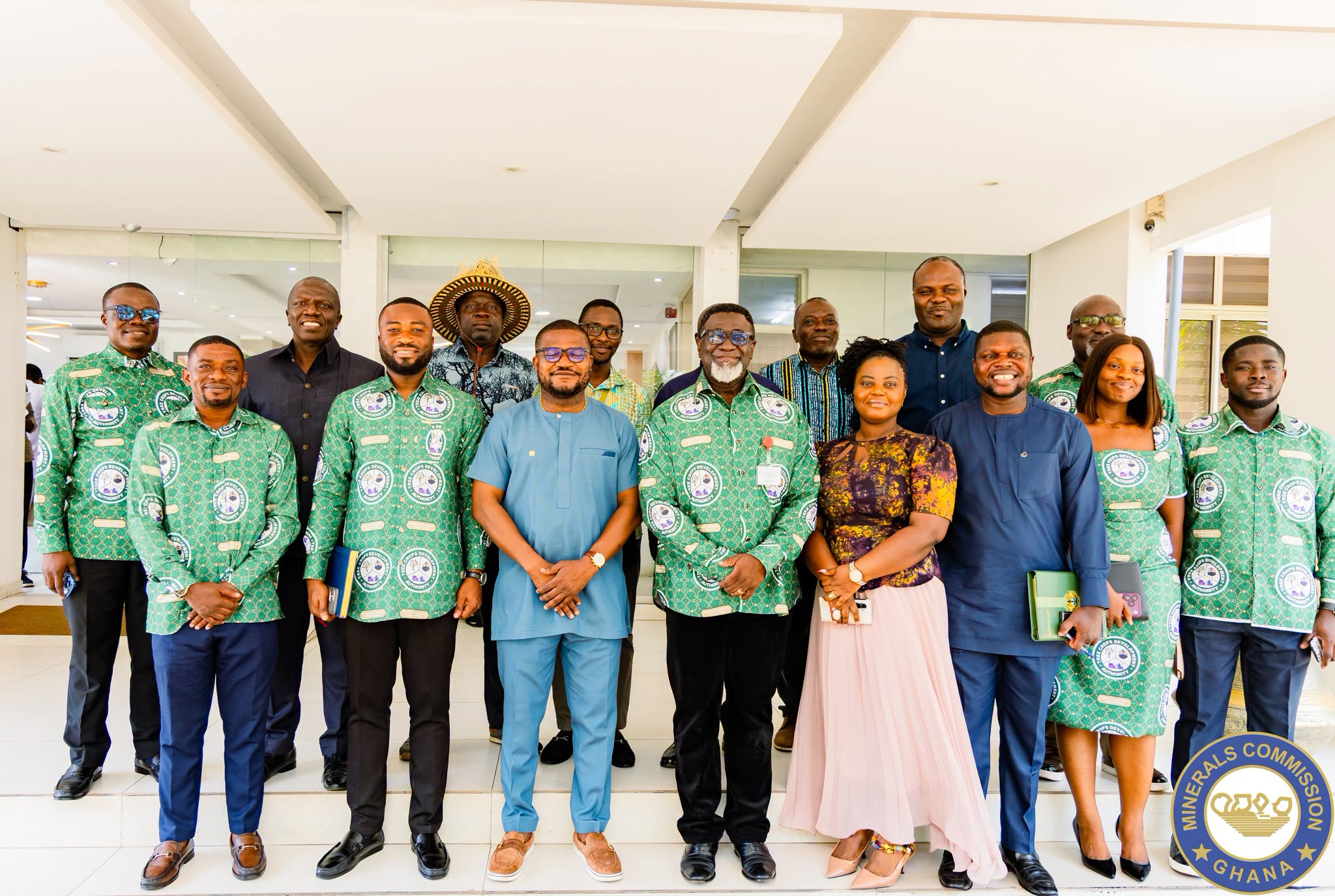
The proposed partnership was discussed during a meeting between the Chief Executive Officer of the Minerals Commission, Isaac Tandoh, and a delegation from the Tree Crops Development Authority, led by its Chief Executive Officer, Dr Andrews Osei Okrah.
During the engagement, the TCDA outlined its mandate to regulate and facilitate the development of Ghana’s tree and industrial crops sector, highlighting opportunities to integrate sustainable agricultural production into land reclamation programmes.

The Authority also presented ongoing projects and proposed initiatives that could benefit from the Minerals Commission’s expertise in environmental restoration and the rehabilitation of mining-affected lands.
Welcoming the delegation, Mr Tandoh expressed the Commission’s readiness to explore practical areas of cooperation, stressing that land reclamation and environmental restoration remained central to its responsibilities.
He highlighted interventions under the Commission’s Alternative Livelihood Programme, which focuses on restoring degraded mining lands, promoting tree planting and creating sustainable income-generating opportunities for affected communities.

Mr Tandoh emphasised that environmental restoration must be linked to economic productivity to ensure that communities derive lasting benefits from reclamation efforts.
He consequently called for closer alignment between the mandates of the two institutions to facilitate the cultivation of commercially viable tree crops on suitable reclaimed lands.
Such an approach, he indicated, would help restore damaged ecosystems while creating opportunities for agricultural production, employment and sustainable livelihoods.

Both institutions expressed their willingness to leverage their respective technical expertise to advance land reclamation, tree planting and community-based economic development initiatives.
The proposed partnership comes amid continuing concerns over the environmental and economic consequences of mining-related land degradation, particularly in communities where damaged agricultural lands have affected productive activities and livelihoods.

By linking reclamation efforts to sustainable tree crop development, the initiative could provide a pathway for restoring the productive value of affected lands while reducing the long-term economic burden on mining communities.