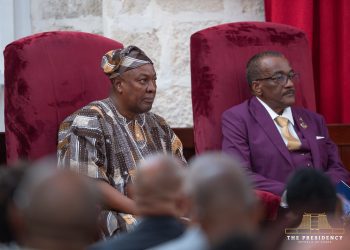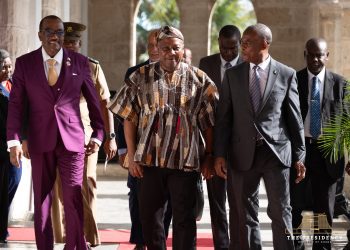
President John Dramani Mahama has pledged to make the operationalisation of the African diaspora as the Sixth Region of Africa a central priority when Ghana assumes the chairmanship of the African Union (AU) in 2027, as he calls for deeper economic and diplomatic integration between Africa and the Caribbean.
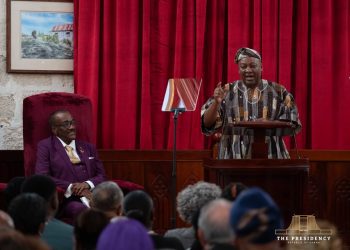
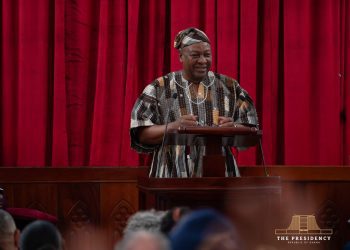
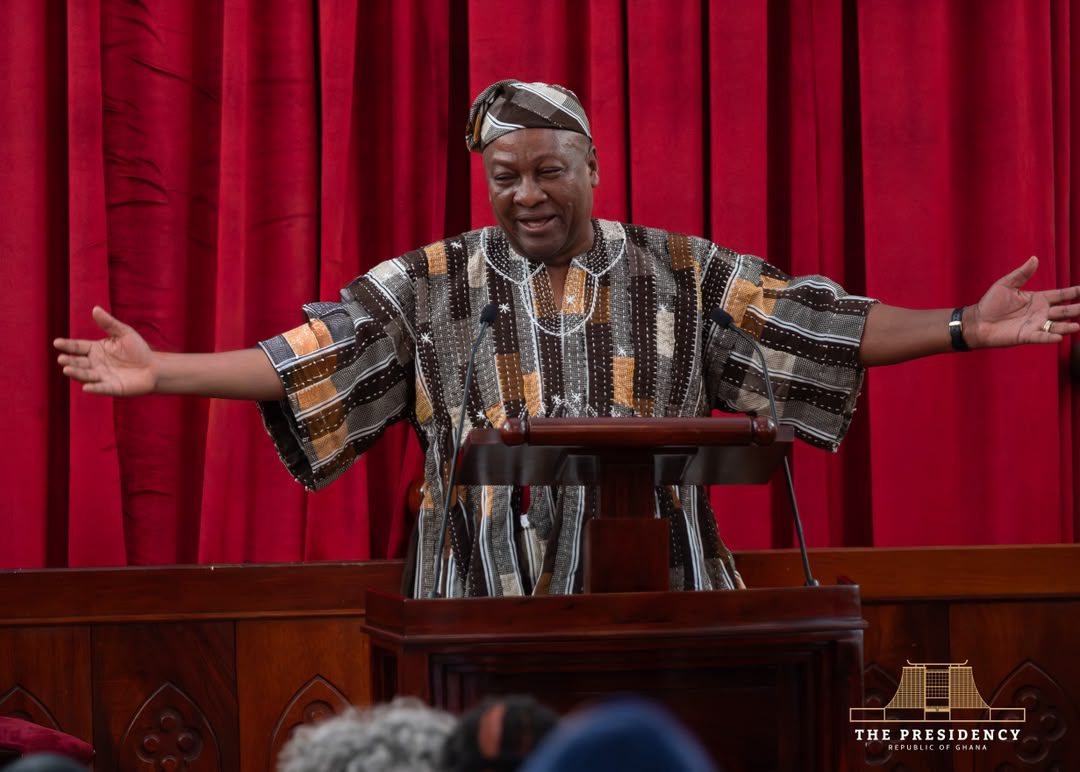
Addressing a joint session of the Parliament of Barbados during his five-day state visit to the Caribbean nation, President Mahama said Africa and the Caribbean must move beyond their shared historical and cultural connections to establish a more coordinated economic and diplomatic partnership capable of advancing their collective interests.
He said Ghana would use its anticipated leadership role within the African Union to strengthen relations between the two regions and promote the integration of the African diaspora into the continent’s economic and institutional structures.
“Recognising the importance of a unified African identity for our collective growth, the African Union has designated the African diaspora as the sixth region of Africa,” President Mahama told Parliament.
“As Ghana prepares to assume the chairmanship of the African Union next year, in 2027, I pledge that making the sixth region operational and integrating Africa and the Caribbean as a cohesive economic and diplomatic bloc will be a central priority during my tenure,” he declared.
The President said the partnership must focus on practical economic transformation, with particular attention to trade, investment, renewable energy, technology, education and opportunities for young people.
AfCFTA-CARICOM integration
A major proposal outlined by President Mahama was the establishment of stronger institutional and commercial links between the African Continental Free Trade Area (AfCFTA) and the Caribbean Community (CARICOM).
He argued that connecting the two regional economic frameworks would create a wider market, expand business opportunities and strengthen the collective bargaining position of African and Caribbean countries in the global economy.
Ghana, which hosts the AfCFTA Secretariat in Accra, he noted, was strategically positioned to facilitate discussions towards achieving this objective.
The President described the AfCFTA as the world’s largest free trade area by the number of participating countries, bringing together 54 countries with a combined market of more than 1.4 billion people and a GDP exceeding US$3.5 trillion.
“Under my chairmanship of the African Union, I will work with my peers, Madam Prime Minister and her colleagues, to establish arrangements for expanding the African Continental Free Trade Area to cover CARICOM countries,” he stated.
Cooperation in green and blue economies
President Mahama also called for stronger collaboration between Ghana and Barbados in developing their green and blue economies.
He observed that both countries possessed abundant sunlight, wind and ocean resources that could support sustainable economic growth through investments in renewable energy, fisheries and ocean conservation.
He proposed collaboration among universities, engineers and public and private sector institutions to promote technology development and knowledge sharing.
“Our universities, engineers and public and private sectors should collaborate on solar technology, sustainable fisheries and ocean conservation,” he said.
“In this way, the ocean that once divided us will become the engine of our shared sustainable prosperity,” he added.
Creative and digital economy
The President further urged both regions to develop their creative and digital economies to ensure that young Africans and Caribbean nationals benefit more directly from the global commercial value of their cultural productions.
He referenced the international influence of Ghanaian music genres, including highlife, hiplife and Afrobeats, alongside Caribbean genres such as soca, spouge and bashment.
However, he expressed concern that ownership of intellectual property, streaming platforms and royalties often remained outside Africa and the Caribbean.
He therefore proposed harmonising intellectual property protection, establishing joint-venture funding arrangements for young entrepreneurs and investing in digital infrastructure.
“We should harmonise intellectual property protection, create joint-venture funding for young Ghanaians and Barbadians, and build digital infrastructure, including artificial intelligence and fintech platforms, that are rooted in our values and owned by our own innovators,” President Mahama said.
Academic and youth exchanges
On education and cultural integration, President Mahama proposed expanded partnerships between universities in Ghana and Barbados to facilitate student exchanges and deepen understanding of their shared history.
He specifically mentioned the University of the West Indies at Cave Hill, the University of Ghana, the Kwame Nkrumah University of Science and Technology and the University of Cape Coast.
He proposed arrangements that would enable students from both countries to spend at least one semester studying in the other country.
“Let us expand our partnerships between our public universities … so that our students can spend at least one semester in Ghana and another in Barbados,” he said.
Easier citizenship and ancestral reconnection
President Mahama also highlighted the need to remove bureaucratic obstacles that prevent people of African descent in the Caribbean from reconnecting with their ancestral homeland.
He disclosed that his administration was streamlining legislation and visa waiver arrangements to make it easier for Barbadians and other Caribbean citizens to travel, invest and settle in Ghana.
He further announced that Ghana was advancing the proposed Homeland Return Bill, which he said would go beyond the existing Right of Abode framework to provide an easier pathway to citizenship for people of African descent.
The President said the African Union’s recognition of the diaspora as its Sixth Region must be matched with practical measures that give meaning to the shared African identity.
From historical connections to shared prosperity
Reflecting on the historical connections between Ghana and Barbados, President Mahama invoked the Akan philosophical concept of Sankofa, which encourages people to return to their roots and reclaim what has been left behind.
He said the Atlantic Ocean, which once separated Africans from their ancestral homeland through the transatlantic slave trade, should now become a bridge connecting the two regions through trade, investment, cultural exchange and shared development.
“The Atlantic was once a barrier of separation, but it must now become our bridge to shared prosperity, restored identity and the renaissance of the global African dream,” he declared.
He also called for sustained cooperation in the pursuit of reparatory justice, emphasising that the historical injustices of slavery and colonialism must be addressed through international collaboration and reforms that promote fairness and human dignity.
President Mahama expressed Ghana’s appreciation to Barbados and Prime Minister Mia Amor Mottley for their continued support for the international reparatory justice agenda.
He said the future of Africa-Caribbean relations must be defined by practical action rather than historical solidarity alone.
“Our objective must be to move from shared aspirations to coordinated action, and from solidarity in principle to tangible improvements in the lives of our people,” he told the legislators.
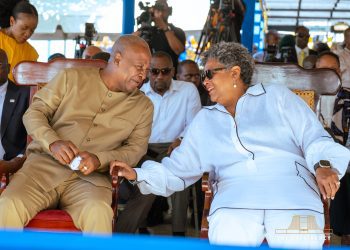
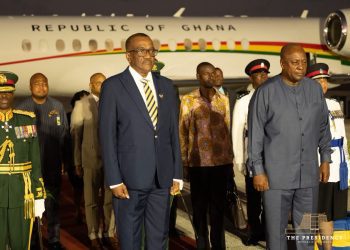
The address forms part of President Mahama’s five-day state visit to Barbados from November 26 to 30, 2026, aimed at strengthening the longstanding historical, diplomatic and economic relations between Ghana and the Caribbean nation.
Story: Patrick Asford Boadu