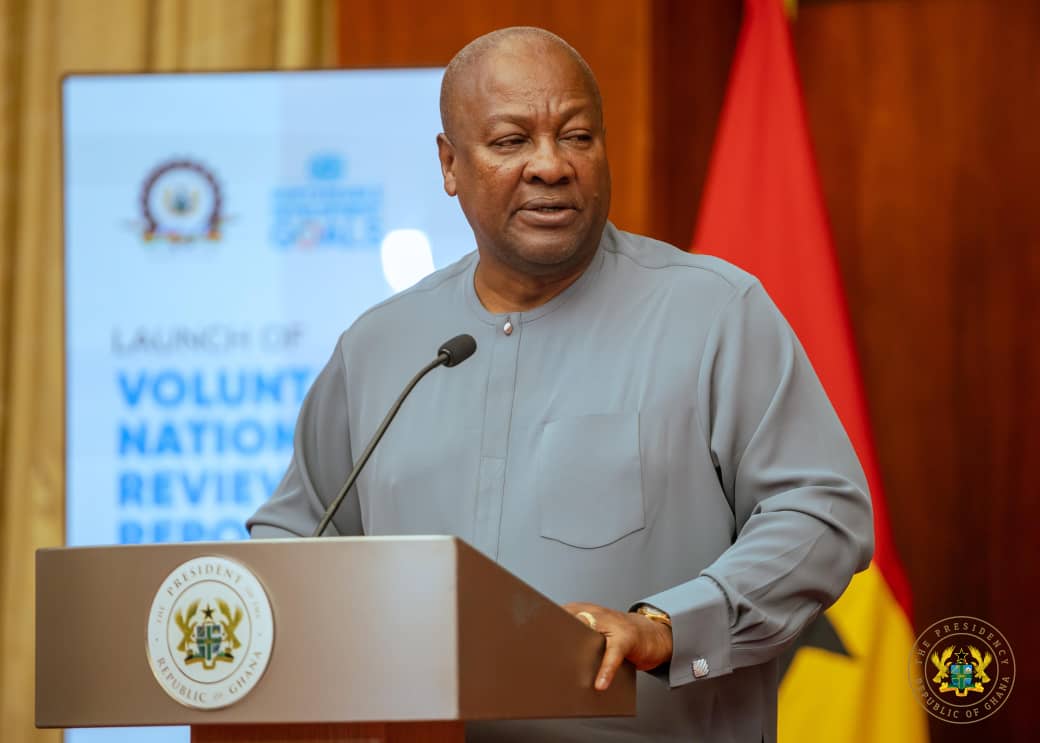
Ghana has unveiled a new results-driven strategy to fast-track progress on the United Nations Sustainable Development Goals (SDGs) by concentrating national efforts on five high-impact priority areas.
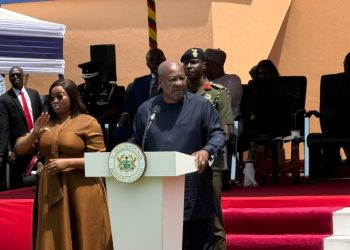
President John Dramani Mahama announced the shift during the launch of Ghana’s 2025 Voluntary National Review (VNR), describing it as “intelligent prioritization” that aligns resources with catalytic development goals.
“These are not isolated targets,” President Mahama said.
“When a girl in Savannah gains access to clean water, school, and nutritious meals, she helps advance the five SDGs simultaneously.”
The five selected priorities—decent work, basic education, sanitation and hygiene, energy efficiency, and effective institutions—were chosen for their multi-dimensional linkages and potential to trigger progress across multiple SDGs.
A Strategic Departure from the 17-SDG Model
The shift marks a significant departure from Ghana’s previous broad-based approach to the SDGs, opting instead for targeted investment in sectors with proven ripple effects.
“We’re just five years away from the 2030 deadline. The clock is ticking. We have no luxury of complacency,” the President cautioned.
Tackling Youth Unemployment and Economic Resilience
The decent work focus aims to address Ghana’s youth unemployment crisis. An estimated 1.9 million young people are currently not in education, employment, or training (NEET).
The government’s flagship 24-Hour Economy Program and the Feed Ghana agricultural initiative form part of a broader employment strategy.
Education as the Cornerstone of Transformation
Basic education remains a foundational pillar, especially for underserved rural and marginalized communities.
The new strategy emphasizes improving access, quality, and equity—particularly for girls—as a means to break intergenerational poverty.
Sanitation and Hygiene: A National Imperative
Sanitation and hygiene were highlighted as urgent concerns, especially with the persistence of open defecation in parts of the country and rising urban water rationing.
“It is unacceptable that in 2025 open defecation persists in parts of Ghana. This is not just a public health issue, it is a matter of dignity and equity,” Mahama stated.
Powering Growth Through Energy Efficiency
Energy efficiency will be a lever for Ghana’s green transition and industrialization goals.
It supports climate resilience and productivity under the government’s “Big Push” infrastructure drive.
Strengthening Institutions to Sustain Progress
The fifth priority—effective and strengthened institutions—focuses on improving service delivery, public accountability, and policy coherence across government levels.
“Good governance is the foundation upon which every SDG rests,” a senior official from the National Development Planning Commission added.
Aligning with Africa and Global Frameworks
Ghana’s SDG reprioritization aligns with the SDG Transitions Framework, the African Union’s Agenda 2063, and Ghana’s own Medium-Term National Development Policy Framework.
It also incorporates findings from Ghana’s previous VNRs (2019 and 2022), and Voluntary Local Reviews (VLRs) conducted by four local assemblies.
A new Integrated National Financing Framework will be deployed to align public, private, and climate finance flows while tackling illicit financial flows that drain national resources.
Monitoring, Accountability, and Adaptation
Regular monitoring and evaluation will be central to the plan, allowing for agile implementation and course correction through 2030.
“This strategy reflects our understanding that sustainable development requires strategic focus rather than scattered efforts,” Mahama said. “With limited resources, we must act smarter, not just harder.”