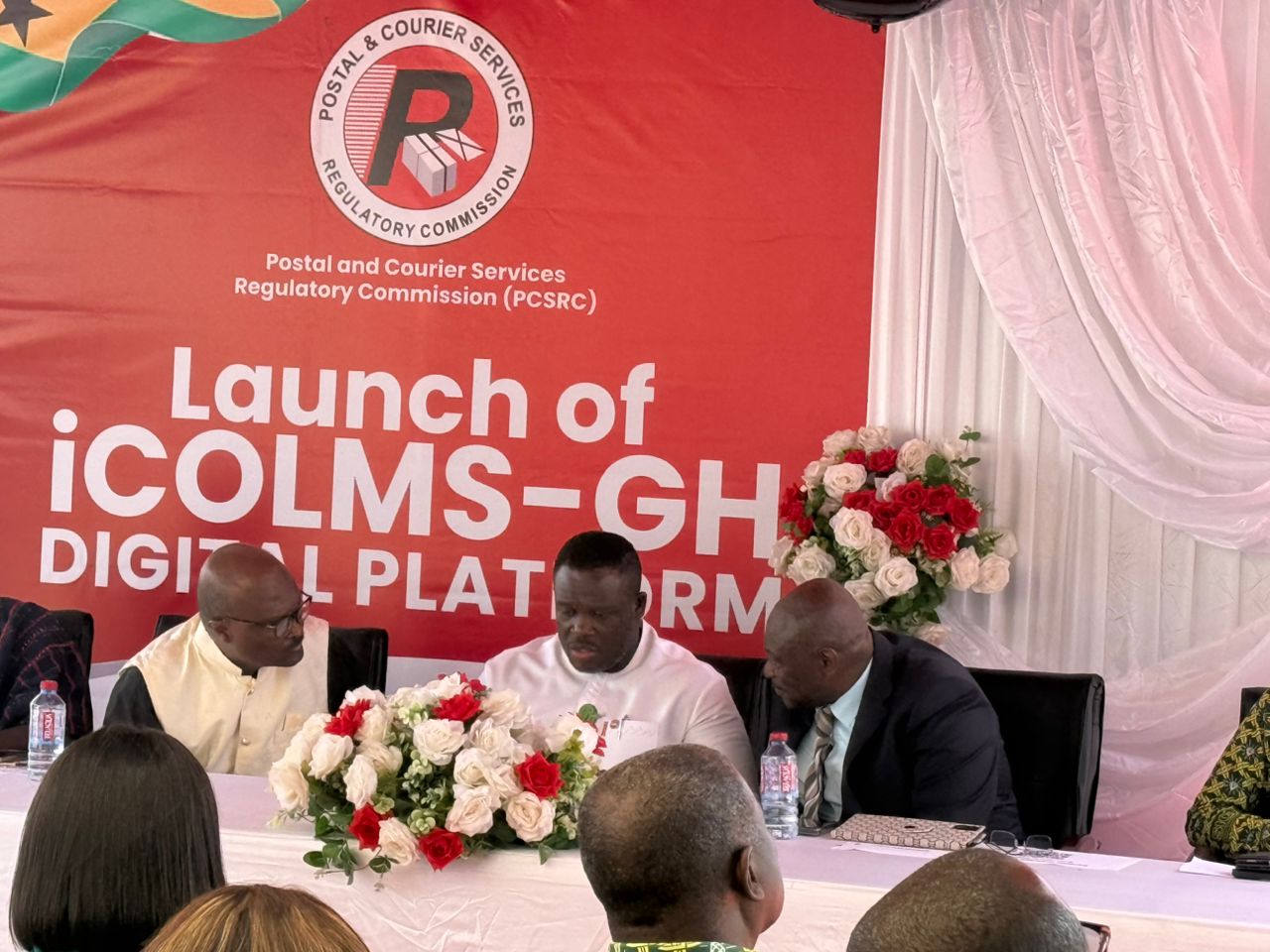
The Ministry of Communications, Digital Technology and Innovation has officially launched the Integrated Courier and Logistics Management System (iComs GH), a new digital platform aimed at modernizing licensing, monitoring, and enforcement in Ghana’s growing postal and courier sector.
The platform, unveiled in Accra, forms part of the government’s broader digital transformation agenda to streamline regulatory services, enhance consumer protection, and formalize operations within the courier and logistics industry.
Speaking at the launch, Samuel Nartey George said the new system fulfills the government’s commitment to make courier registration and regulatory compliance simple and accessible.

According to him, the iComs GH platform will allow courier operators to complete registration and compliance processes digitally, “as easy as sending a WhatsApp message.” He explained that the system integrates with national databases including National Identification Authority and Ghana.gov to verify operators and improve traceability across the industry.
The Minister announced a grace period from now until March 31, 2026, for courier companies and individual riders to register on the platform via the PCSRC website, USSD shortcode (928007#), or through a WhatsApp chatbot (0596111611). He warned that failure to comply will result in joint enforcement operations with the Ghana Police Service beginning April 1, 2026.
Hon. Sam George noted that the initiative follows earlier enforcement exercises that disrupted courier operations in August 2025 and stressed that the government now aims to adopt a more accessible and humane regulatory framework that encourages compliance while protecting both operators and customers.
Digital Platform to Centralize Courier Regulation
The Acting Executive Secretary of the Postal and Courier Services Regulatory Commission, Comas Anpengnuo, said the newly introduced platform, known as ICONS.GH, will digitize and centralize all courier licensing and regulatory processes.

He explained that the system was developed following a directive issued in September 2025 by the Communications Minister, requiring the Commission to establish a fully digital regulatory chain by the end of the year.
Under the new system, all regulatory activities—from registration and application to license issuance and incident reporting—will be processed digitally. Once the platform is fully deployed, no regulatory action will be handled outside the system.
Courier operators are therefore being urged to integrate with ICONS.GH ahead of its full operational rollout to remain compliant with national regulations.
The system will also allow prospective operators to apply for licenses via USSD or WhatsApp and will link with national identity databases to verify operators. According to the Commission, this will significantly improve consumer protection and traceability in parcel delivery services.

Officials cautioned the public against using unlicensed courier operators, noting that such services increase the risk of delayed deliveries and make incident resolution difficult. Citizens will be able to report service-related incidents directly through the same digital channels.
As part of the initiative, insurance provider SIC Life Insurance Company Limited has partnered with the Commission to introduce insurance products targeted at courier riders and drivers. Access to these products will require operators to be properly licensed through the Commission.
Police Introduce Automated Traffic Enforcement
Meanwhile, the Ghana Police Service has announced plans to transition road traffic enforcement to a fully digital system as part of broader road safety reforms.
Speaking on the initiative, Chief Superintendent Obeng of the Motor Traffic and Transport Department (MTTD) revealed that the new system will replace manual policing with automated cameras, mobile digital devices, and real-time license verification technology.

Under the new regulations expected to take effect soon, traffic violations will be captured through pole-mounted and portable cameras, with evidence transmitted to cloud-based systems. Drivers and riders will receive electronic notices of violation within minutes.
The digital platform will integrate with national databases covering driver licensing, vehicle registration, and motor insurance, enabling officers to verify driver identities and vehicle compliance electronically without requiring physical documents.
Chief Superintendent Obeng also highlighted a new regulatory framework for commercial motorcycle operations. Riders aged 21 and above who meet the required training and testing standards will be issued commercial motorcycle licenses and distinctive yellow number plates.
Authorities say the reforms are designed to improve road safety and reduce fatalities, particularly those involving motorcycles, which currently account for a significant share of road traffic deaths in Ghana.
Under the system, unpaid electronic fines will accumulate daily surcharges and could eventually restrict access to certain government services after a specified default period.

Despite the stricter enforcement measures, Obeng emphasized that the initiative is primarily aimed at improving road safety and efficiency rather than punishing drivers.
He added that electronic tickets will include video evidence, while collected data will help authorities analyze traffic patterns and improve road management across the country.
Overall, the launch of iComs GH and the move toward automated traffic enforcement represent major steps in Ghana’s effort to build a digitally integrated regulatory system that supports safer roads, a more professional courier industry, and improved public service deliver
Story by Osman Issah Abadoo