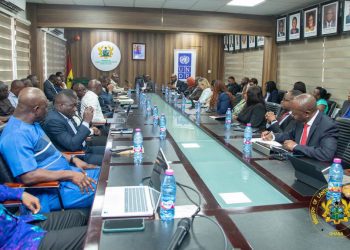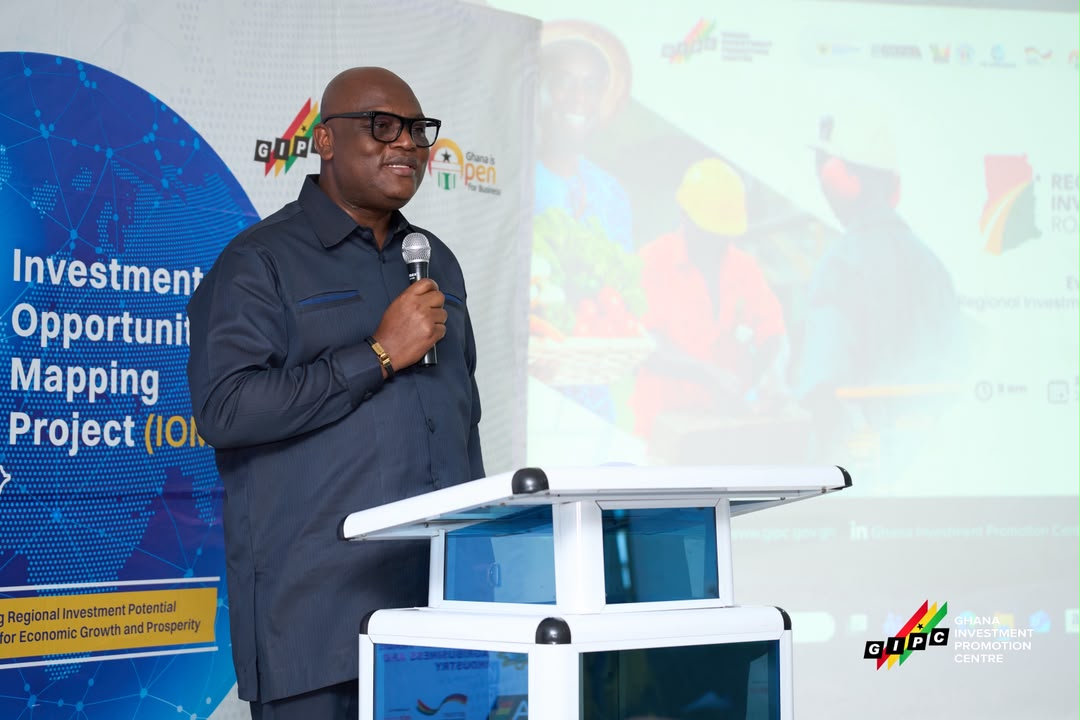
Building on successful Regional Investment Roadshows (RIR) under its Investment Opportunity Mapping Project (IOMP) in the Volta, Oti, Western, Central and Ashanti Regions, the Ghana Investment Promotion Authority (GIPA) is now shifting its focus to Ghana’s middle belt, a largely agrarian corridor that is rapidly emerging as a hub for agribusiness, logistics, eco-tourism and value-added manufacturing.

Over the course of five days, the GIPA team and its partners will work with Metropolitan, Municipal and District Assemblies (MMDA’s), traditional authorities, business chambers and local enterprises to identify, validate and package investment-ready projects that reflect the unique economic strengths of Bono, Bono East and Ahafo regions.
The roadshow will run from Monday 27th to Friday 31st July 2026, with stakeholder engagements and project showcases scheduled in Sunyani (Bono Region), Techiman (Bono East Region) and Goaso (Ahafo Region). Courtesy visits to Regional Houses of Chiefs and Regional Ministers, targeted media engagements, project site tours and structured business-to-business (B2B) matchmaking sessions will form the core of the programme.
Increased Investment Project Profiles
From July 2025 to June 2026, the Authority has received and profiled 378 investment projects from 188 districts across 15 regions of Ghana, with Bono, Bono East, and Ahafo collectively contributing 99 projects.
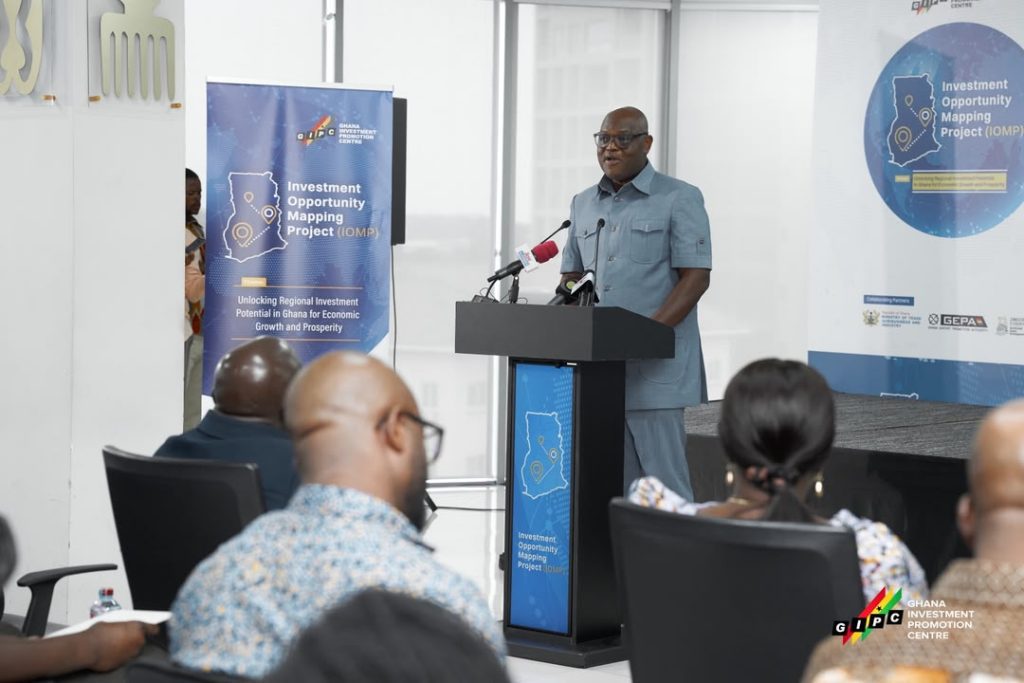
Additional data from the GIPA shows that Bono, Bono East and Ahafo, the three regions carved from the former Brong-Ahafo Region, have together attracted 57 registered companies with approximately US$383.65 million in foreign direct investment (FDI) between January 1994 and June 2026.
Bono East leads the three regions by investment value, recording US$266.9 million across 15 projects. The figure is driven overwhelmingly by agriculture, underscoring the scale-defining impact that flagship agribusiness investments can have on a region’s FDI profile.
The Bono region has drawn the highest number of registered companies, at 32, with manufacturing (US$29.6 million) and export trading (US$10.1 million) forming the backbone of its US$56.7 million investment portfolio, much of it centred on cashew, timber and other agro-processing activities destined for export markets.
Ahafo, though the smallest of the three by project count, with 10 companies, has attracted US$60.1 million in investment, anchored by strong service-sector investment (US$44.3 million), including manufacturing, mining support services, and building and construction.
Investors in the three regions span the globe, from India, the United Kingdom, and the United States to Canada, China, Lebanon, and Australia, reflecting sustained international confidence in the agricultural, agro-processing, mining support, and manufacturing potential of Ghana’s middle-belt regions.
Turning local potential into investable projects
The Bono, Bono East, and Ahafo roadshow is designed as a practical deal-preparation platform that connects local economic ambitions with investor expectations.
Through project exhibitions, curated pitch sessions, and technical guidance, the Authority will support MMDA’s small and medium enterprises (SMEs) and community actors in refining their concepts into compelling investment proposals backed by data and local insights.
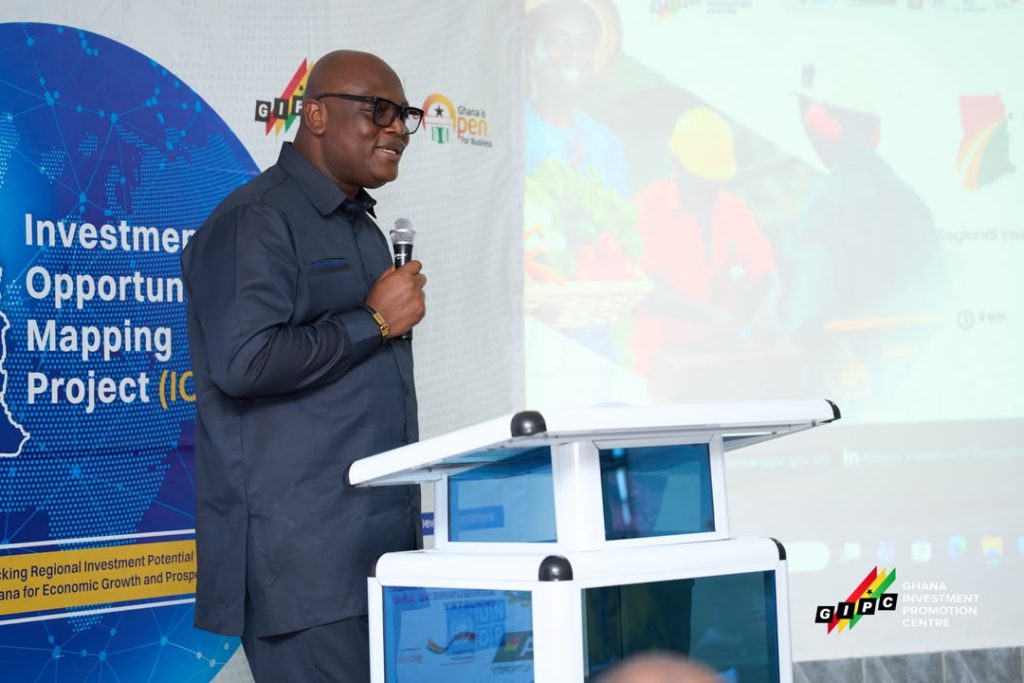
By the end of the week, GIPA aims to build a verified pipeline of investment-ready projects and an investment intelligence database rooted in local content from the three regions, covering opportunities in agribusiness, agro-processing, storage and logistics, eco-tourism, mining-linked value addition and rural industrialisation.
The Authority will also enhance the capacity of regional stakeholders to present bankable projects and engage confidently with both domestic and foreign investors.
Structured programme and strategic partnerships
Across Sunyani, Techiman and Goaso, each roadshow day will combine high-level stakeholder engagements with practical investment-focused activities. Morning sessions will feature opening ceremonies, remarks from regional authorities, GIPA leadership and national partners, followed by presentations on the regional investment landscape and GIPA’s subnational strategy under the IOMP.
Afternoon sessions will emphasise action-oriented B2B matchmaking meetings and project showcases, in which selected local businesses and MMDAs pitch opportunities directly to potential investors. GIPA is collaborating with key partners including the Office of the Chief of Staff, the 24-Hour Economy Secretariat, Regional Coordinating Councils, the Ministry of Trade, Agribusiness and Industry (MOTAI), Ghana National Chamber of Commerce and Industry (GNCCI), Ghana Export Promotion Authority (GEPA) and Ghana Tourism Authority (GTA), among others, to ensure coordinated mobilisation and follow-up on investment leads.
Expected impact on regional development
The Bono–Bono East–Ahafo Regional Investment Roadshow is expected to significantly improve the visibility of the three regions as viable investment destinations and to deepen investor confidence in subnational opportunities beyond Ghana’s major urban centres. By documenting key projects in a comprehensive compendium and building a structured pipeline of bankable ventures, the Authority will create a clearer path for financing, partnerships and long-term regional development.
Post-event, GIPA will work with partner institutions to track investor interest, support due diligence and advance negotiations, ensuring that promising leads translate into concrete investments that create jobs, enhance value addition and expand Ghana’s productive base in the middle belt.
The Bono–Bono East–Ahafo roadshow thus marks a decisive step in repositioning Ghana’s regions as competitive, high-profile investment hubs under the broader IOMP.
-ENDS-