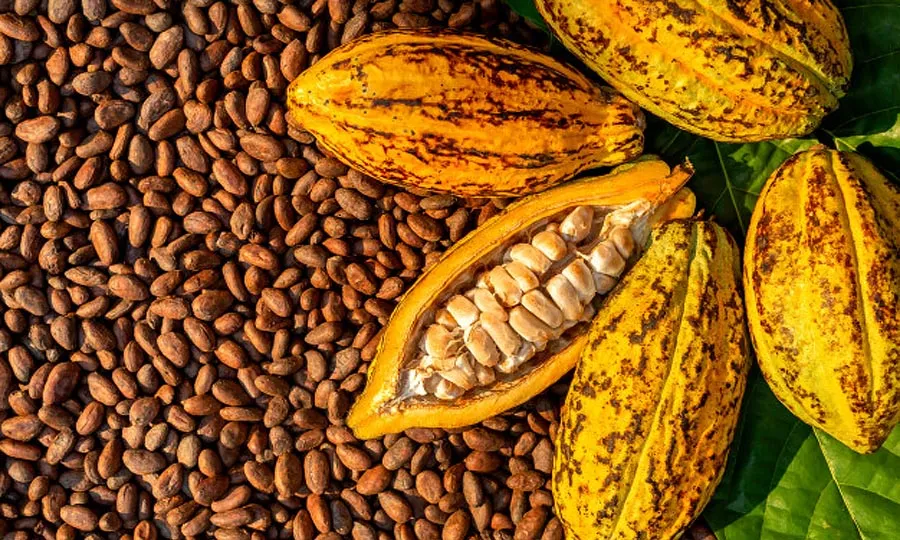
The ongoing turbulence in the global cocoa market is affecting not only Ghana but also neighbouring Côte d’Ivoire, the world’s largest cocoa producer, underscoring the broader international nature of the current crisis.
In Côte d’Ivoire, unsold cocoa beans are reportedly piling up in warehouses as global prices decline sharply. Farmers are awaiting payments, and regulators are stepping in to stabilise the market amid weakening international demand.
At the start of the main crop season, Côte d’Ivoire’s Coffee and Cocoa Council increased the official farmgate price to a record 2,800 CFA francs per kilogramme, just over $5 U.S. dollars, in an effort to boost farmer incomes and strengthen the sector. However, global cocoa prices subsequently fell to their lowest levels in more than two years, creating a mismatch between regulated local prices and international market realities.
As buyers struggled to absorb the higher farmgate price, reports indicate that some offered lower rates, despite regulatory restrictions. This has left many farmers holding onto unsold stock while cooperatives work to manage accumulating inventory ahead of the next harvest.
In response, Ivorian authorities have launched emergency purchasing programmes to support the sector and prevent deterioration of stored beans.
Ghana, the world’s second-largest cocoa producer, is navigating the same global market pressures. Cocoa prices are largely determined on international commodity exchanges, influenced by global demand patterns, speculative trading, inventory levels, and broader macroeconomic conditions.
When international prices fall after farmgate prices have been set at higher levels to protect farmers, producing countries face difficult policy choices, either absorb financial strain to maintain farmer incomes or adjust prices in line with market realities.
The current developments in Côte d’Ivoire demonstrate that the challenges confronting Ghana’s cocoa sector are not unique to one country. Rather, they reflect the structural vulnerability of cocoa-dependent economies to global price volatility.
Cocoa remains a globally traded commodity, with demand concentrated in major consuming markets in Europe and North America. When demand weakens or speculative positions shift, prices can decline rapidly, leaving producing countries exposed.
Both Ghana and Côte d’Ivoire had earlier raised farmgate prices to improve farmer welfare and promote sector development. However, the subsequent downturn in international prices has created cash flow pressures, delayed payments, and emergency interventions in both countries.
As the next harvest approaches across West Africa, the situation highlights a shared reality. While production occurs locally, pricing power resides in global markets.
The cocoa shock is not confined to one country. It is part of a broader international commodity cycle that continues to shape the fortunes of the world’s leading producers.