The Ghana Maritime Authority (GMA) has underscored the need for Ghana to strengthen the training and certification of seafarers to take advantage of growing global demand for maritime professionals.
Deputy Director-General of the GMA, Mr. Mubarak Masawud, said the shipping industry remains critical to global trade and socio-economic development, with more than 85 percent of goods reaching countries through the oceans.
He explained that seafarers play a central role in ensuring the safe and secure transportation of goods and maintaining the operations of vessels across the world’s maritime routes.
“The shipping industry is very crucial to the socio-economic development of the world. Over 85 percent of goods that we receive in our countries happen through the ocean, and the people who make it happen are our seafarers,” he said.
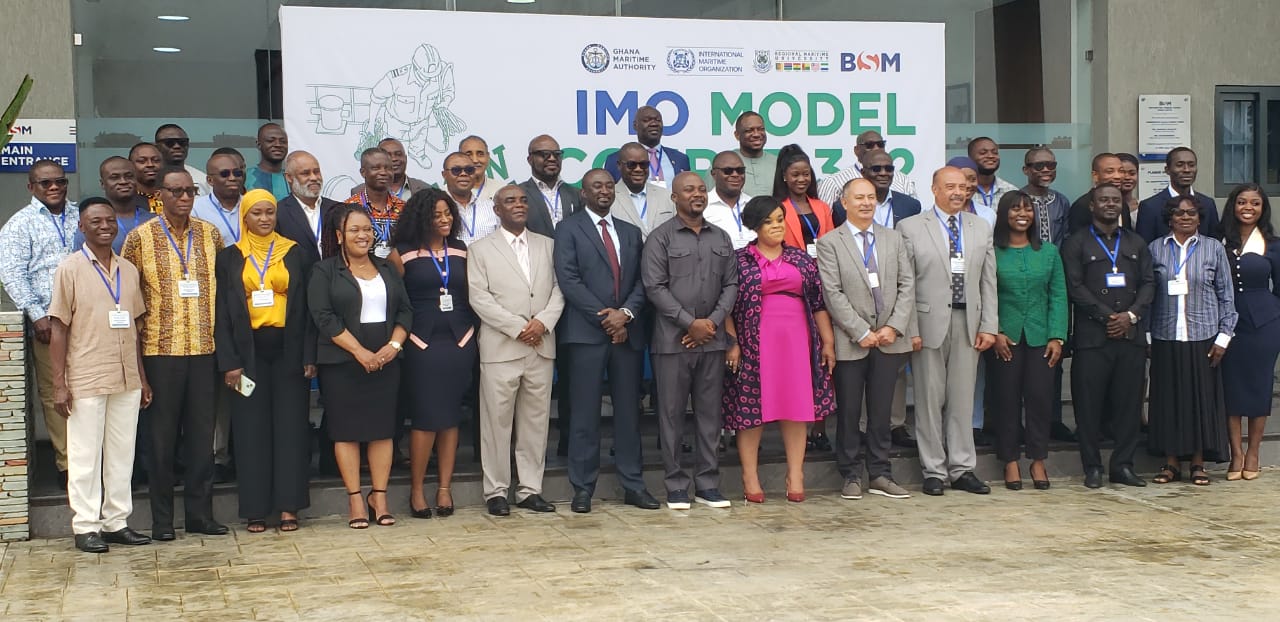
Mr. Masawud made the remarks in connection with the International Maritime Organization (IMO) Model Course 3.12 Workshop for Certificate of Competency (CoC) Seafarer Certification Examiners, organised to strengthen the capacity of assessors and examiners.
He said maintaining high standards in the assessment and certification of seafarers was essential to guaranteeing safety at sea and protecting the security of goods transported aboard vessels.
“It is important to continuously set the standards high for the assessment, so that we ensure that the safety of the lives themselves aboard vessels is guaranteed. The security of our goods aboard vessels is guaranteed,” he stated.
According to him, the rapidly changing nature of the maritime industry, driven largely by technological advancements, makes continuous professional development of assessors and examiners imperative.
He noted that as new technologies emerge, maritime training curricula must evolve accordingly, while those responsible for assessing seafarers must also be equipped with the latest knowledge and skills.
“The maritime industry is very dynamic. It changes every now and then. New technologies are coming onshore. And so it is important that as we develop curricula to close these gaps and to address the technological advancements, we are equally also training our assessors,” Mr. Masawud said.
He explained that assessors have a critical responsibility to ensure that every person issued with a seafarer certificate is competent and fit to perform the duties assigned to them aboard vessels.
Africa’s Seafarer Opportunity
Mr. Masawud further identified significant economic opportunities for Ghana and Africa, particularly given the continent’s youthful population and the growing global demand for maritime workers.
He said the global maritime sector is expected to require about 90,000 additional officers in the current year, while approximately 1.9 million additional seafarers would be needed globally by 2050.
“Globally now, just this year alone, the world is supposed to add about 90,000 new officers on vessels. It is estimated that by year 2050, the world needs to add about 1.9 million additional seafarers,” he said.
He noted that Africa was well positioned to meet part of this demand because of its large youthful population, many of whom are seeking sustainable employment opportunities.
“Africa is the place that you would find a youthful population that are ready, that are committed and eager to work,” he stated.
Mr. Masawud said Ghana must therefore put in place the necessary systems, infrastructure and training standards to position the country as a reliable supplier of competent seafarers to the international maritime industry.
“So for us now, it is important that as the world is looking to Africa to be a supply nation for seafarers, we begin to do the plumbing that is necessary to make this happen,” he said.
Seafaring as a Sustainable Career
The Deputy Director-General said seafaring could provide Ghanaian youth with sustainable employment while also contributing to the country’s foreign exchange earnings.
He explained that employment opportunities created through the maritime sector could provide sustainable livelihoods for individuals while seafarers working internationally could also contribute foreign exchange to their home economies, particularly because many are paid in foreign currencies.
“The economic benefit is quite broad, on the individual level and on a national economy level,” he said.
Mr. Masawud therefore encouraged young Ghanaians considering their career options to look seriously at opportunities within the maritime industry.
He said the continued dependence of the global economy on ocean transportation meant that seafaring would remain an important career option for the foreseeable future.
“It presents them a very good opportunity to be economically and viably employed and also to be in a much sustainable kind of employment,” he stated.
GMA Targets Globally Competitive Seafarers
On the expectations of the GMA from the IMO Model Course 3.12 workshop, Mr. Masawud said the Authority wanted participating assessors and examiners to emerge with updated knowledge and renewed commitment to maintaining international standards.
He explained that the GMA’s mandate includes setting and enforcing standards to ensure that Ghanaian seafarers are properly trained, assessed and certified before being deployed aboard vessels.
“Our expectation would be that by the end of this workshop, the assessors come out well informed, quite updated and charged to even do better in their quest to ensure that the Ghanaian seafarer meets the international standards and is able to compete with peers globally,” he said.
Mr. Masawud stressed that a Ghanaian seafarer carrying the country’s identity and credentials aboard an international vessel must demonstrate competence, professionalism and adherence to global standards.
He said this was essential not only for the individual seafarer but also for Ghana’s reputation within the global maritime community.
The GMA Deputy Director-General reiterated that strengthening the country’s seafarer certification system would help Ghana position itself to benefit from the expanding global maritime labour market while contributing to safety, security and sustainable economic development.
Story: Patrick Asford Boadu