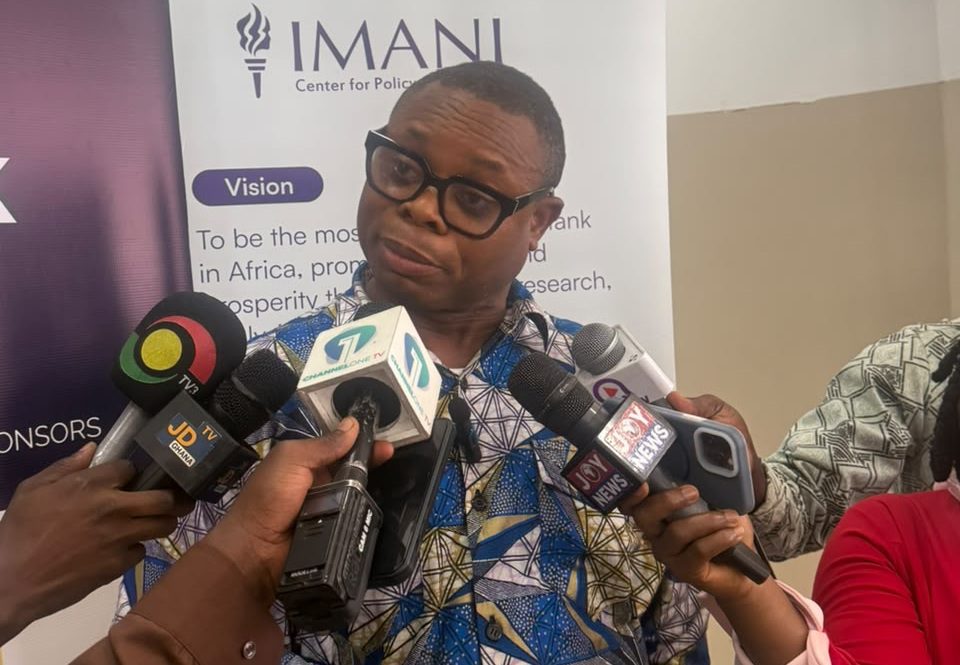
President of Imani Africa, Franklin Cudjoe, has commended the current government for what he described as a more disciplined approach to fiscal management compared with previous administrations.
Mr Cudjoe said the country’s economic challenges required stronger adherence to fiscal rules, careful public spending and greater discipline in the implementation of government policies.
He made the remarks at SYPALA 2026 in Accra, organised by the IMANI Center for Policy and Education under the theme “Africa’s Ascent: Forging Resilient Economies and Inclusive Governance.”
Speaking to students, young professionals, academics, entrepreneurs and policymakers, Mr Cudjoe warned that weak implementation of policies and failure to respect established fiscal frameworks remained major obstacles to sustainable economic development.
He cited Ghana’s Public Financial Management Act and Fiscal Responsibility Act, arguing that the existence of laws alone could not prevent economic difficulties if governments failed to adhere to the principles contained in them.
“We pass laws, then two years later we are in debt,” he observed, stressing that weak compliance with fiscal rules had contributed to recurring public debt and financial instability.
Mr Cudjoe, however, pointed to what he described as a positive change in the current administration’s approach to public finances.
He said the current government appeared to be demonstrating greater discipline in its spending and fiscal decisions than previous administrations, suggesting that such restraint could help strengthen economic stability.
According to him, maintaining fiscal discipline should not be limited to the passage of legislation but must be reflected in actual government decisions and expenditure.
Mr Cudjoe also attributed some of Ghana’s governance challenges to institutional incompetence and the appointment of people without the necessary skills or expertise to occupy critical positions.
He said placing people in positions they were not adequately prepared for could undermine policy implementation, weaken coordination and ultimately prevent governments from achieving their development objectives.
He therefore called for improved personnel selection, training and institutional capacity to ensure that policies were properly designed and effectively implemented.
Beyond public finance, Mr Cudjoe urged African countries to balance economic development with environmental protection, particularly in the exploitation of natural resources.
He cautioned that building national wealth through resource extraction without addressing the environmental consequences could undermine long-term development.
“You are building reserves based on extracting resources on the ground, but you are not cleaning up; you are causing environmental degradation,” he said.
Mr Cudjoe said discipline must therefore extend beyond fiscal management to include responsible natural resource governance and environmental stewardship.
He urged policymakers and the next generation of African leaders to pursue development policies that promote economic growth while protecting the environment and creating sustainable opportunities for future generations.
He said stronger policy alignment, institutional competence, fiscal responsibility and responsible resource management were essential to restoring confidence in public institutions and building resilient African economies.
Story by Osman Issah Abadoo