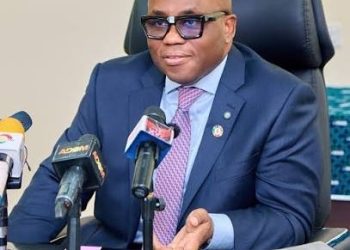
The Minister for Lands and Natural Resources, Emmanuel Armah Buah, has issued a stern warning to foreign entities and local collaborators against “fronting,” as the government moves to transform Ghana’s mining sector from an extractive enclave into a catalyst for domestic industrialization.
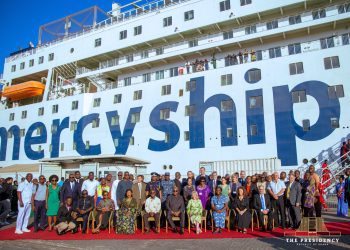
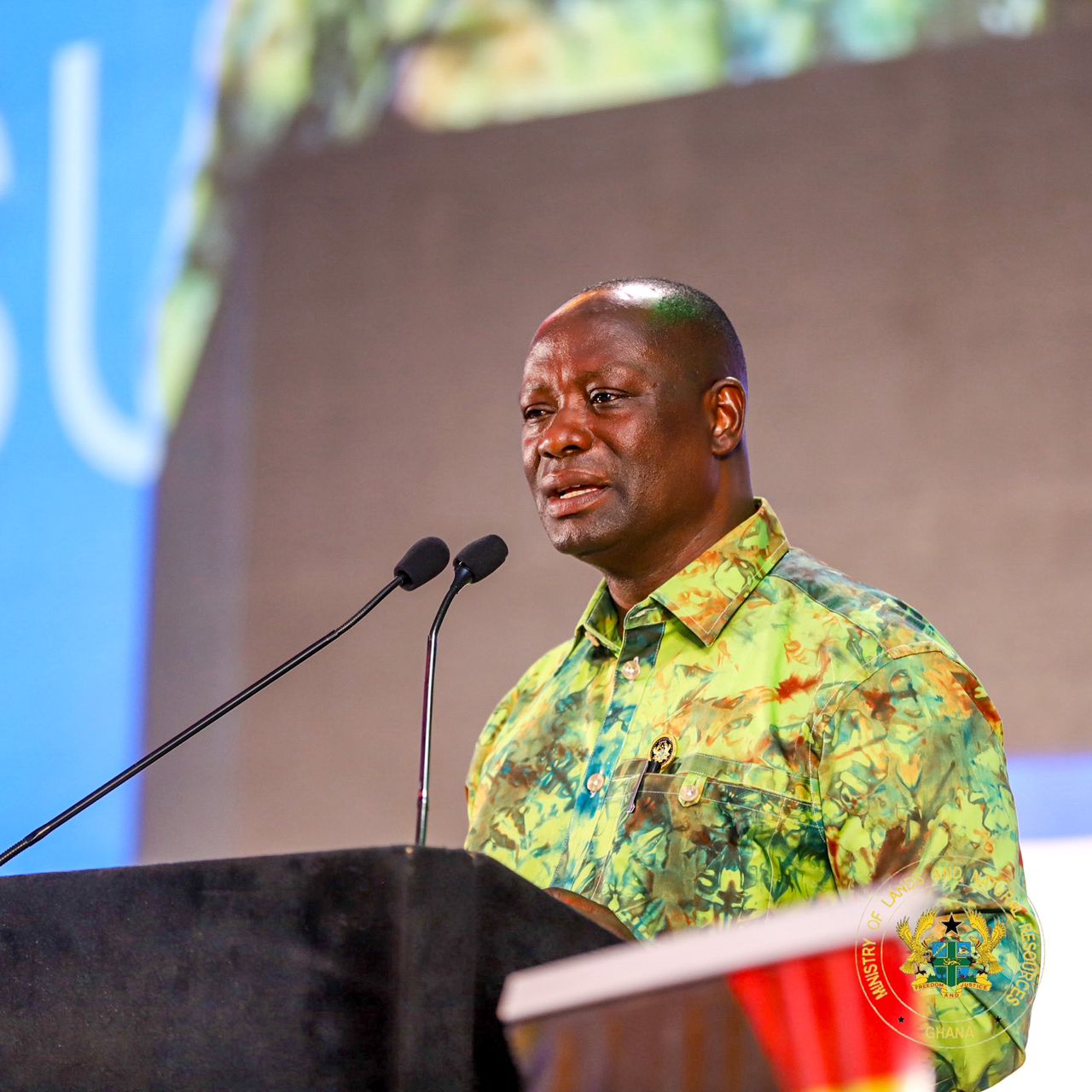
Speaking at the Maiden Mining Local Content Summit in the Western Region, attended by President John Dramani Mahama and various captains of industry, the Minister lamented that despite over a century of mining, the sector has largely existed “alongside” the Ghanaian economy rather than within it.
He highlighted a sobering disparity in the sector’s current structure: while mining accounts for 43% of Ghana’s total merchandise exports, local businesses capture less than 40% of procurement spend. Furthermore, over 70% of high-value services, including engineering and technical support remain sourced from abroad.
“For all these decades, despite all this wealth, the mining sector has largely operated as an enclave,” the Minister told the gathering. “We have been prolific producers, yet passive participants. The value has flowed through our hands, but too much of it has settled elsewhere.”
Quoting the Chairman of the occasion, Nana Kobina Nketsiah, the Minister noted that the era where “gold leaves but poverty stays” must come to an end through structured, intentional local content policies.
A central pillar of the Minister’s address was a sharp rebuke of “fronting” the practice where foreign firms use Ghanaian names as masks to satisfy regulatory requirements while retaining control and profits.
Hon. Armah-Buah described the practice as a “betrayal” of the nation and a “theft of opportunity.”
“We frown on, and we will not condone, any form of fronting,” he warned. Addressing local entrepreneurs directly, he added: “Do not sell your birthright for crumbs when you can own the bakery.”
The Minister revealed that the Minerals Commission has already developed a Mining Local Content and Local Procurement Policy Framework. This strategy includes the establishment of a Special Purpose Vehicle (SPV) designed to drive sustainable partnerships and ensure that Ghanaian participation is treated as a strategic imperative rather than an afterthought.
The vision, according to the Minister, is to move beyond simple extraction toward value addition. He challenged stakeholders to find ways to ensure that Ghanaian gold is refined and crafted locally, and that newly discovered lithium deposits power jobs and industries within the country rather than solely feeding foreign supply chains.
While the government remains committed to creating an enabling environment through the “Reset Agenda,” the Minister emphasized that the burden of success also lies with the private sector. He urged Ghanaian businesses to invest in their own capacity to meet global standards.
“The time has come to earn contracts because we are competent and competitive, not merely because we are Ghanaian,” he noted.
The Minister concluded by reiterating that while minerals are finite, the industrial capabilities and partnerships built today can become an infinite legacy for the nation.
Background
For decades, Ghana’s mining sector has been criticized for being “capital intensive but labor light,” meaning while it generates massive revenue, much of that money leaves the country to pay for foreign machinery, foreign experts, and foreign shareholders.
The Local Content (L.C.) Regulations mentioned by the Minister refer to a legislative push similar to what was achieved in Ghana’s petroleum sector to mandate that mining companies hire locals and buy from local suppliers.
Story By: Eric Boateng