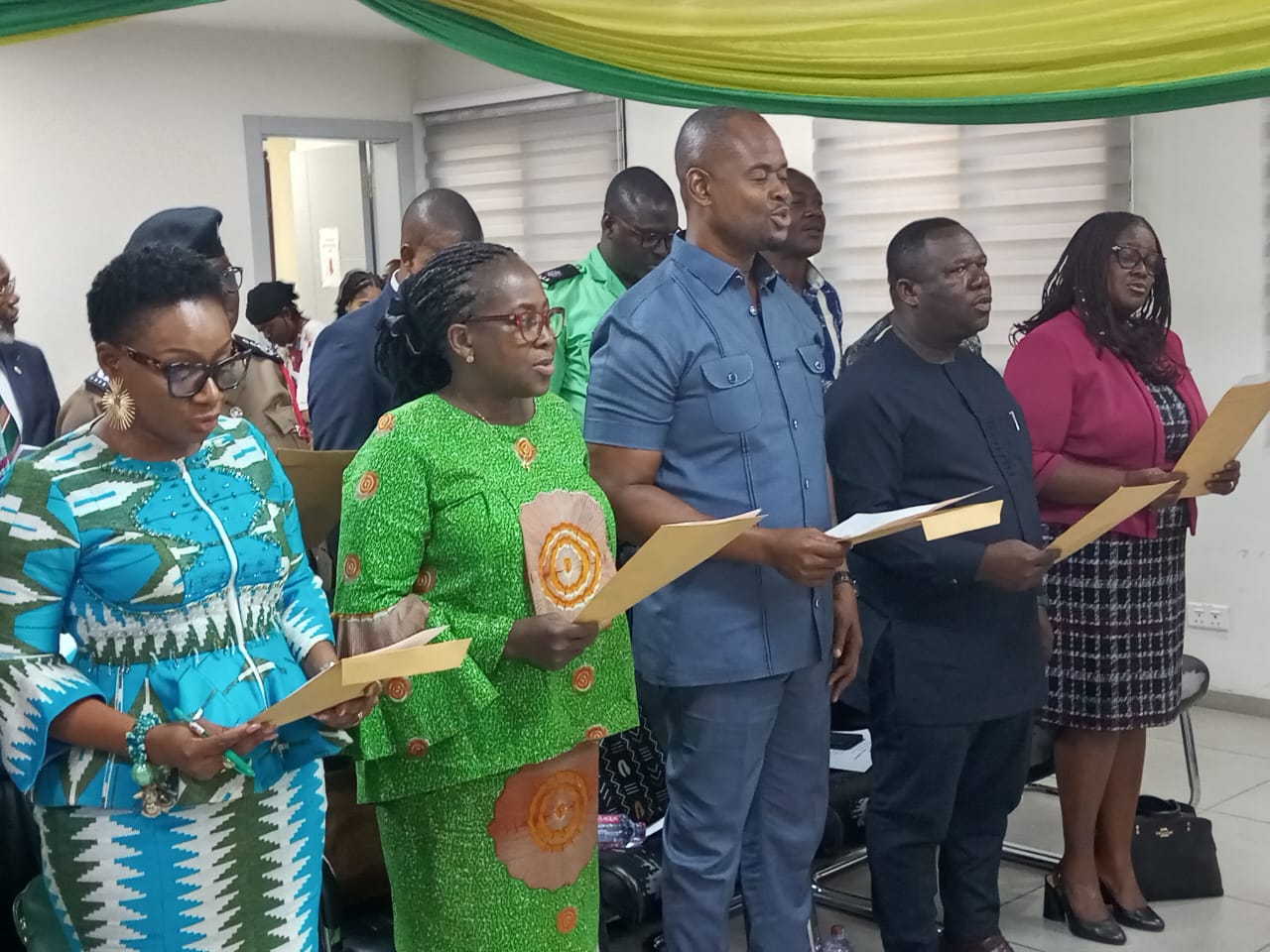
Six pivotal regulatory institutions in Ghana’s health sector now have newly sworn-in boards, signaling a concerted effort to fortify the nation’s healthcare framework. Health Minister Kwabena Mintah Akandoh presided over the ceremony, emphasizing that these boards, for the Mental Health Authority, Ghana College of Pharmacists, Allied Health Professions Council, National Ambulance Service, Traditional Medicine Council, and National Blood Service are critical to anchor quality, professionalism, and public trust across every layer of care.
The Minister highlighted the timely and essential nature of these appointments, noting their alignment with ongoing efforts to make healthcare more accessible, responsive, and attuned to the evolving needs of Ghanaians. “Today’s event is a collective statement that regulation matters,” he stated, asserting that oversight, standards, and systems are not optional but are the foundation on which safe, equitable, and trusted healthcare is built.
Speaking at the Swearing-In Ceremony at the Health Ministry, the Minister emphasized the urgent need to address mental health, revealing that over 2.3 million Ghanaians are affected by mental illness, yet only about 2% receive formal psychiatric treatment. He charged the Mental Health Authority board with closing this national gap, expanding access, strengthening community services, integrating mental health into general healthcare, and combating stigma. “Mental health is not a luxury; it is central to our collective wellbeing,” Akandoh stressed.
Turning to the Ghana College of Pharmacists, the Minister pointed out a critical shortage which reveals to be fewer than 20 pharmacists per 100,000 people, significantly below the OECD average of 85. This shortfall impacts not only medicine access but also broader public health outcomes, including vaccine delivery, patient counseling, and the growing challenge of opioid misuse.
The College’s pivotal role, he noted, lies in advanced training, professional specialization, and mentorship, preparing pharmacists for leadership in care and public health response, especially as Ghana aims to become a pharmaceutical manufacturing hub.
In empowering Allied Health Professionals, the Minister underscored the vital yet often underregulated, underdeveloped, and under-recognised role of allied health professionals like radiographers, laboratory technicians, and physiotherapists. He mandated the Allied Health Professions Council to ensure these professionals are equipped, empowered, and upheld to the highest standards, deeming the strengthening of this workforce essential for improving diagnostics, continuity of care, and system efficiency.
According to him, the National Ambulance Service also faces significant challenges. Despite operating over 350 ambulances and deploying more than 3,400 personnel, national average response times stand at 17 minutes, more than double the WHO’s recommended 8-minute window. Akandoh acknowledged that maintenance issues have sidelined nearly half the fleet and highlighted alarmingly low utilization rates in rural areas. “We are in the process of overhauling the system, not just technically, but culturally,” he affirmed, charging the new board with restoring public trust in prompt emergency assistance.
Acknowledging that an estimated 60 to 70% of Ghanaians rely on traditional medicine, the Health Minister called on the Traditional Medicine Council to professionalize the sector, ensure safety and accountability, and build bridges between indigenous knowledge and scientific standards. He noted the far greater accessibility of traditional medicine practitioners compared to their orthodox counterparts, emphasizing the need to regulate what people already use.
He finally addressed the National Blood Service, revealing a consistent annual shortfall of over 120,000 units of blood, with only 36% of collections coming from voluntary unpaid donors. He tasked the board with leading the push for greater donor engagement, improved safety systems, and fostering a national culture of voluntary blood donation.
Kwabena Mintah Akandoh concluded by urging the boards to collaborate across agencies, allow data to guide their decisions, and keep the Ghanaian patient at the center of their mandate.
“Real regulation is not about paperwork. It’s about protecting lives, building trust, and keeping the promise of health for all,” he declared.
| Story By: Eugenia Ewoenam Osei |