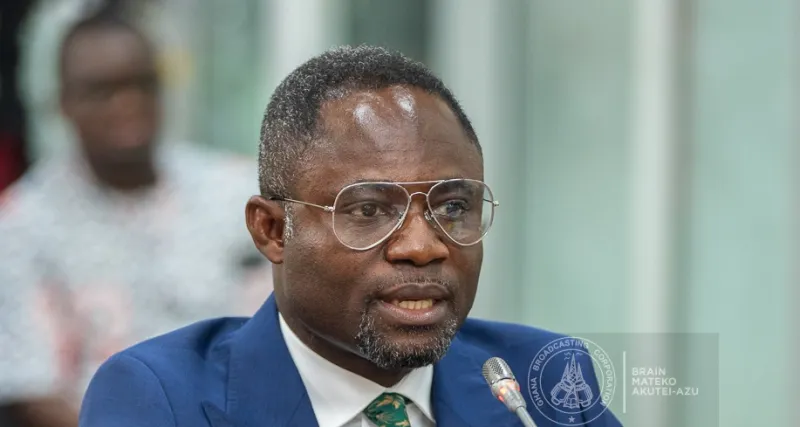
In a bid to restore public trust in Ghana’s healthcare system, the Minister for Health, Kwabena Mintah Akandoh, has undertaken a series of unannounced inspections at key health facilities, including the Madina Polyclinic and the Mother and Child Hospital.
The visits were aimed at strengthening professionalism, improving patient safety, tightening security systems, and addressing challenges within the healthcare sector that have recently triggered public concern.
The Minister’s inspection of the Madina Polyclinic followed the commissioning of a new container-based health post at the Madina Market. During the visit, he emphasized the need for strict enforcement of professional standards and enhanced security protocols within healthcare facilities.
As part of the new directives, all healthcare workers have been instructed to wear visible identification tags while on duty. According to the Minister, the measure is intended to help distinguish authorized staff from unauthorized individuals and curb security breaches within medical facilities.
He explained that reports of people impersonating health professionals to steal hospital equipment and, in some instances, allegedly abduct infants, had made the directive necessary.
The Minister also inspected the facility’s CCTV systems and ordered management to ensure round-the-clock monitoring to improve threat detection and emergency response. He further encouraged health workers to improve patient relations, noting growing public complaints about poor staff attitudes in some facilities.
During the tour, Mr. Akandoh officially handed over a modern container-based medical kiosk located at Social Welfare in Madina to the Director-General of the Ghana Health Service.
The facility is equipped with solar power, a borehole, and telemedicine technology to provide accessible healthcare services in busy communities such as markets and transport terminals.
Highlighting government’s commitment to healthcare accessibility, the Minister announced that primary healthcare services under the Free Primary Healthcare programme would be provided at no cost to citizens.
“You do not need to pay to access primary healthcare; government will pay for you,” he stated.
He explained that the initiative is currently being implemented in 150 districts during its first phase and covers treatment for common illnesses such as malaria and respiratory infections, as well as preventive services including blood pressure monitoring and diabetes screening.
However, the Minister clarified that the programme does not replace the National Health Insurance Scheme and advised citizens to remain active NHIS subscribers to access specialized healthcare services when necessary.
The inspection tour later shifted focus to the Mother and Child Hospital, where the Minister addressed the death of 27-year-old Abigail Opoku.
The deceased reportedly died in April 2026 after allegedly being denied an emergency caesarean section because of a shortage of recovery beds, an incident that sparked widespread public outrage.
The Minister met hospital management to review the circumstances surrounding the case and assured the public that a full investigation into possible medical negligence would be conducted.
He stressed that the Ministry of Health would intensify efforts to strengthen emergency maternal healthcare services nationwide to prevent similar tragedies in the future.
As part of immediate interventions, the Minister directed the urgent supply of essential hospital equipment, including beds, under the government’s healthcare improvement programme.
He reaffirmed the Ministry’s commitment to improving healthcare delivery, enhancing neonatal and maternal care, and rebuilding public confidence in the healthcare system through better efficiency, accountability, and timely emergency response services.
Story By: Eugenia Ewoenam Osei