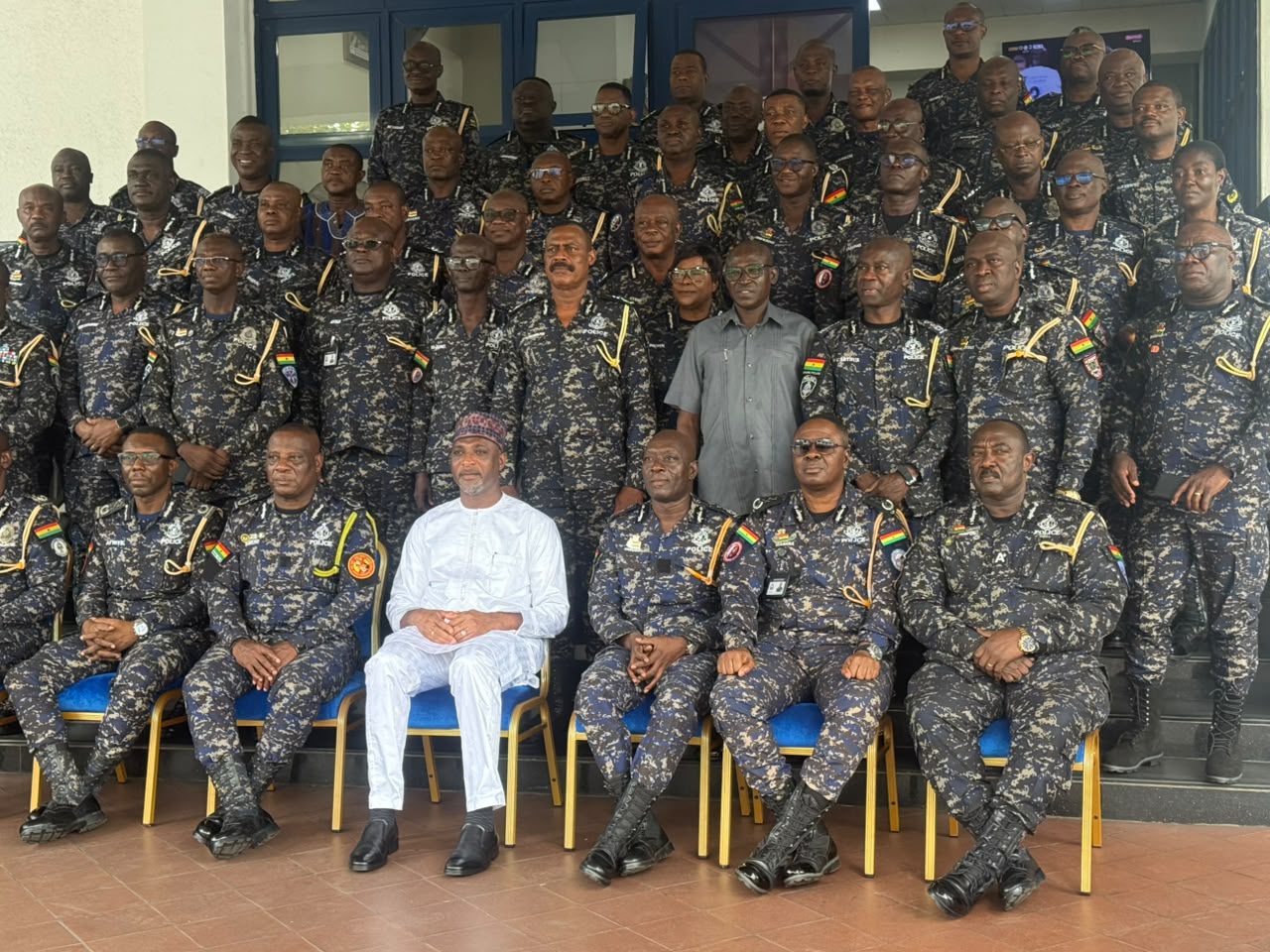
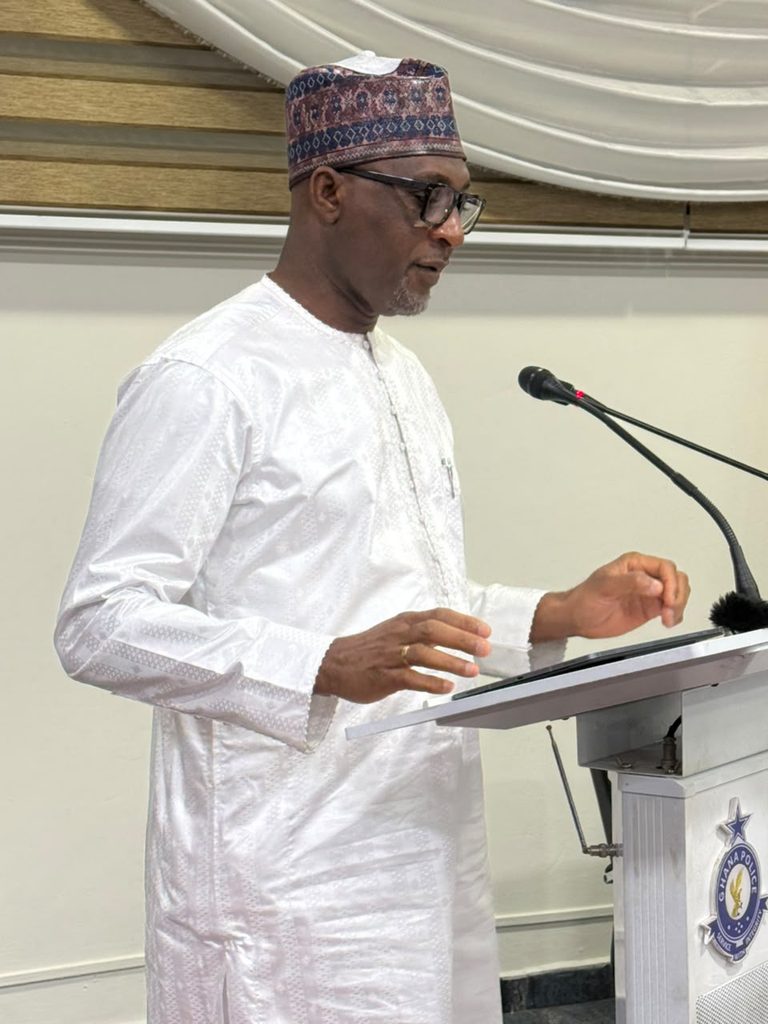
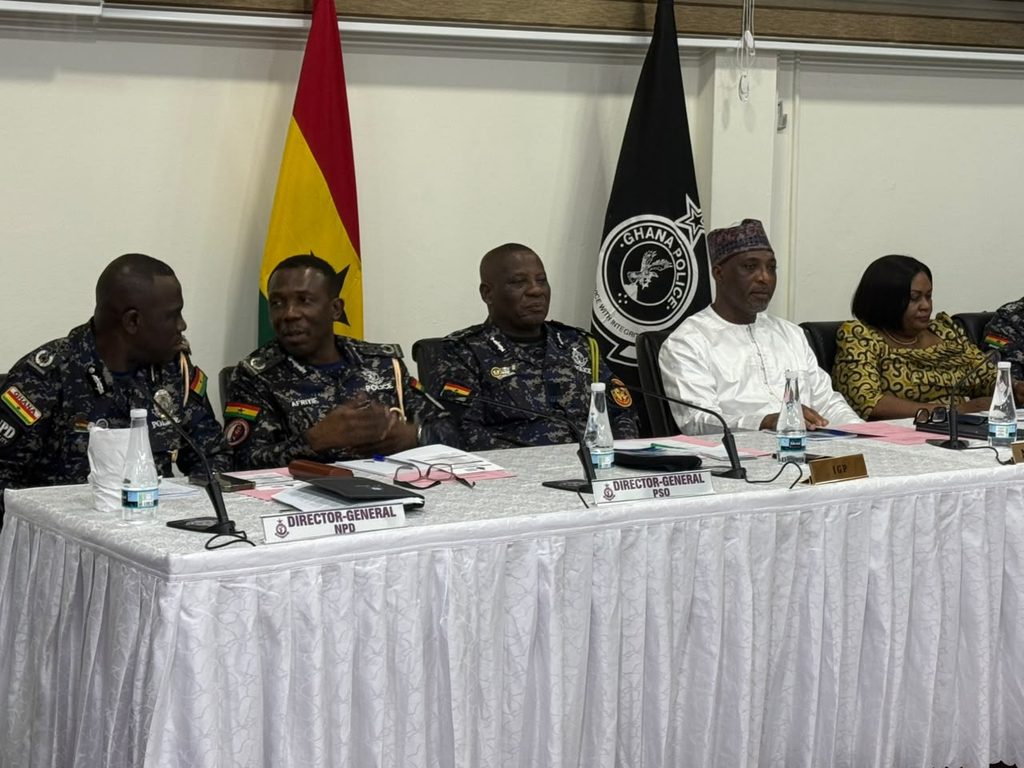
The Minister for the Interior, Mohammed Muntaka Mubarak, has directed regional commanders of the Ghana Police Service to intensify efforts against illegal private security groups and vigilante activities while enforcing stricter controls on the recording and sharing of videos of police recruits undergoing training.
Addressing senior police officers at the opening of the Regional Commanders Conference at the Police Headquarters in Accra, the Minister described unauthorized private security formations as a threat to public order and national security, stressing that such groups remain unlawful under the Violent and Related Offences Act, 2019 (Act 999).
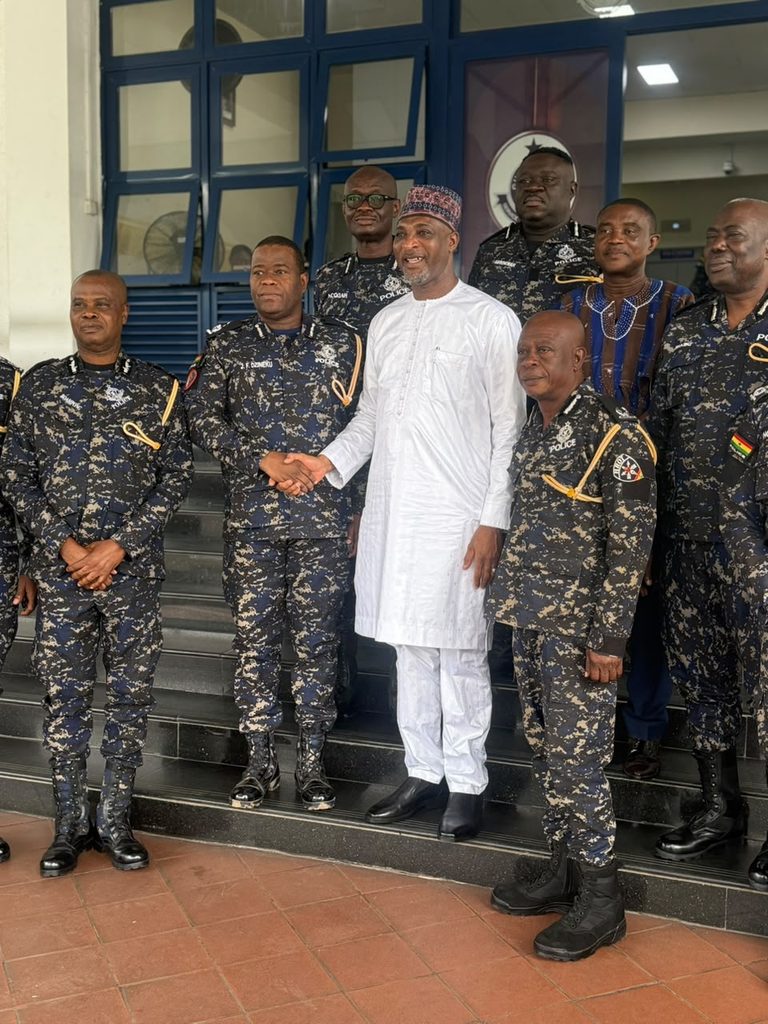
He charged commanders across the country to identify, investigate and prosecute individuals operating illegal security outfits, warning that the government would not tolerate parallel security structures that undermine the authority of state security agencies.
“Policy without execution is promise without performance,” Mr. Muntaka told the commanders, emphasizing that the success of government security policies depends largely on the commitment and leadership of officers on the ground.
The Minister also announced measures aimed at protecting the integrity of police training institutions, directing commanders to enforce a ban on the unauthorized recording and circulation of videos and images of police recruits on social media.
According to him, the practice compromises the privacy, dignity and security of trainees while exposing the service to reputational risks. He said preserving the professional image of the Ghana Police Service must remain a priority throughout the training process.
Beyond discipline and security reforms, Mr. Muntaka urged the police administration to embrace technology-driven policing to improve operational efficiency and public service delivery.
He revealed that government, in collaboration with the Motor Traffic and Transport Department (MTTD), is expected to roll out an automated road traffic enforcement system by the end of the year to strengthen road safety compliance and reduce traffic-related offences.
The Interior Minister also highlighted progress on the National Criminal Automated Biometric Identification System (CABIS), under which more than 700 digital enrollment stations are expected to be deployed nationwide by the end of 2026.
He said the initiative would decentralize criminal background checks, improve data integrity, speed up investigations and enhance access to justice services across the country.
Mr. Muntaka reiterated government’s commitment to providing the resources needed by the police service while maintaining high standards of accountability, integrity and professionalism.
He urged regional commanders to return to their respective jurisdictions with renewed determination to implement reforms that would strengthen public confidence in law enforcement and make Ghanaians proud of their police service.
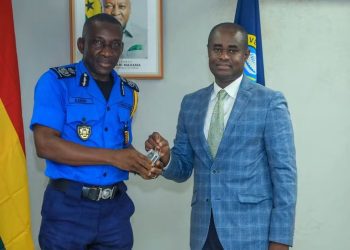
Meanwhile, Inspector-General of Police Christian Tetteh Yohuno called on police leaders to prioritize preventive policing, professionalism and stronger community engagement as part of efforts to transform the service.
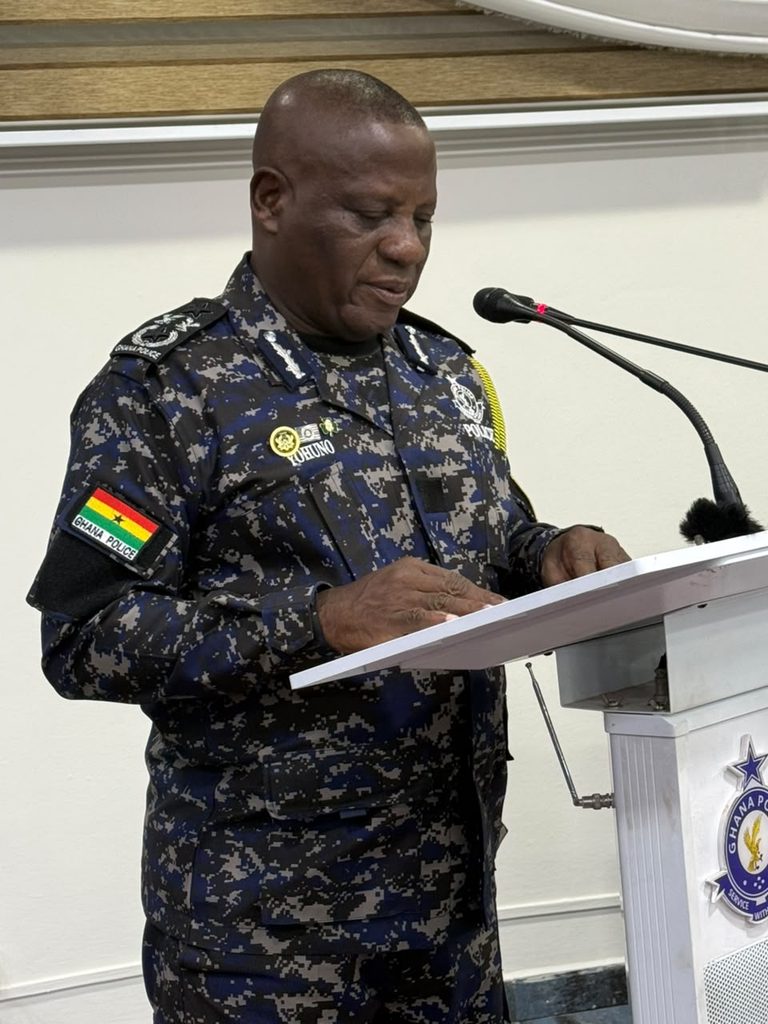
Addressing the conference, the IGP said Ghanaians were demanding a police service that is visible, approachable, competent and fair rather than perfection.
“Ghanaians are not asking for perfection; they are asking for presence. They are asking for professionalism,” he said.
Mr. Yohuno stressed the need for the police to move beyond reacting to crime and focus more on preventing criminal activities through intelligence-led operations and stronger partnerships with communities.
He also announced enhanced collaboration between the Ghana Police Service and the National Security Council to improve coordination among security and intelligence agencies.
The IGP noted that lasting reforms would depend on leadership at the command level, urging regional commanders to lead by example, mentor younger officers and uphold the highest standards of ethical conduct.
He calls for greater accountability across the service, assuring the public that the police administration remains committed to building a professional, trusted and responsive law enforcement institution capable of meeting the country’s security needs.
Story by Osman Issah Abadoo