The Minerals Commission is moving to make workers’ pay and employment conditions a key consideration in Ghana’s contract mining industry, as the regulator seeks to prevent the country’s local content drive from producing Ghanaian-owned businesses at the expense of Ghanaian workers.
Chief Executive Officer of the Minerals Commission, Isaac Tandoh, has raised concerns about remuneration and conditions of service within the growing indigenous contract mining sector, signalling tougher scrutiny of companies whose pricing models leave little room for decent compensation.
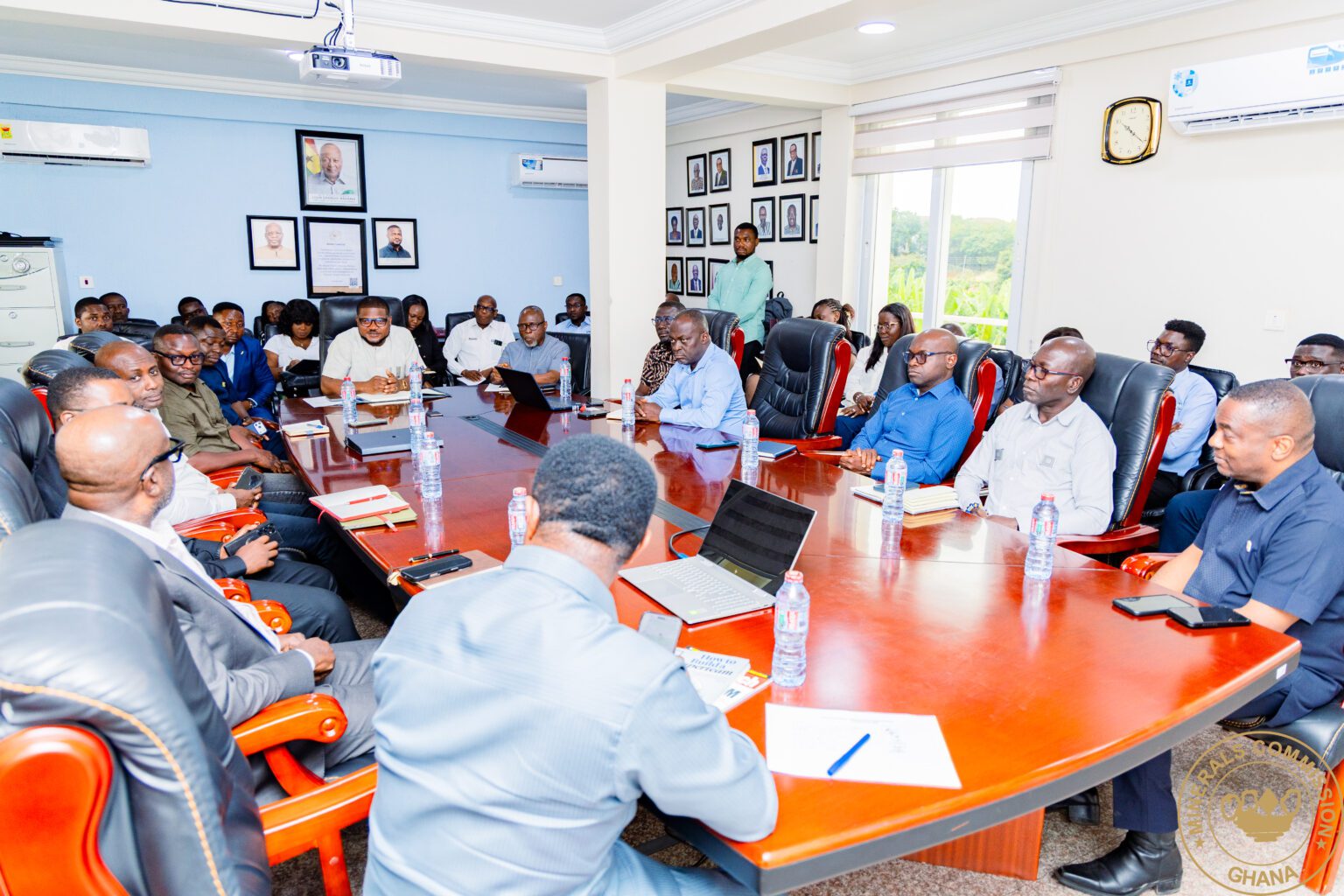
At a meeting with major contract mining companies, Mr Tandoh said increasing Ghanaian ownership of mining operations must produce tangible benefits for the people employed by those businesses.
“Local participation must not become merely a change in ownership; it must translate into better opportunities, fair remuneration and improved working conditions for Ghanaian workers,” he said.
The Commission’s intervention follows concerns that intense competition for mining contracts is encouraging some contractors to submit bids at prices that may be difficult to sustain without cutting operational costs.
One area potentially affected by such cost pressures is labour, with concerns that workers could ultimately bear the consequences through lower salaries and poorer conditions of service.
The issue has also attracted the attention of the Ghana Mineworkers’ Union (GMWU), which has raised concerns about alleged disparities between the compensation and employment conditions offered by some indigenous contractors and those available to workers undertaking comparable jobs for foreign-owned mining companies.
To address the problem, the Minerals Commission has asked contract mining companies to develop a framework that could introduce industry-wide benchmarks for wages and conditions of service.
Industry stakeholders are expected to discuss the proposed standards and submit a framework to the Commission for consideration and possible approval.
If adopted, the arrangement could introduce a more consistent basis for determining acceptable employment conditions across the contract mining industry and limit the extent to which companies can gain a competitive advantage by suppressing labour costs.
“A mining contract should not be won at a price that makes decent wages and acceptable working conditions impossible,” Mr Tandoh stressed.
The emerging framework could also have implications for how future mining contracts are awarded.
Beyond technical expertise and financial capacity, prospective contractors could face greater scrutiny over whether their bids provide sufficient resources to meet acceptable labour and remuneration standards.
The Commission has indicated that workers’ compensation will receive increased attention in its assessment of contract mining arrangements, with companies falling below acceptable standards potentially required to take corrective action or face regulatory consequences.
The intervention marks a shift in the debate over Ghana’s local content programme as the country advances efforts to increase indigenous ownership of contract mining operations.
While the policy has traditionally focused on expanding opportunities for Ghanaian companies, the Commission is pushing for the benefits to extend more directly to employees through better jobs, competitive wages and improved professional opportunities.
“Local ownership must deliver local value and local value must include decent jobs and fair wages,” Mr Tandoh said.
The Commission’s position is that indigenous ownership and worker protection should reinforce each other rather than become competing objectives.
That could require Ghanaian contractors to compete increasingly on technical capability, productivity, innovation and service quality, instead of relying heavily on lower-priced bids that may place pressure on wages.
The challenge is particularly significant because contract mining is capital-intensive, requiring companies to finance heavy equipment, recruit skilled personnel and maintain stringent safety, environmental and operational standards while remaining commercially competitive.
For the Minerals Commission, however, those commercial pressures should not be transferred disproportionately to employees.
The regulator’s latest intervention consequently broadens the measure of success for Ghana’s local content policy: beyond the number of mining contracts transferred into Ghanaian hands, the Commission wants the industry to demonstrate that greater domestic ownership is translating into sustainable businesses, decent employment and fair rewards for Ghanaian workers.