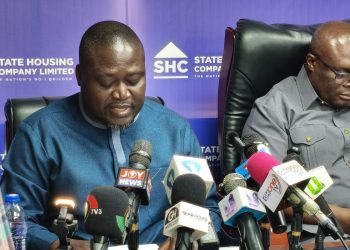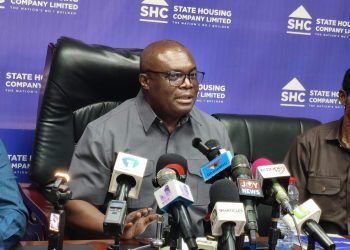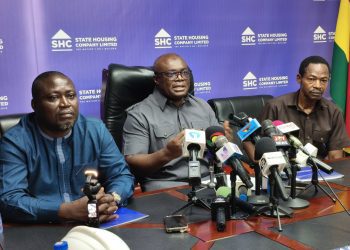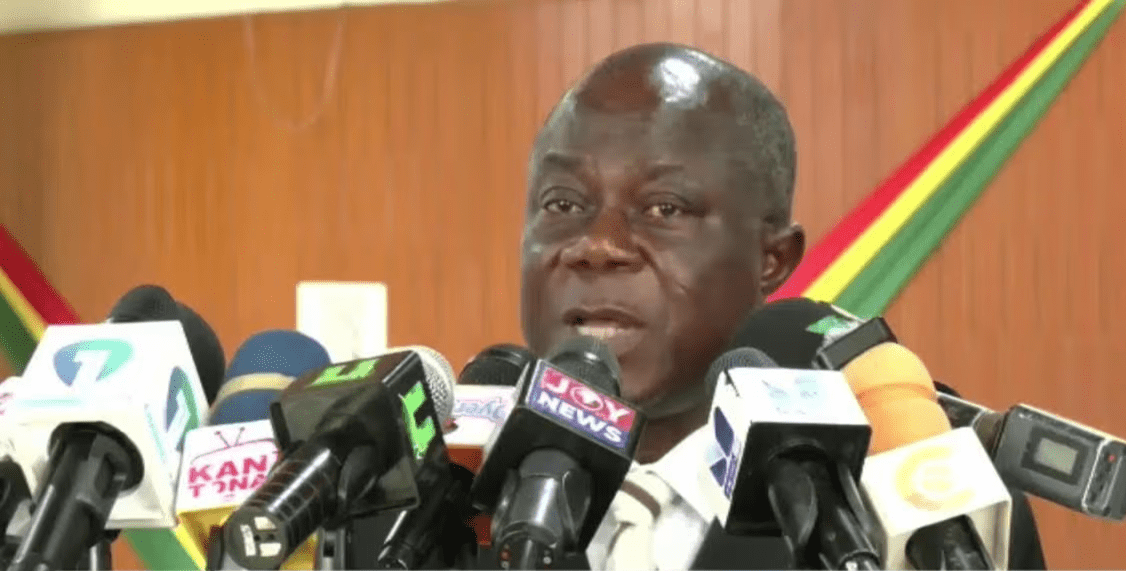
The Minority in Parliament, led by Kwame Anyimadu Antwi, ranking member on Parliament’s Constitutional and Legal Affairs Committee, today convened a press conference, expressing concerns and demanding urgent answers from the Attorney-General regarding the recent entry of a “nolle prosequi” in the high-profile case of The Republic v. Kwabena Duffour & 7 Others. The decision, which effectively halts the prosecution of individuals implicated in the GHS 5.7 billion UniBank financial sector clean-up, has been described by the Minority as an “unacceptable repercussion on the country” that warrants serious scrutiny.
The press conference was a direct response to a press release issued by the Deputy Attorney-General on July 22, 2025, which stated that the Attorney-General had entered a “nolle prosequi” in the case. While acknowledging that prosecutorial discretion legally requires no explanation, the Attorney-General’s office had, “in the spirit of accountability and transparency,” provided a rationale.
BACKGROUND TO THE ATTORNEY-GENERALS DECISION
The Attorney-General’s press release outlined that the Kwabena Duffour & 7 Others case was part of broader prosecutions stemming from the 2018 financial sector clean-up. The primary objectives of these prosecutions were identified as ensuring accountability for public funds and recovering losses to the State due to alleged financial impropriety.
Crucially, the Attorney-General’s office stated that a 60% recovery threshold of alleged losses was established as a condition for reconsidering prosecution in specific cases. According to the release, following prolonged negotiations and engagements, the accused persons in The Republic v. Kwabena Duffour & 7 Others case have met this recovery threshold. Consequently, the Attorney-General concluded that continuing with the prosecution would not serve any additional public purpose, emphasizing that this decision does not imply an absence of wrongdoing or a vindication of conduct, but rather a pragmatic step in line with the overarching national interest of recovering State resources.
The Minority highlighted the background of the UniBank case, where a GHS 5.7 billion of depositors’ funds was allegedly unavailable, with investigations revealing transfers to related businesses that rendered UniBank insolvent. Criminal charges, including fraudulent breach of trust and money laundering, were subsequently brought against Dr. Kwabena Duffour and seven others after UniBank’s license was revoked and a receiver appointed.
In light of these circumstances, the Minority presented a series of pointed questions, calling on the Attorney-General to provide clarity to the Ghanaian public. The Minority questioned whether Dr. Dominic Akuritinga Ayine had previously acted as defense counsel for Dr. Kwabena Duffour in this very case. They pressed the Attorney-General to clarify if Dr. Ayine is now the current Attorney-General referenced in the press release and to explain the full extent of any potential conflict of interest arising from such a dual role.
They also challenged the Attorney-General’s discretionary power to halt prosecutions, particularly in cases involving financial crimes against the state, demanding to know the legal basis and introduction date of the “60:40 principle” into Ghana’s criminal jurisprudence, questioning if it was a new policy directive and if it had been made public or debated in Parliament.
They sought clarification on what happens to the remaining 40% of the alleged stolen funds, metaphorically questioning if the Attorney-General was applying a “goat theft approach” where a portion is recovered and the rest is disregarded.
“For a case involving GHS 5.7 billion, can the Attorney-General confirm that GHS 1 billion (60%) has indeed been recovered, and provide documented proof of this recovery? It is strange that the Attorney-General is insisting that an amount of GHS800m recovered from Dr Duffour constitute 60%. How did the AG review the amount from GHS507bn to GHS1.2bn by a mere administrative fiat”, they quizzed.
“the best we heard from him today is to make arrangements for the amount to be paid into public funds”
The Minority queried why the Attorney-General “seemingly overlooked” Section 35 of the Courts Act, 1993 (Act 459), which provides a framework for compensation or restitution in cases causing economic loss to the State.
“Why did the Attorney General turn a blind eye on the above institutional provision? Would the AG’s principle of restitution be under the Plea Bargain under section 162 as amended under the criminal and other offences (procedure) Act, 30 and 1079? ” Anyimadu asked. “One will doubt whether the attorney general considered any of the above processes in coming out with the principle of 60-40.”
“Why was the accused person not convicted even when he agreed to pay 60% in line with the plea bargain agreement or section 35 of the Courts Acts?
For plea bargain to be accepted by the court there are a lot of options opened to the parties including a conviction. However, any such process must be supervised by the court. So how does the AG allow the accused persons to walk free without a conviction and without the supervision by the Court? That definitely cannot be under a plea bargain agreement.
The learned AG has obviously forgotten the theories of prosecution and punishment.”
The Minority concluded by stating that this approach by the Attorney-General undermines the crucial principle of deterrence in prosecution and punishment.
Story By: Eugenia Ewoenam Osei