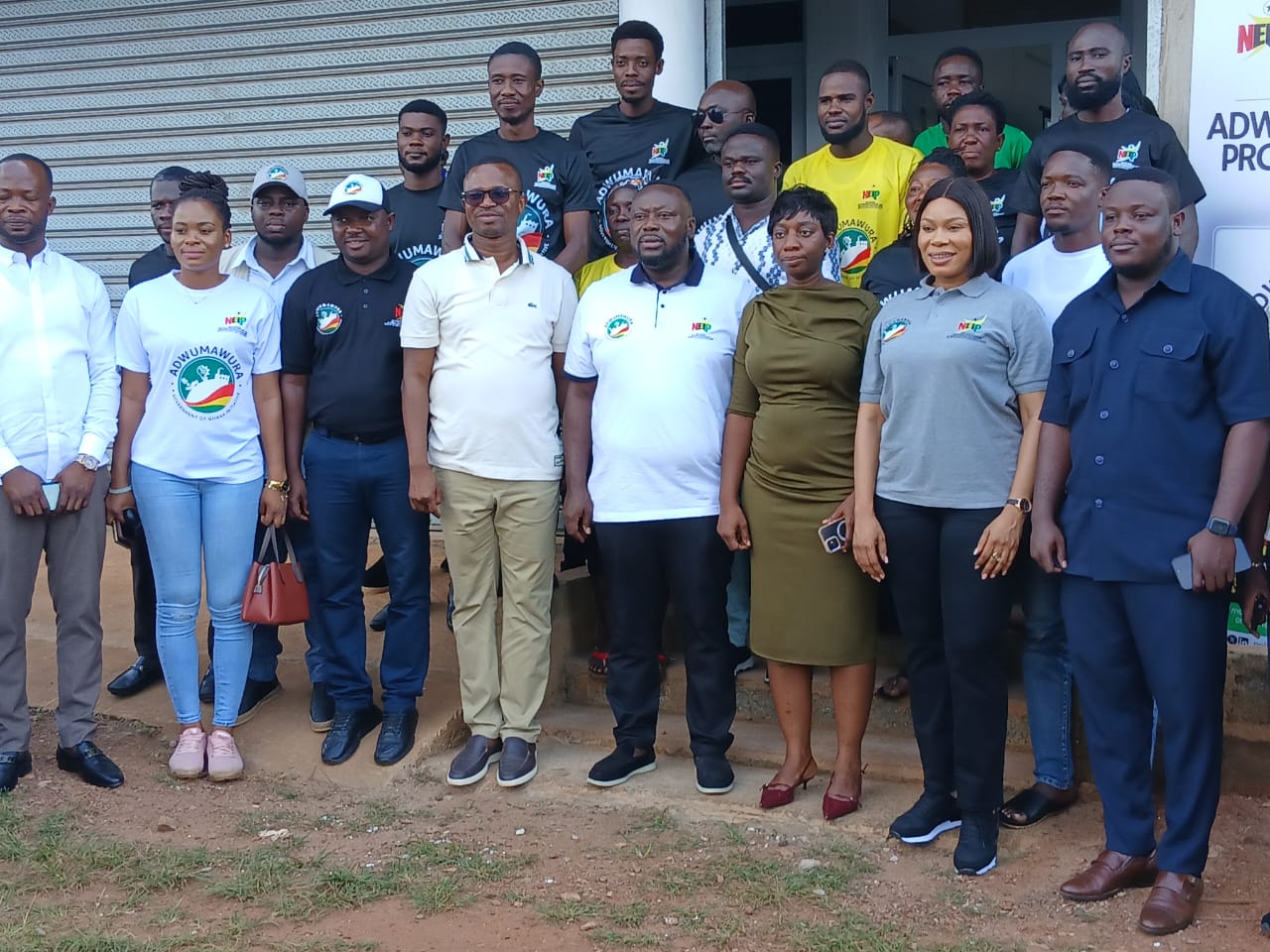
A high-level delegation from the Ministry of Youth Development and Empowerment and the National Entrepreneurship and Innovation Programme (NEIP) has toured selected Adwumawura Centres in the Eastern Region, expressing strong satisfaction with the remarkable progress made in shaping young entrepreneurs and transforming livelihoods.
The team, led by the Minister for Youth Development and Empowerment, George Opare-Addo, included NEIP CEO Eric Adjei Esq, Deputy CEO Joan Selasie Ahiawordor, the Ministry’s Chief Director, and technical staff from both institutions.
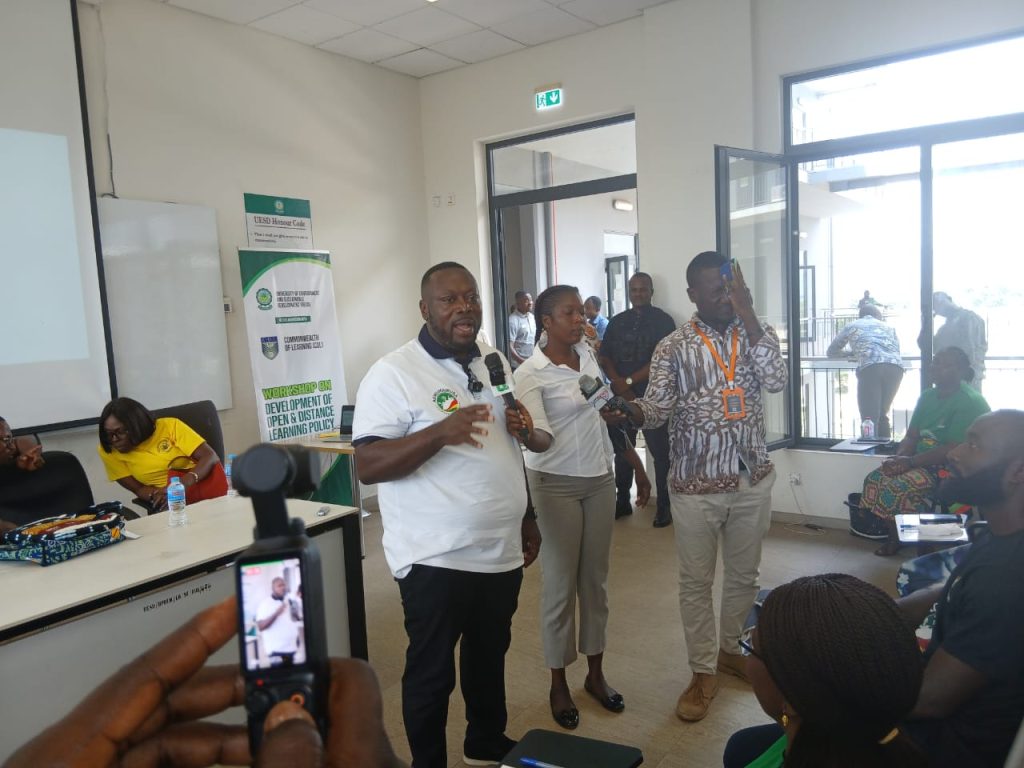
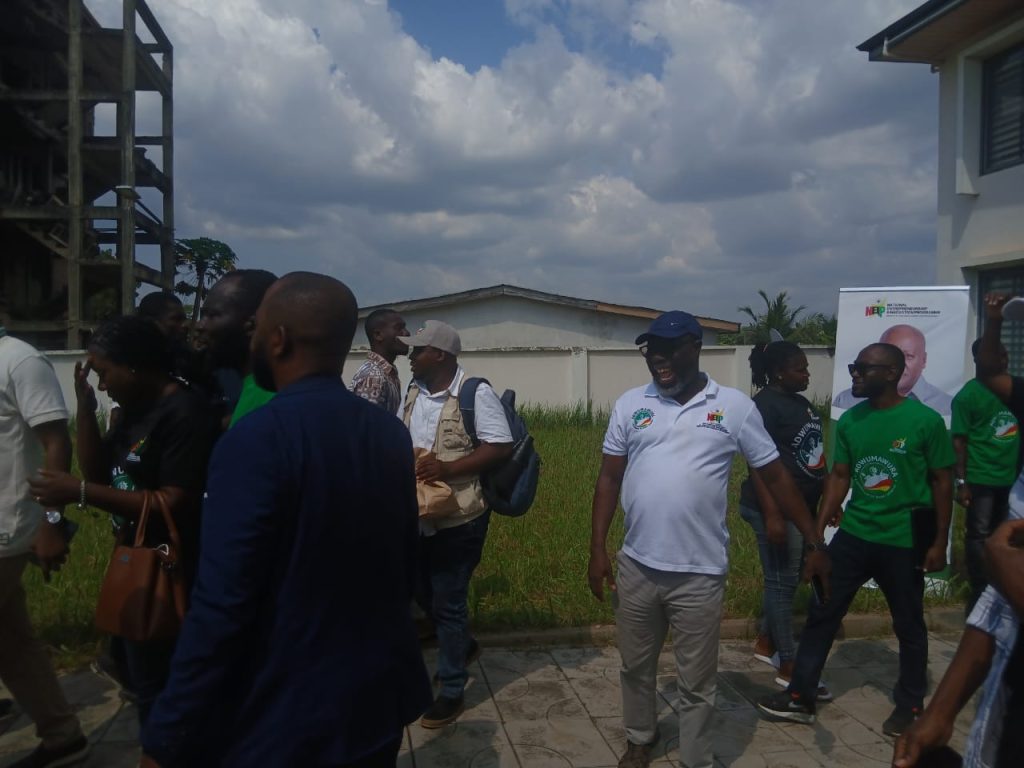
The group visited centres in Aburi, the University of Environment and Sustainable Development (UESD) at Somanya, adjoining project sites, and Senchi, where trainees showcased their work and shared personal stories of change.
Addressing the trainees, the minister emphasized that entrepreneurship is built not only on technical skills but on character, discipline and the strength of professional relationships. He urged the beneficiaries to value mentorship and guard their reputation as they prepare to enter the business world.
“Every business has difficult moments, and when that time comes, you need someone who has walked the road before to hold your hand,” he said.
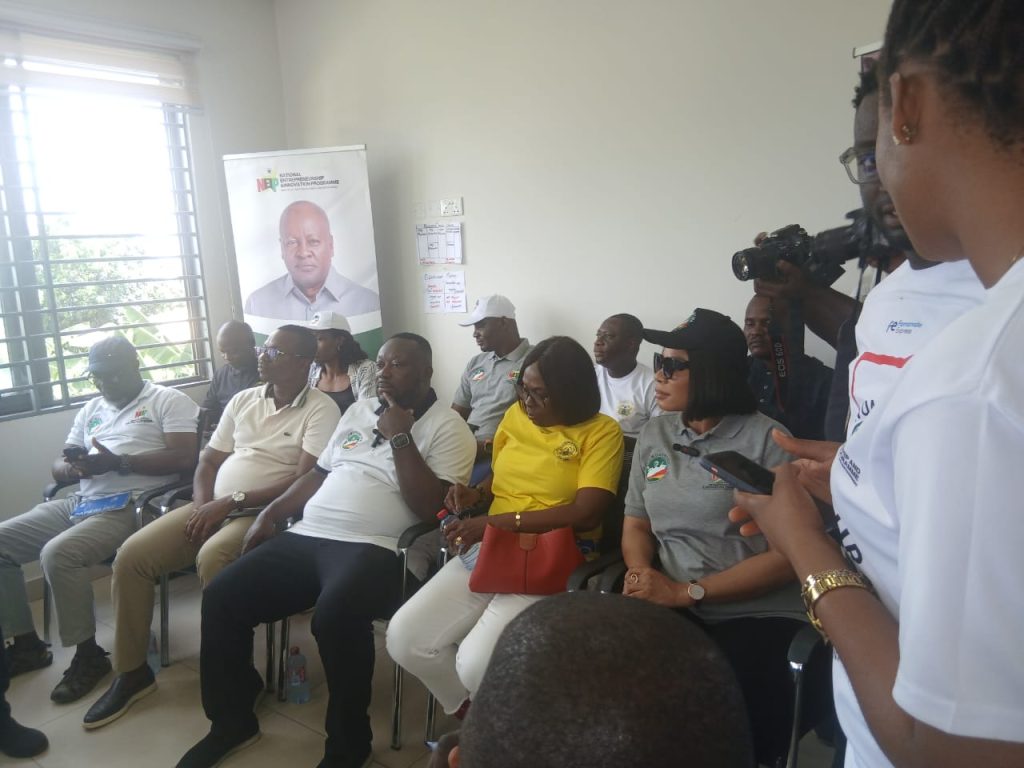
He cautioned that disrespecting mentors, technicians, or artisans who support their operations could ruin their credibility and derail their business prospects.
Mr. Oparr-Adoo also advised the trainees to avoid needless rivalry and instead cultivate cooperation, explaining that networks, partnerships and referrals often determine long-term success. He further encouraged them to remain disciplined and avoid habits that limit their progress, such as drug use and excessive betting.
Deputy CEO of NEIP, Joan Selasie Ahiawordor, expressed delight at the transformation she observed among participants, describing the shift in mindset as the programme’s most profound achievement.
She disclosed that many applicants began the programme expecting financial handouts, only to discover that sustainable entrepreneurship requires a deeper foundation.
“They now say the training is worth more than the money they thought they were coming for. Without the right mindset, even a billion dollars cannot guarantee success. That shift is the highlight for me,” she noted.
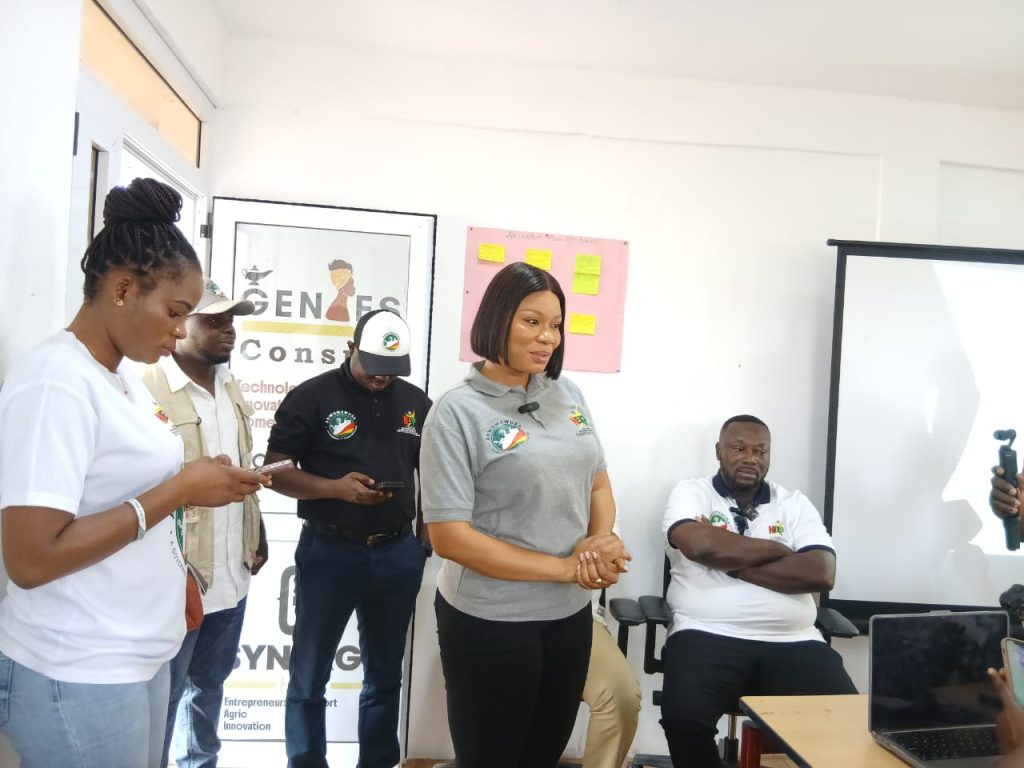
Ms. Ahiawordor credited the programme’s progress to strong political will. She highlighted that President John Dramani Mahama launched the initiative within his 120-day social contract timeline, with GHS 20 million released in the first budget cycle and additional allocations secured for upcoming phases.
She also clarified concerns about the age limit, explaining that although exceptions exist for women and persons with disabilities, broader adjustments must align with national youth policy guidelines and would require further consultations with the President and relevant authorities.
Trainees across the centres described the programme as life-changing, noting that it has opened new paths for employment, built their confidence and equipped them with practical skills they previously lacked. Many appealed for an extension to allow more young people to benefit, especially those who missed the application window or fall outside the current age bracket.
A trainee at Somanya said, “We have learnt so much. Even if they don’t give us everything, at least some startup capital will help us put the skills to work.”
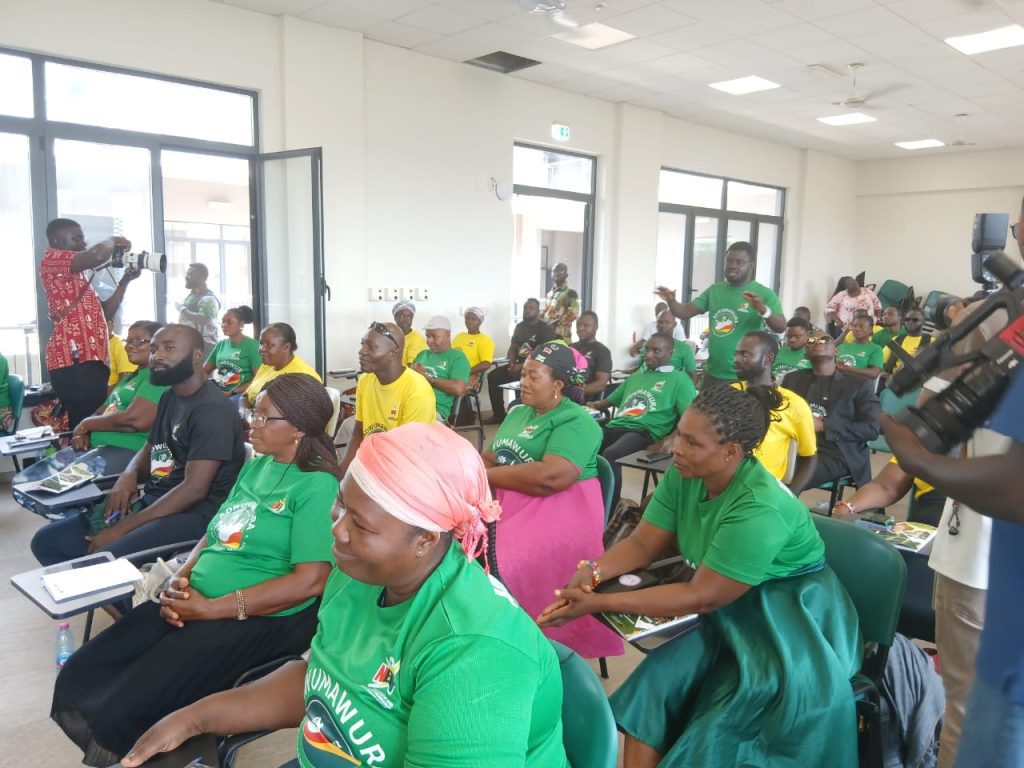
Others echoed the call, noting that combining training with financial support would create stronger and more sustainable enterprises.
The tour forms part of continuous monitoring efforts to ensure the Adwumawura initiative remains on course to deliver its mandate: equipping Ghanaian youth with the skills, mindset and opportunities needed to build meaningful, independent livelihoods.
Story by Osman Issah Abadoo