The Executive Director of the African Institute of Strategic Studies, Dr Jonathan Asante Otchere, says the New Patriotic Party (NPP) needs a strong and authoritative National Chairman capable of rebuilding its structures and restoring confidence in the party following its electoral defeat.
Speaking in an interview with Sena Nombo on Radio Gold, Dr Asante Otchere said the National Chairmanship contest has become the most significant race in the NPP’s national executive elections because of the organisational challenges confronting the party.
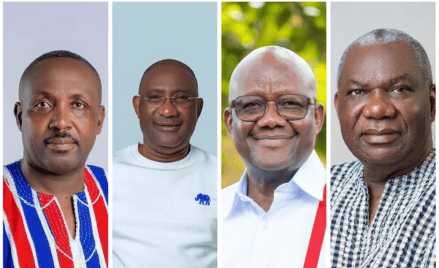
The NPP will elect its national officers on Saturday, October 3, 2026, with John Boadu, Sammy Crabbe, Paul Afoko and Boakye Agyarko contesting for National Chairman. Mr Boadu is number one on the ballot, followed by Mr Crabbe, Mr Afoko and Mr Agyarko.
Dr Asante Otchere argued that the party requires a reform-minded chairman with the political stature and communication skills to command respect and rally members behind a rebuilding agenda.
While acknowledging the experience of former General Secretary John Boadu, he said Boakye Agyarko, a former Energy Minister, better fits his assessment of the kind of political weight required for the position.
He compared the leadership demands of the NPP chairmanship with the influence wielded by NDC National Chairman Johnson Asiedu Nketiah, arguing that the NPP requires a chairman capable of exercising comparable authority within the party.
According to him, Mr Agyarko possesses “gravitas” and “clout” and is able to communicate effectively in both English and Twi.
Dr Asante Otchere also expressed admiration for Paul Afoko’s campaign message, particularly his “Three Rs” of reunite, rebuild and recapture, which he described as a “masterpiece.”
“I would have preferred Mr Afoko to take over,” he said, although he argued that other political considerations could make the former NPP National Chairman’s campaign more difficult.
He consequently suggested that, based on the qualities he considers important for rebuilding the party, the chairmanship contest should have centred principally on Mr Afoko and Mr Agyarko.
Polls are not the final word
Dr Asante Otchere also cautioned against treating opinion polls as conclusive evidence of how delegates will vote.
Recent surveys have produced different measurements of support among the four candidates. A September 30 Global InfoAnalytics poll using its Committed Delegates Model put John Boadu at 48%, Boakye Agyarko at 38%, Paul Afoko at 12% and Sammy Crabbe at 2%. A separate survey released a day earlier by Professor Smart Sarpong and Feedback Africa reported different levels of support.
Dr Asante Otchere said delegate elections can be unpredictable and maintained that circumstances on election day could alter the outcome. “The real deal is what happens on the ground on Saturday,” he said.
He nevertheless commended the organisation of the electoral process so far, describing the work of the committee overseeing the elections as credible.
Questions NPP’s party leadership arrangement
Beyond the individual candidates, Dr Asante Otchere questioned the practicality of making an elected National Chairman the overall leader of a political party when that party has a presidential candidate or is in government.
He argued that once a party has a flagbearer campaigning to become President, political authority inevitably gravitates towards that candidate, who leads the national campaign and mobilises resources towards winning power.
He said the arrangement becomes even more difficult when the party is in government because the President is simultaneously the country’s head of government and the party’s most prominent political figure.
Dr Asante Otchere suggested that political parties could even consider a different arrangement while in opposition, where the Minority Leader in Parliament assumes a stronger leadership role until a flagbearer is elected.
His argument was that opposition MPs frequently become the principal actors advancing their party’s positions on national issues in Parliament.
For Dr Asante Otchere, Saturday’s election therefore goes beyond choosing another set of national officers. The chairmanship contest will test what kind of leadership NPP delegates want as the party reorganises and prepares for the next general election.