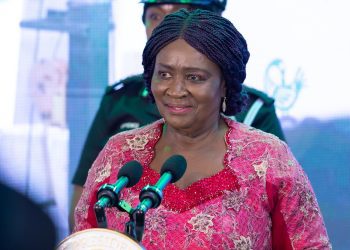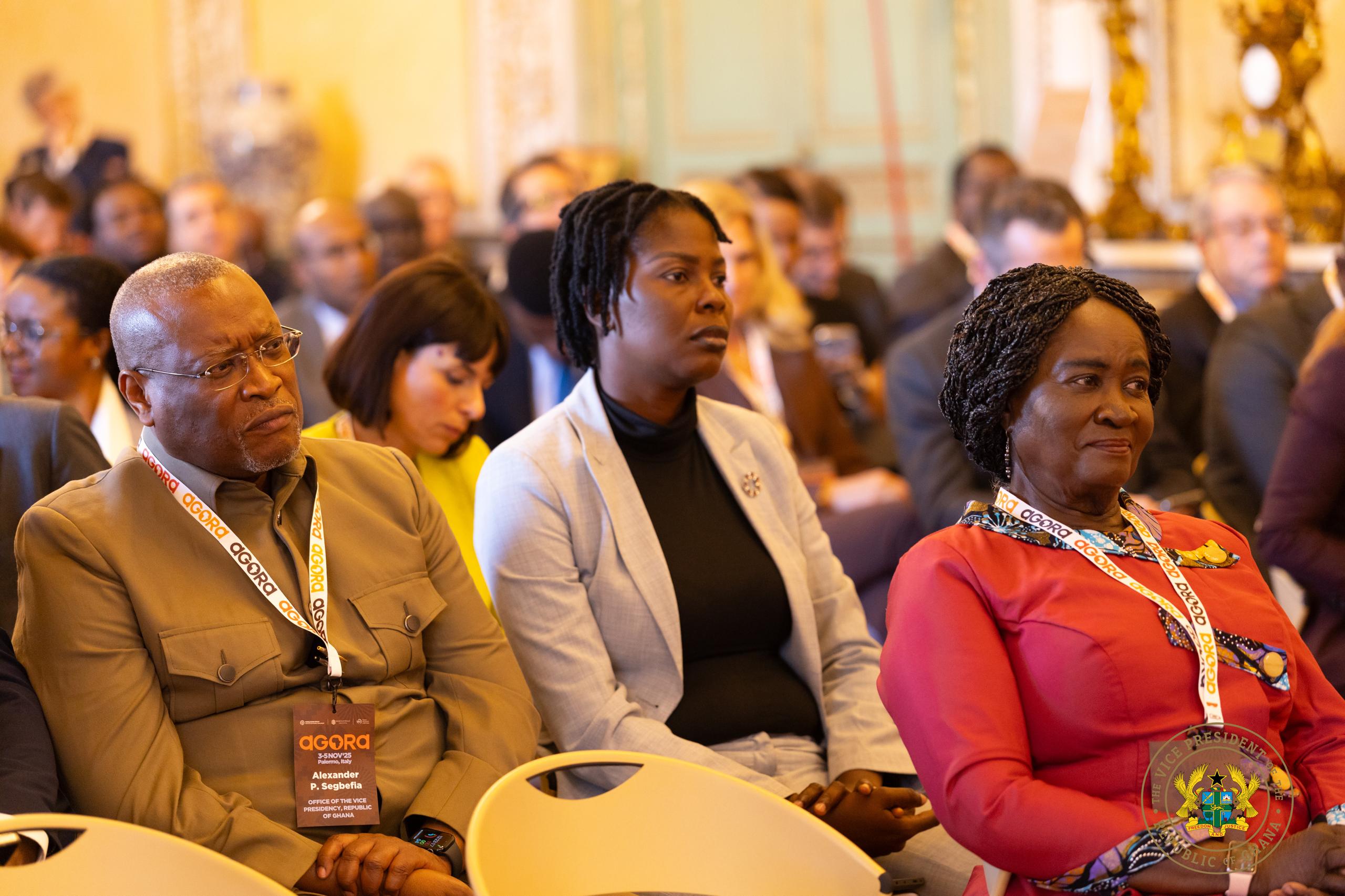
Palermo, Italy – November 3, 2025 – Ghana’s Vice President, H.E. Prof. Naana Jane Opoku-Agyemang, has outlined a comprehensive national strategy to build a high-productivity, inclusive economy anchored on job creation, enterprise growth, and value addition.
Delivering a keynote address at the Africa Growth and Opportunity Research in Action (AGORA) Conference in Palermo, Italy, the Vice President stated that the government is advancing a 12-pillar blueprint aimed at transforming Ghana’s economic structure.
“We are reshaping our economy to ensure that growth translates directly into decent work and rising incomes,” she emphasized. “Our ambition is not only to create jobs, but to expand the possibilities of what our people can achieve.”
24-Hour Economy at the Centre of Transformation
Prof. Opoku-Agyemang described the government’s flagship 24-Hour Economy policy as a structured approach to enabling continuous and efficient economic activity through stable energy supply, digital networks, logistics improvements, and shift-based work systems.
“This is not about asking Ghanaians to work endlessly,” she clarified. “It is about ensuring the systems exist for businesses to operate and grow at any hour of the day.”
The policy is being implemented through strategic pillars such as Grow24, Make24, Build24, Connect24, Fund24, Aspire24, Show24, and Go24, each targeting key sectors from agriculture to manufacturing to skills development.
Macroeconomic Recovery Strengthens the Jobs Agenda
The Vice President highlighted improved macroeconomic performance, noting that inflation declined to 9.4% as of September 2025.
She also pointed out that the Ghana Cedi appreciated by over one-third against major currencies early in the year, earning recognition from Bloomberg as the best-performing currency globally in May 2025.
“These numbers are not just statistics,” she said. “They represent stability, stable prices, stable investment conditions, and the environment in which jobs flourish.”
Agriculture and Cocoa Value Addition Take Priority
Under the Grow24 pillar, the Feed Ghana programme is expanding irrigation systems, introducing climate-resilient seeds, and investing in agro-processing hubs such as the Tamale Agro-Industrial Park.
The Vice President also announced a national goal to process at least 50% of Ghana’s cocoa locally by 2030, shifting the sector toward value addition.
“We are moving from exporting raw materials to exporting refined opportunity,” she stated.
“This transformation will create skilled jobs and ensure farmers share more of the value they produce.”
Infrastructure and MSME Support as Job Multipliers
Under the Build24 pillar, the government is undertaking what she described as “the most ambitious infrastructure investment since Independence”, focusing on rail expansion, port modernization, and renewable energy grids.
She also highlighted the role of Micro, Small, and Medium Enterprises (MSMEs), noting that the BRIDGE Initiative is linking thousands of small businesses to markets, finance, and technical support.
“Our small businesses are the heart of our economy. When they rise, Ghana rises,” she said.
Women and Youth at the Frontline of Transformation
The Vice President reaffirmed the government’s commitment to women’s economic empowerment, citing initiatives such as the Women in Agricultural Productivity and Enterprise Fund (WAPE-Fund), and plans to establish a Women’s Development Bank.
She also detailed the success of the Adwumawura Entrepreneurship and Skills Programme, which received 120,000 applications, with 10,000 young entrepreneurs selected for intensive training and financing support.
“When women and young people thrive, the nation’s progress becomes unstoppable,” she added.
Call for Global Partnerships
Concluding her address, Prof. Opoku-Agyemang called for collaborative development partnerships with the international community based on equality, innovation, and shared benefit.
“Ghana stands ready not merely as a beneficiary, but as a partner to co-create a future where jobs are abundant, inclusive, and dignified,” she said. “We invite investors, researchers, and innovators to build this future with us.”
Story: Patrick Asford Boadu