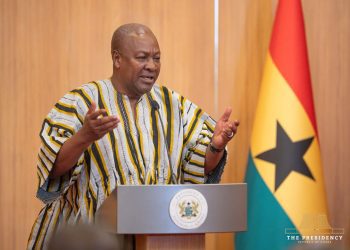
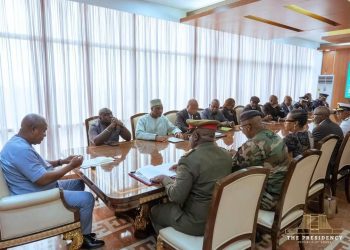
President John Dramani Mahama has launched a comprehensive Code of Conduct for government appointees as part of his administration’s aggressive push toward ethical governance, transparency, and accountability.
The launch, which took place at the Jubilee House, marks a significant step in Mahama’s second-term agenda to rebuild public confidence in government institutions and combat corruption at all levels.
In a strong and uncompromising tone, President Mahama declared that any appointee who fails to declare their assets by May 7th should consider themselves dismissed from their position.
“This is not a negotiation. It is a requirement of service”.
Public office is a public trust, and anyone who fails to meet this basic obligation has no business representing the people of Ghana,” the president stated.
The new Code of Conduct lays out clear expectations regarding integrity, impartiality, and the responsible use of public resources. It includes specific measures such as:
Mandatory Asset Declaration: All ministers, deputy ministers, CEOs of state agencies, and board members are required to submit a full declaration of assets and liabilities.
Ban on First-Class Travel: In an effort to cut unnecessary government spending, all appointees are prohibited from flying first class on official assignments.
Conflict of Interest Guidelines: Appointees are barred from engaging in activities or relationships that could compromise their decision-making.
Reporting and Whistleblower Protections: Mechanisms will be put in place to allow civil servants and the public to report unethical behavior without fear of retaliation.
The president emphasized that this code is not merely symbolic but will be actively enforced through a dedicated Oversight and Ethics Compliance Unit under the Office of the President.
This new directive builds on earlier efforts from Mahama’s administration.
In December 2024, shortly after winning the election, he formed an independent Anti-Corruption Task Force led by North Tongu MP Samuel Okudzeto Ablakwa.
The task force includes a former Auditor-General, a legal expert, an investigative journalist, and a retired police commissioner, tasked with probing allegations of graft and holding officials to account.
Political analysts have viewed the move as a bold attempt to reset the tone of public service in Ghana, especially after years of public dissatisfaction over corruption scandals and misuse of funds in various sectors.
Civil society organizations and international observers have largely welcomed the Code of Conduct, urging its strict enforcement.
“This is a step in the right direction,” said Ama Boakye, a governance specialist with the Ghana Integrity Initiative.
“But we will judge it not by the speech, but by the consequences that follow inaction or misconduct.”
President Mahama concluded his address with a call to action for all public servants:
“We owe it to the people of Ghana to serve with humility, discipline, and honor. Let us rise to that call.”