President John Dramani Mahama will today officially launch the Vegetable Development Project, also known as “Yeredua” (We Are Planting), as part of government’s broader agricultural diversification agenda aimed at transforming Ghana’s vegetable sub-sector and reducing the nation’s dependence on imports.
The launch forms part of a strategic intervention to boost local production of key vegetables, enhance food security, and expand export opportunities.
Speaking at the launch, President Mahama emphasized the importance of agriculture to national progress.
“Agriculture is the bedrock of development for every nation. For Ghana, achieving food security and strengthening our export base begins with supporting our farmers through modern, all-year-round farming initiatives,” he noted.
104 Schools Join School Farm Initiativej
As part of efforts to promote farming among the youth, government has registered 104 schools under the School Farm Project. These schools will receive farmlands for crop farming, livestock production, and poultry, allowing them to both consume and sell what they produce.
“The schools will grow their own food, eat some to improve nutrition, and sell the rest for income. This builds responsibility and ensures healthy, nutritious meals for our children,” President Mahama said.
Six Communities and 70,000 Farmer Cooperatives Enrolled
Under the “Yeredua” project, six farming communities and 70,000 farmer cooperatives have been registered for the pilot phase in the Ahafo Region.
Each participating community will receive:
10 hectares of irrigated farmland
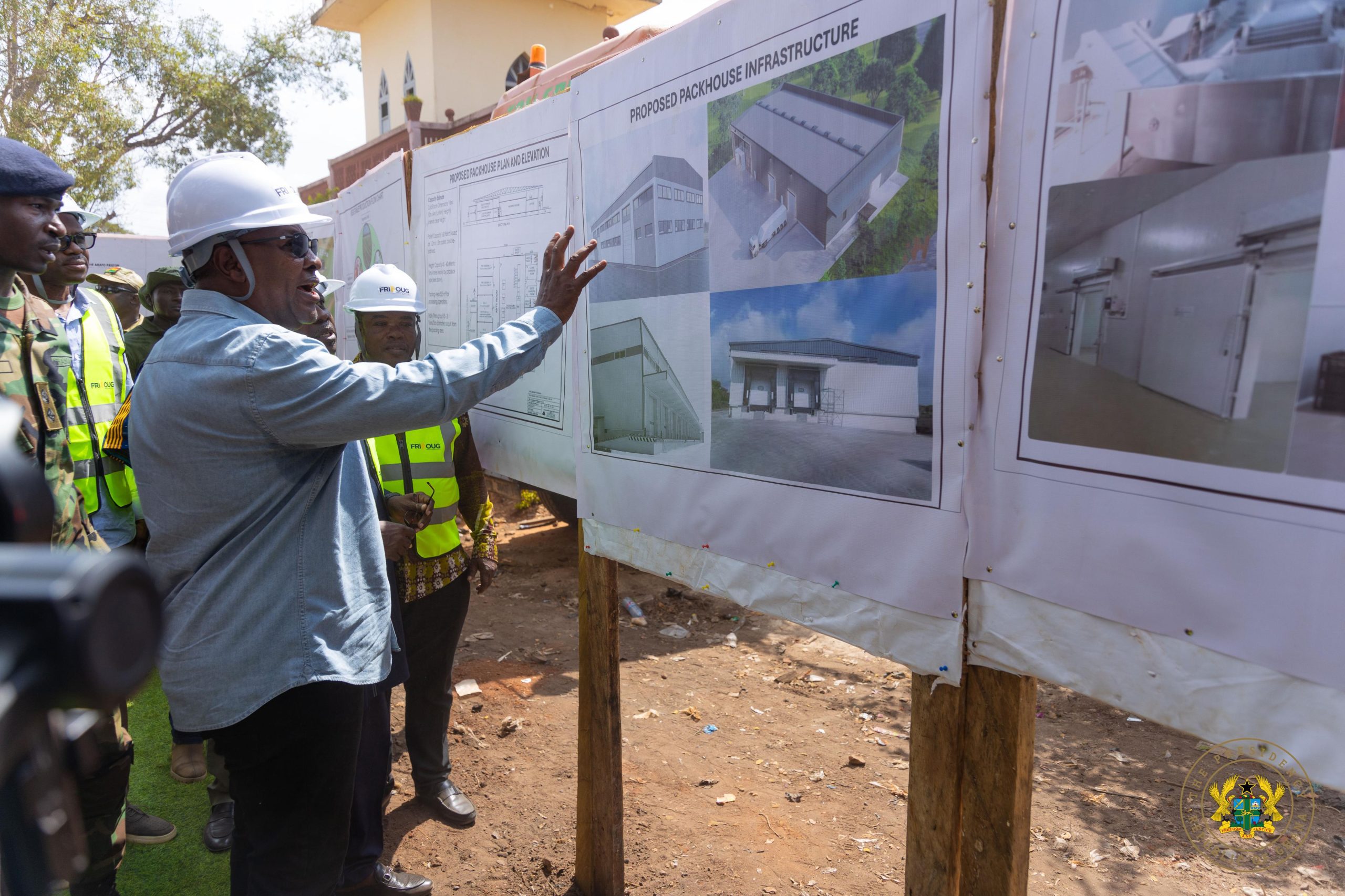
A packhouse for storing harvested tomatoes and vegetables
Guaranteed access to the vegetable value chain for market linkage
Selected farmers will each be allocated 2.5 hectares of land for vegetable cultivation.
Free Distribution of Tomato and Pepper Seeds
As part of the support package, government will distribute tomato and pepper seeds free of charge to all registered cooperatives.
President Mahama assured farmers that the seeds are of high quality, noting that “these are good seeds that germinate quickly and guarantee higher yields.”
Reducing Imports, Boosting Local Competitiveness
The Yeredua project aims to drastically cut Ghana’s heavy vegetable imports—especially tomatoes and peppers—which remain a major drain on foreign exchange.
“This project is a strategic intervention to strengthen the vegetable sub-sector and reduce our dependence on imports. We want to grow more here, process more here, and export more from here,” he emphasized.
U.S. Tariff Reversal Opens New Export Window
President Mahama also welcomed the recent reversal of the 15% tariff restriction previously imposed by the United States on some countries, including Ghana.
“With the restriction now rescinded, this is the perfect time for us to expand production and take advantage of new export opportunities. It will also help us ensure cheaper vegetable prices here at home,” he said.
Project Open to All Ghanaians
The President encouraged wide participation, stressing that the initiative is open to everyone.
“Whether you are a public servant or not, you can take part in this project. It is an opportunity for all Ghanaians to engage in productive farming and contribute to national development,” he added.
The Yeredua Vegetable Development Project is expected to create jobs, enhance farmer income, reduce post-harvest losses, and drive all-year-round vegetable farming in the Ahafo Region and beyond.
Story: Patrick Asford Boadu