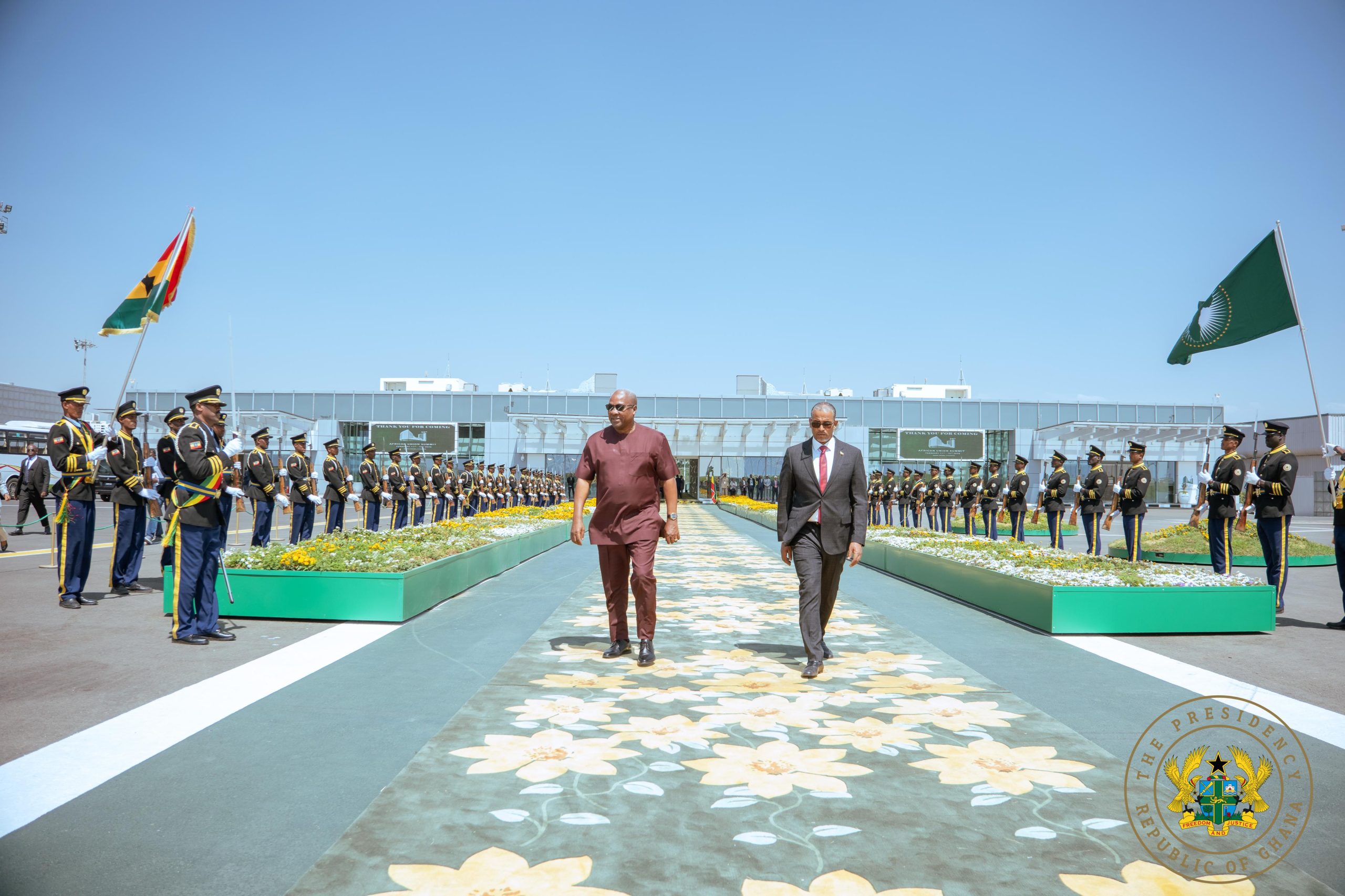
The President of Ghana, John Dramani Mahama, has left Addis Ababa at the end of his participation in the 39th Assembly of Heads of State and Government of the African Union, marking the conclusion of a series of high-level engagements that reinforced Ghana’s leadership on continental reform, reparations, gender equality and financial inclusion.
During the Summit, President Mahama played a central role in advancing Africa’s collective position on historical justice, reparations and global equity, while also hosting and co-hosting a number of strategic side events aimed at reshaping Africa’s engagement with the rest of the world.
Speaking at the Summit, President Mahama stressed the urgency of confronting the enduring impact of slavery and colonial exploitation on Africa’s development.
“Africa cannot fully reset its future without honestly reckoning with its past.
The transatlantic slave trade and racialised chattel slavery were not just tragic episodes; they were foundational crimes whose consequences still shape global inequality today,” he said.
Reparations and Global Advocacy
A key highlight of the President’s engagements was the successful mobilisation of African leaders around a common position on reparatory justice.
Ghana, with the backing of the African Union, announced plans to escalate the issue to the global stage.
President Mahama revealed that Ghana will table a formal resolution on slavery at the United Nations in March, seeking international recognition of slavery and the transatlantic slave trade as crimes against humanity and laying the groundwork for a structured global dialogue on reparations.
“With the full moral authority of Africa behind us, Ghana will table this resolution at the United Nations General Assembly in March. This is not about revenge; it is about recognition, justice and healing,” the President announced.
Accra Reset and Addis Reckoning
On the margins of the Summit, President Mahama hosted the ‘Accra Reset – Addis Reckoning’ side event, which brought together African leaders, multilateral institutions and private sector actors to discuss reforms to the global financial architecture and Africa’s place within it.
He urged African leaders to speak with one voice on debt relief, fair access to capital and institutional reform.
“Africa must no longer be a passive participant in a system designed without us. The Accra Reset is a call for bold, collective action to redesign the rules so they work for our people,” he stated.
Gender Equality and Financial Inclusion
President Mahama also used the Summit to reaffirm Ghana’s commitment to gender equality and inclusive growth, highlighting policy interventions aimed at expanding opportunities for women and young people across the continent.
“Gender equality is not a side issue; it is central to Africa’s economic transformation. When women thrive, Africa thrives,” he said.
Closing the Summit
As he departed Addis Ababa, President Mahama expressed appreciation to fellow African leaders for the strong consensus built around Ghana’s initiatives and reaffirmed his commitment to translating summit declarations into concrete action.
“This Summit has strengthened Africa’s collective resolve. The real work begins now turning our shared commitments into real change for our people,” he said.
President Mahama has since returned to Accra, where he is expected to brief stakeholders on the outcomes of the Summit and begin diplomatic engagements ahead of the tabling of Ghana’s slavery resolution at the United Nations in March.
Story: Patrick Asford Boadu