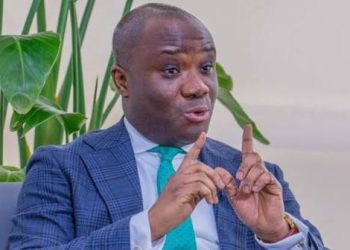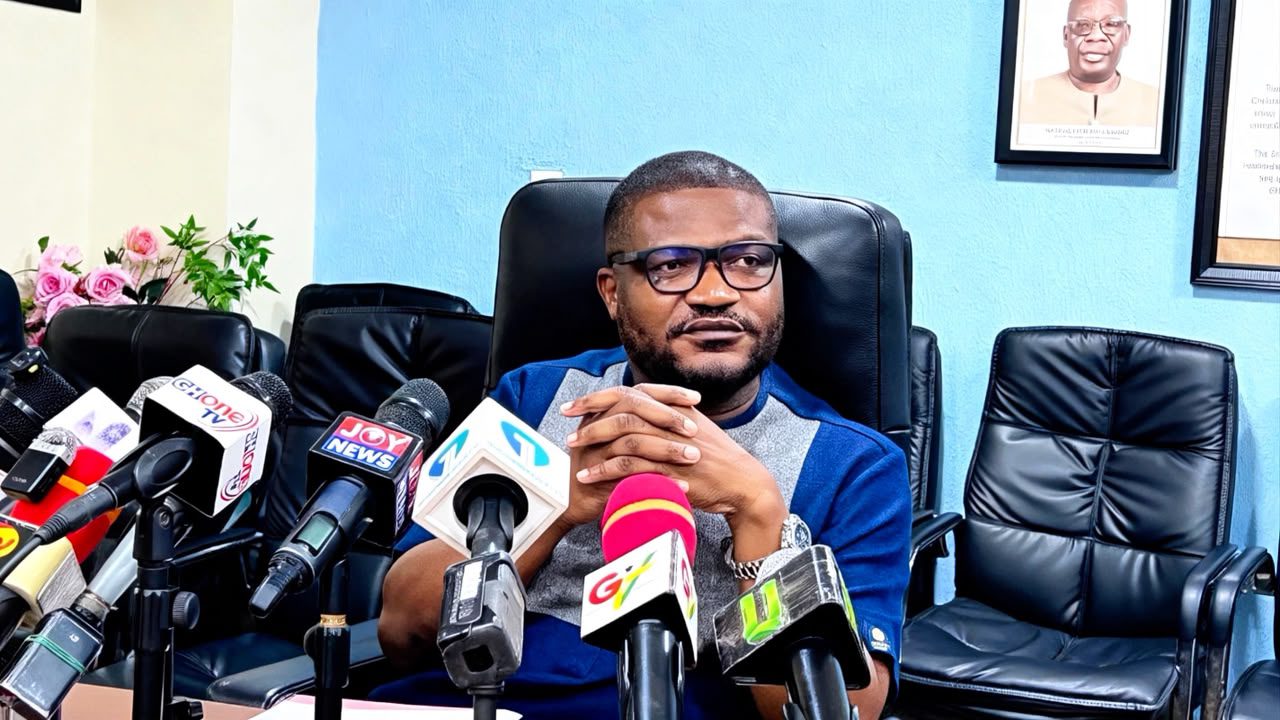
Minister of State in charge of Government Communications, Felix Kwakye Ofosu, has warned that the government will not abandon regulatory decisions it considers lawful merely because influential individuals mobilise public opposition.
He accused critics of the Minerals Commission’s handling of the Northern Ashanti Mines Limited dispute of attempting to discredit a statutory institution while giving insufficient consideration to the alleged regulatory breaches that prompted its intervention.
Mr Kwakye Ofosu insisted that although the government remained open to dialogue and the possibility of granting companies additional time to address infractions, such flexibility should not be mistaken for permission to disregard the law.
The exchanges arose during a discussion in which the government’s handling of Adamus Mines was cited as a possible precedent for extending similar concessions to Northern Ashanti Mines.
President John Dramani Mahama had, according to Mr Kwakye Ofosu’s earlier account, directed that Adamus Mines be given one year to regularise its operations following concerns about regulatory breaches, rather than the three-month period referred to during the discussion.
Responding to suggestions that Northern Ashanti Mines could receive similar consideration, the government spokesperson acknowledged that regulators could exercise discretion and allow companies time to remedy breaches.
“You can show clemency by giving people the benefit of the doubt and allowing them time to remedy a breach,” he stated.
However, he cautioned that the government’s commitment to promoting indigenous participation in the mining industry could not justify repeated violations of regulatory requirements.
He argued that Ghana could not build a credible regulatory system if indigenous companies were permitted to breach regulations and subsequently demand exceptional treatment whenever enforcement action became imminent.
Mr Kwakye Ofosu also defended the Minerals Commission’s statutory mandate, maintaining that the regulator’s account of alleged breaches should not be dismissed solely because the affected company disputed the allegations.
He said that, as a government official, he was inclined to give weight to the position of an institution established under Ghanaian law to regulate the mining industry, while recognising that its decisions remained subject to judicial scrutiny.
He questioned what he considered an unfair approach in which the regulator’s statements were rejected outright while the company’s claims were treated as credible without equivalent scrutiny.
The government spokesperson further criticised demands that the Minerals Commission publish all supporting documents on social media before its decisions could be considered legitimate.
He argued that regulatory institutions were accountable through established legal processes and could be required to produce documentary evidence before a competent court. “That they have not put it on Facebook doesn’t mean they are wrong,” he stated.
Mr Kwakye Ofosu maintained that the government would remain receptive to legitimate public concerns but would resist attempts to force a reversal of decisions it believed were justified.
“If we are convinced that we are doing the right thing, we will stand by it,” he declared.
He added that public criticism could sometimes persuade the government to reconsider its position, citing President Mahama’s previous intervention in a separate regulatory matter involving the National Communications Authority as an example of the administration’s willingness to exercise clemency.
However, he insisted that such flexibility should not be interpreted as weakness or an obligation to retreat whenever regulatory enforcement generated controversy.
The remarks come amid the continuing dispute over the termination of Northern Ashanti Mines’ mineral rights.
At an October 29, 2026 press conference, Minerals Commission Chief Executive Officer Isaac Tandoh alleged that the company had accumulated approximately US$8.38 million in unpaid statutory fees despite repeated notices and opportunities to remedy the breaches.
Northern Ashanti Mines has challenged the termination, while its supporters have questioned the regulator’s conduct and the government’s handling of the dispute.
Mr Kwakye Ofosu urged commentators and media practitioners to assess the competing claims fairly, warning against what he described as a tendency to automatically support private interests whenever they came into conflict with state institutions.
He maintained that businesses were entitled to challenge government decisions, but regulatory bodies must equally be allowed to exercise their lawful powers without being subjected to undue public pressure.