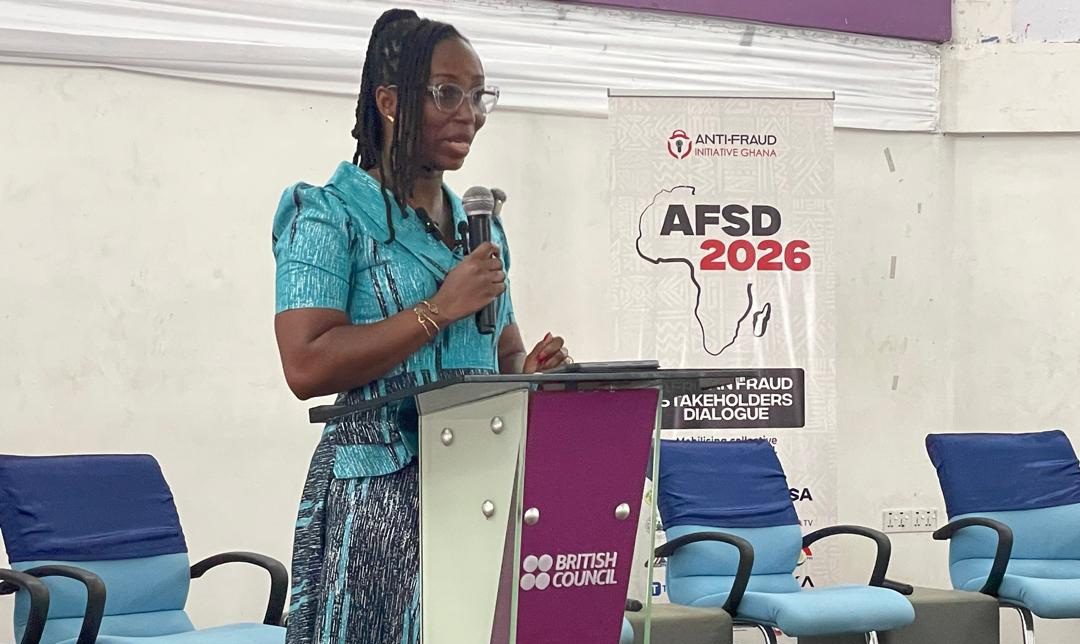
QNET’s Head of Global Compliance, Naana Quartey, has called for closer collaboration between the company and law-enforcement agencies to identify and dismantle criminal networks allegedly misusing the QNET brand to defraud victims.
Speaking at the African Fraud Stakeholders Dialogue (AFSD) 2026, Ms Quartey acknowledged that QNET’s name has been associated with cases involving alleged fake job offers, deceptive recruitment, suspicious travel arrangements and financial fraud.
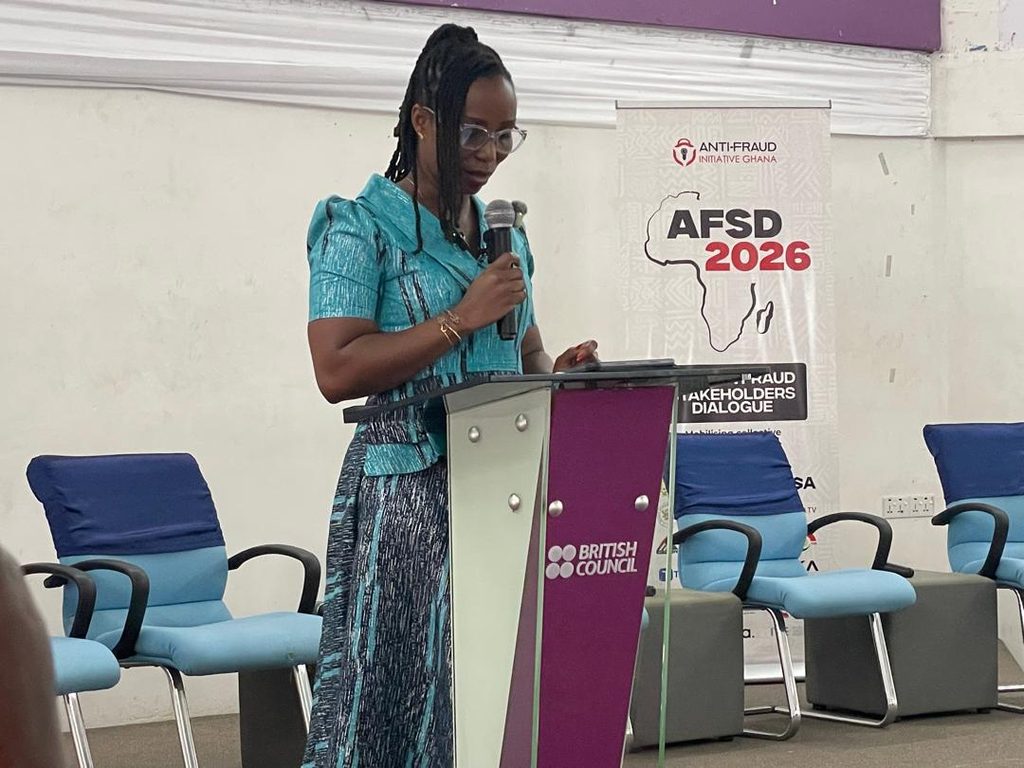
She, however, stressed that such activities do not form part of QNET’s legitimate business and urged investigators to look beyond the company’s name to identify the individuals and networks actually responsible.
According to her, QNET is a direct-selling company that sells products and does not sell jobs or promise overseas employment: “We do not sell jobs. We do not issue employment contracts in exchange for payment. We do not arrange visas or immigration or migration for people. We do not promise overseas employment.”
Ms Quartey warned that anyone asking people to pay money in exchange for a job through QNET is making a false representation. “If someone says, ‘Pay this money and QNET will give you a job,’ that is a big lie,” she said.

She said criminal networks had in some cases used the QNET name to give credibility to schemes involving false employment offers, deceptive recruitment and travel arrangements, particularly targeting young people with promises of opportunities abroad.
Ms Quartey said the company was not seeking to distance itself from the problem but wanted law-enforcement agencies to distinguish between legitimate QNET operations and criminal activity carried out through the misuse of its brand.
She introduced what she described as an important distinction in recent engagements with law-enforcement agencies across the region, including Interpol, concerning the criminal misuse of QNET’s name, identity and business model.
She warned that simply describing every incident as a “QNET case” could cause investigations to stop at the wrong point.

Instead, she said investigators should establish who recruited the victim, who made the false call, who received the money, who arranged the travel, who controlled the location and who benefited from the scheme.
“Those questions take us beyond the label and closer to the people and networks actually responsible,” she said.
Ms Quartey said QNET was prepared to support investigations by verifying whether suspects were registered with the company and providing relevant information available to it.
She said the company could investigate breaches of its internal policies and suspend or terminate distributors who violated its rules, but did not have the authority to arrest suspects, execute warrants, conduct criminal investigations across borders or prosecute offenders.
She therefore called for a stronger information-sharing partnership between QNET, the police, immigration authorities, Interpol and other relevant institutions.
According to her, different institutions may each possess fragments of information about a criminal operation, including phone numbers, locations, distributor accounts, payment trails and cross-border movements.
When combined, she said, such information could expose wider criminal networks and support law-enforcement action.
“Criminals do not wait for institutions to finish writing letters to one another,” she said, stressing the need for trusted channels through which intelligence can be shared quickly.
Ms Quartey also highlighted the regional nature of organised fraud, noting that a victim could be recruited in one country, transported through another, while money and the individuals controlling the operation are located elsewhere.

She argued that a purely national response could leave law-enforcement agencies at a disadvantage against networks operating across borders.
“If criminals operate regionally while our response remains purely national, they retain the advantage.”
Ms Quartey maintained that whether the alleged perpetrator is an outsider impersonating QNET or a registered independent distributor who has violated the company’s rules, the company’s position remains the same.
“Criminal activity must be met, and those responsible must be held accountable.”
She said the ultimate objective should be to identify perpetrators, disrupt criminal networks and prevent further victims, while strengthening cooperation between QNET and law-enforcement agencies before rather than after arrests are made.