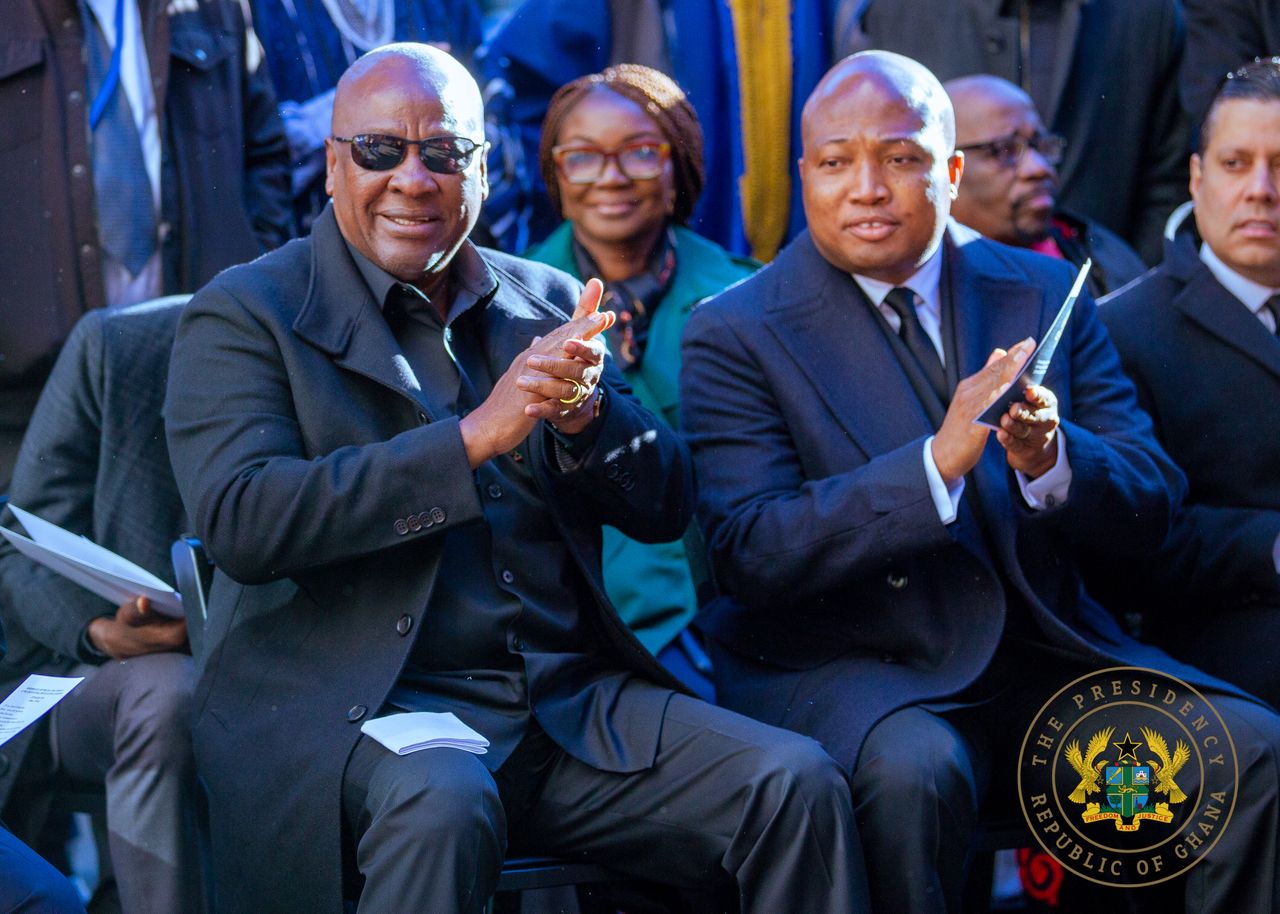
Minister for Foreign Affairs and Regional Integration, Samuel Okudzeto Ablakwa, has described the adoption of Ghana’s resolution at the United Nations declaring the transatlantic slave trade the gravest crime against humanity as a “historic and emphatic victory for justice.”
Addressing the media after the vote at the United Nations General Assembly, the Minister revealed that the resolution—A/80/L.48—was adopted with overwhelming support from member states.
“Today, the international community has taken a significant, considerate and historic step forward,” he said. “We have not simply passed a test we have affirmed a truth.”
According to him, 123 member states voted in favour of the resolution, 52 abstained, while only three voted against, underscoring what he called a strong global consensus.
“We have chosen remembrance over silence, dignity over erasure and shared humanity over division,” he stated. “This is an emphatic victory for justice, and our ancestors Africans and all people of African descent are honoured today.”
Mr. Ablakwa expressed profound appreciation on behalf of the African Group to all countries that supported the resolution, while also acknowledging differing views among some delegations.
“We thank those who engaged in this process in a spirit of dialogue, reflection and good faith,” he said. “We note the positions of those who were not in a position to support the resolution at this time.”
He emphasized that the adoption of the resolution marks a milestone, but not the end of the journey toward reparatory justice.
“This is not an arrival at a destination, but a major step in our ongoing journey and collective conversation for reparatory justice,” he noted. “We remain committed to continued engagement with all member states.”
Referencing remarks by President John Dramani Mahama, who initiated the resolution, the Minister highlighted the importance of language in shaping historical understanding.
“Today, through this resolution, the world has spoken with clarity and truth,” he said. “We have affirmed that the trafficking of enslaved Africans and their racialised chattel enslavement is the gravest crime against humanity.”
He stressed that the resolution is not about assigning blame, but about ensuring that history is neither forgotten nor denied.
“It is about creating space for truth, for education and for a more honest global conversation that allows us to move forward together,” he explained.
Mr. Ablakwa further noted that the resolution acknowledges the complexity of history while recognising the unique scale and impact of the transatlantic slave trade.
“To acknowledge this is not to diminish any other history, but to deepen our collective moral awareness,” he added.
He said the resolution paves the way for renewed commitments in remembrance, education, dialogue, and cooperation, while also opening broader discussions on reparatory justice.
“It is not a narrow or transactional concept,” he said. “It is a framework for healing, restoration and partnership.”
The Minister urged all member states to take concrete steps toward inclusive and good-faith dialogue on reparatory justice, stressing that the pursuit of justice must extend beyond remembrance.
“We cannot change history, but we can change how we remember it and in doing so, we can change what we carry forward,” he concluded.
Mr. Ablakwa also commended Ghana’s diplomatic team and paid tribute to President Mahama for his leadership.
“His vision, dynamism and humanity have been instrumental in bringing us to this historic moment,” he said.
Story: Patrick Asford Boadu