
Deputy Government Spokesperson Shamima Muslim has urged Ghanaian businesses to embrace innovation, technology and value addition to position Made-in-Ghana products for success across Africa, saying the future of local industry depends on its ability to compete beyond Ghana’s borders.
Delivering the keynote address at the FMCG Summit and Awards in Accra on behalf of the Chief of Staff, Mr. Julius Debrah, Ms. Muslim called on manufacturers and entrepreneurs to leverage the opportunities presented by the African Continental Free Trade Area (AfCFTA) by investing in innovation, modern production and digital transformation.
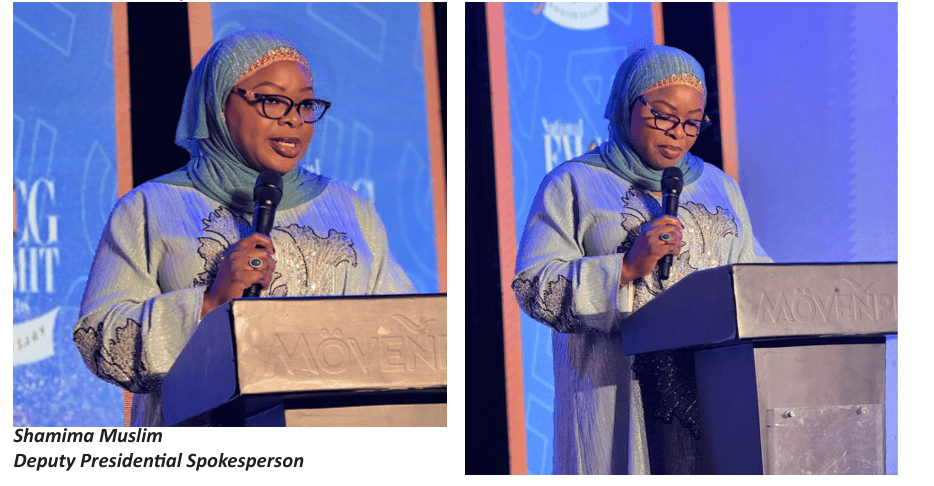
She identified technology, artificial intelligence, automation, digital payments, e-commerce and data-driven decision-making as critical tools for improving competitiveness and unlocking new business opportunities.
According to her, innovation is no longer optional but a strategic necessity for businesses seeking sustainable growth.
“The companies that will lead the next decade will not necessarily be the largest; they will be those that learn fastest, adapt quickest and innovate continuously,” she said.
Ms. Muslim stressed that Ghana’s Micro, Small and Medium Enterprises (MSMEs) can play a transformative role in the economy by embracing innovation, strengthening local manufacturing, improving logistics and building more efficient supply chains.
She urged businesses to move beyond competing solely within the domestic market and instead position themselves to take advantage of the opportunities presented by the AfCFTA, which provides access to a market of more than 1.4 billion people across the continent.
Highlighting the importance of value addition, she said Ghana must transition from exporting raw materials to producing higher-value finished goods capable of competing in regional and international markets.
Ms. Muslim noted that Ghana’s comparative advantage lies not only in its natural resources but also in its human capital, entrepreneurial talent and growing digital economy.
She encouraged greater investment in research and development, modern packaging, branding and improved production standards to enhance the competitiveness of Made-in-Ghana products.
The Deputy Government Spokesperson also called for stronger collaboration between government, financial institutions, manufacturers, technology firms and educational institutions to create an environment that supports innovation-led industrial growth.
She maintained that with the right investments in technology, innovation and value addition, Ghanaian businesses can successfully penetrate African markets, create jobs and contribute meaningfully to national economic transformation.