The Social Security and National Insurance Trust (SSNIT) is embarking on an ambitious expansion drive to add an average of 300,000 active members annually, as the Trust redesigns its operations to capture millions of Ghanaians working outside traditional formal employment.
Director-General Kwesi Afreh Biney says the transformation of Ghana’s labour market requires an equally significant change in how SSNIT identifies, reaches and serves workers, particularly those operating in the informal and digital economy.
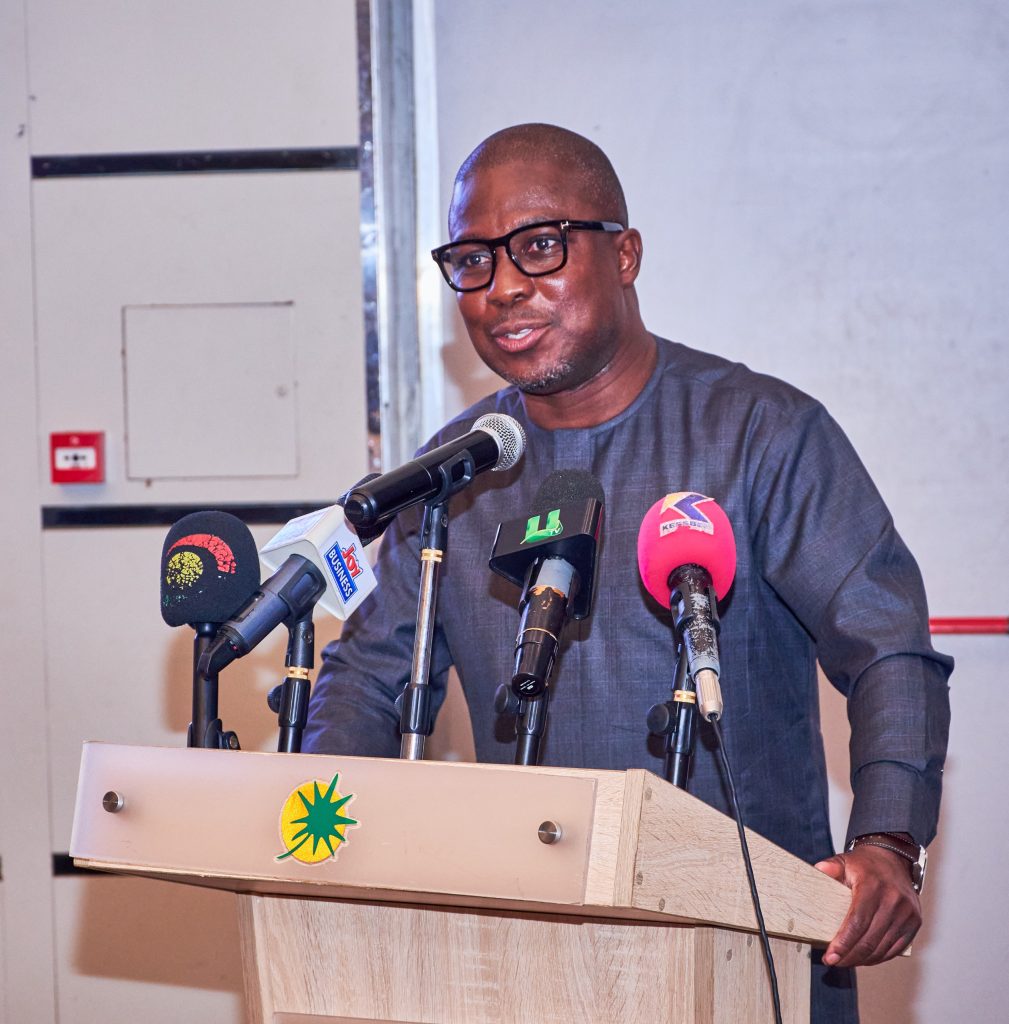
Speaking at an engagement between SSNIT Management and the leadership of organised labour at the Labadi Beach Hotel in Accra, Mr Biney disclosed that SSNIT’s active membership had reached 2,179,295 as of July 2026, up from just over two million at the end of 2025.

Under the Trust’s three-year corporate strategy, SSNIT plans to add an average of 300,000 active members every year, with active membership projected to reach approximately 2.8 million by 2028.
The membership drive comes as SSNIT seeks to respond to significant changes in Ghana’s labour market, particularly the growing number of people earning livelihoods outside conventional employer-employee arrangements.
Mr Biney said more than 80% of Ghanaian workers operate within the informal space, which has evolved beyond the traditional understanding of informal employment.
He cited online traders, remote professionals, technology workers providing services to companies abroad, self-employed professionals and other digitally enabled workers as examples of a changing workforce that the country’s pension system must increasingly accommodate.

Despite the overall growth in SSNIT membership, however, active participation from the informal sector remains comparatively low, with Mr Biney putting the number at about 55,000.
He said expanding pension coverage among these workers is therefore central to SSNIT’s long-term strategy, particularly as informal and non-traditional forms of employment account for a substantial share of Ghana’s workforce.
The gender profile of the Scheme also highlights the importance of extending coverage within the informal economy. While men constitute the majority of contributors in formal public and private employment, Mr Biney said women account for 53% of informal-sector membership, compared with 47% for men.
SSNIT Takes Services into Banking Halls
As part of the expansion strategy, SSNIT is moving its services closer to workers through partnerships with commercial banks rather than relying exclusively on traditional SSNIT branches.
Mr Biney said the Trust currently operates only 53 branches despite Ghana having more than 200 districts, making the establishment of conventional branches everywhere expensive and impractical.

SSNIT has consequently entered partnerships with banks, including GCB Bank, Ecobank, Fidelity Bank and Consolidated Bank Ghana, to establish co-location service points within existing banking halls.
Under the arrangement, SSNIT personnel operate from participating bank branches, allowing members to access services without the Trust bearing the full cost of establishing and maintaining separate offices.
The Director-General said the model reduces expenditure on rent, electricity, air-conditioning, generators and other operational costs associated with conventional branches.
SSNIT plans to expand the initiative to at least 100 co-location points by the end of 2027.
Pension Services Go Digital
The Trust is simultaneously accelerating its digital transformation to accommodate workers whose lifestyles and businesses increasingly depend on technology.
Mr Biney highlighted SSNIT’s 24-hour virtual branch, introduced in December 2024, which enables members to access services remotely rather than travelling to physical offices.
SSNIT has also enhanced its mobile application, self-service portal, USSD services, digital payment platforms and social media channels as part of efforts to make pension administration more accessible.
Benefits Beyond Retirement
SSNIT is also seeking to provide members with additional value during their working lives rather than limiting the benefits of participation to retirement.
Under its Member Value Proposition programme, the Trust has partnered with more than 49 businesses to provide discounts and other benefits to active members and pensioners.
The programme covers several sectors, including healthcare, hospitality, electronics, travel, food and beverage, fashion and other services.
Mr Biney also announced a partnership with Ecobank to provide eligible SSNIT members and pensioners with co-branded virtual Visa cards at no cost, designed in part to facilitate access to benefits available under the programme.
For pensioners, the Trust has introduced a telehealth service aimed at improving access to healthcare, particularly for retirees facing mobility difficulties or living in areas where physical access to healthcare may be challenging.
New Informal-Sector Initiative Coming
Mr Biney further disclosed that SSNIT is preparing another initiative specifically aimed at expanding pension coverage, which is expected to be unveiled by the end of September 2026.
He did not disclose details of the initiative, indicating that the Trust would provide further information at the appropriate time.
The Director-General said innovation and expanded coverage would remain central to SSNIT’s efforts to adapt to Ghana’s changing employment landscape and bring more economically active people into the national social security system.
He also appealed to organised labour to support efforts to improve pension literacy and encourage participation, stressing that the future strength of the Scheme will depend partly on expanding its contributor base.
For SSNIT, the challenge is increasingly about building a social security system capable of serving not only workers in conventional employment, but also the growing number of Ghanaians earning their livelihoods through informal, flexible and digitally enabled work.