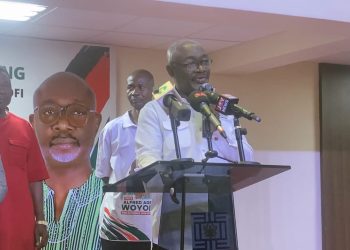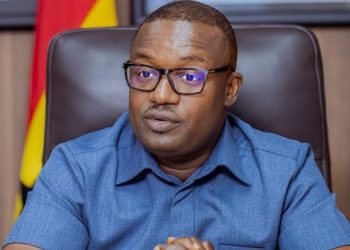
Former National Investigations Bureau (NIB) operative Richard Kumadoe has cautioned against proposals to permanently station lawyers at police stations and other law enforcement institutions, warning that such arrangements could create conflicting lines of authority and undermine established operational structures.
Speaking to Sena Nombo on Radio Gold, the founder of Independent Elections Security and Compliance Watchers said efforts to strengthen legal oversight within security institutions must take account of their command systems, professional regulations and operational responsibilities.
His comments come amid renewed discussions about accountability within Ghana’s criminal justice system following a directive issued by Attorney-General and Minister for Justice, Dr Dominic Akuritinga Ayine, on November 2, 2026.
The directive was issued to address recurring problems identified in criminal investigations, including detention beyond 48 hours without court appearance, arrests for civil debt recovery, coerced or improperly recorded statements, unlawful searches and the mistreatment of suspects before charge.
It seeks to enforce constitutional safeguards, improve the quality and admissibility of evidence, prevent avoidable compensation claims against the state and strengthen public confidence in law enforcement.
Against this background, Mr Kumadoe argued that while legal oversight was necessary, proposals to station lawyers permanently within security institutions required careful consideration of their operational implications.
He explained that law enforcement and intelligence institutions already operated under established rules governing recruitment, professional conduct, confidentiality and the exercise of authority.
According to him, introducing lawyers into these institutions without clearly defining their employment and reporting relationships could create administrative and operational difficulties.
“Who employs you? Command and control issues will come. Who do you take instructions from?” he questioned.
Mr Kumadoe noted that security institutions could benefit from periodic legal reviews and independent assessments, particularly where such exercises were intended to identify weaknesses and recommend improvements.
However, he maintained that permanent legal supervision arrangements should not be introduced without considering their implications for institutional authority and accountability.
The security consultant explained that some law enforcement agencies already recruited legal professionals to work within their established structures, suggesting that reforms should build on existing arrangements rather than create competing centres of authority.
He also emphasised the importance of distinguishing between legitimate criminal investigations and disputes that may involve both civil and criminal liability.
Mr Kumadoe argued that the existence of a financial dispute did not automatically exclude the possibility of criminal conduct, stressing that some circumstances could give rise to both civil proceedings and criminal prosecution.
His remarks followed concerns raised in the Attorney-General’s directive about the use of criminal investigative powers to recover civil debts.
The former intelligence operative urged policymakers to draw lessons from international practices while ensuring that proposed reforms remain consistent with Ghana’s institutional framework.
He maintained that improving law enforcement accountability required clear responsibilities, professional training and effective oversight without creating uncertainty over operational authority.
Mr Kumadoe called for reforms that strengthen constitutional compliance while preserving the ability of investigative agencies to carry out their lawful responsibilities effectively.