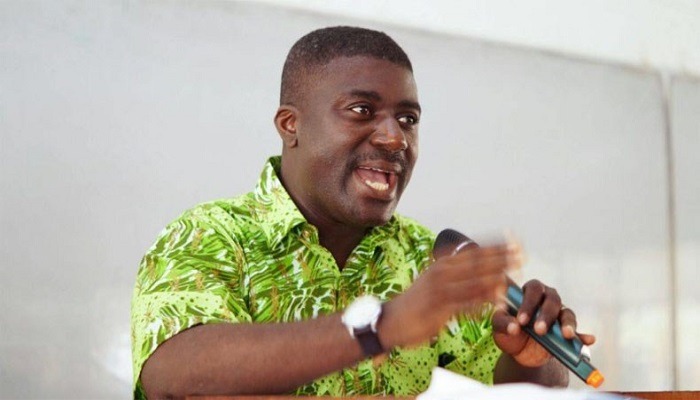
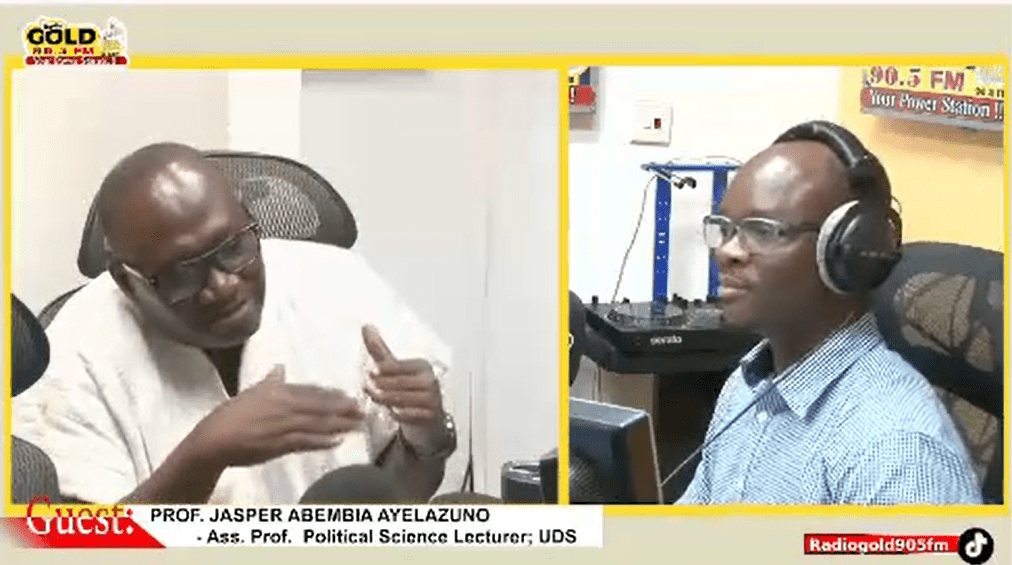
A Political Science lecturer at the University for Development Studies (UDS), Prof. Jasper Abembia Ayelazuno, says outgoing Electoral Commission (EC) Deputy Chairperson, Dr. Bossman Asare, should have resigned from the Commission years ago when its actions became detrimental to the democratic rights of Ghanaian voters.
Speaking on Gold Morning Conversation with Sena Numbo, Prof. Ayelazuno cited three key instances during which he believes Dr. Asare should have stepped down from his position.
The SALL Saga
Prof. Ayelazuno pointed to the Santrokofi, Akpafu, Likpe and Lolobi (SALL) constituency controversy as the most compelling reason for Dr. Asare to have resigned.
“As a political scientist who believes that power belongs to the people, I would have done whatever it takes to ensure that the people were represented,” he said.
“The best time for him to have resigned was during the SALL saga, when the people of SALL were denied representation. Democracy is about the people. To deny even one person the right to representation is a serious matter. I could not have remained part of the Commission under those circumstances,” he added.
The 2020 CI on Voter Registration
Prof. Ayelazuno also criticised the Constitutional Instrument (C.I.) that replaced C.I. 91 ahead of the 2020 voter registration exercise.
“That C.I. was an attack on the right of ordinary people to vote. How many ordinary Ghanaians possess passports? The Electoral Commission’s responsibility is to make voter registration accessible to the ordinary citizen. Voting is the primary means by which citizens choose those who govern them. From a participatory democracy perspective, the Commission should be removing barriers, not creating them,” he stated.
Voter Registration During COVID-19
The UDS lecturer further argued that the voter registration exercise conducted during the COVID-19 pandemic exposed many Ghanaians to unnecessary health risks.
“I monitored the exercise in Tamale, Bolgatanga and several communities around Bolgatanga. People were exposing themselves to danger. Registration centres became potential super-spreader events. Statistics indicate that many people contracted the virus, and lives were lost during that period. We were in the midst of the pandemic, and social distancing protocols were largely not observed, despite assurances from the authorities,” he recounted.
“As a political scientist, I would have been reluctant to be part of a team undertaking an exercise that potentially placed lives at risk,” he added.
Prof. Ayelazuno noted that Dr. Asare is leaving the Electoral Commission without citing any specific concerns regarding his tenure, but rather to return to academia.
“He was a good lecturer in terms of scholarship. As political scientists, we are expected to put our theories into practice. He entered public service, and a number of significant events occurred during his time at the Commission,” he said.
“But if he truly held those principles, the SALL issue would have been the appropriate moment to resign. People would have applauded him for standing up for the rights of citizens. At this point, however, he is leaving not because of any particular issue, but simply to return to academia.”
Story by: Ruth Quaye