The drama surrounding the $100 million Black Volta Gold Project has taken a fiery twist, as the lawyer for Engineers & Planners (E&P), Bobby Banson, delivers a searing rebuttal to claims made by Azumah Resources Ghana Limited.
In a no-holds-barred revelation, Banson lays bare what he describes as the “truth behind the noise,” accusing Azumah of double standards, selective memory, and a desperate attempt to rewrite the facts after gold prices surged.
“They came to us for help,” Banson declared, dismantling claims that E&P sought to acquire the project on its own accord. He paints a picture of a company on the brink, battling court judgments, drowning in debt, and turning to E&P as a last hope.
What followed, he argues, was a clear agreement, signed and sealed, for both the acquisition and development of the gold project. But now, Banson says, with the market’s value rising, Azumah appears to be backpedalling, using media statements and PR tactics instead of honouring legal commitments.
Azumah Approached E&P for Rescue, Not the Other Way Round
Giving the backstory, Banson stressed that it was Azumah, not E&P, that made the first move. “E&P did not approach the owners of Azuma Resources to buy. They came to E&P because at the time the company was sinking,” he explained.
According to him, the Ghana Revenue Authority had obtained judgments from both the High Court and the Court of Appeal, confirming that Azumah was indebted to the state to the tune of over $3 million. “They had written a letter to the company to say, if you did not pay us our debt by this date, we are going to sell your assets as required by the Revenue Administration Act,” Banson revealed.
With shareholders unwilling to reinvest, Azumah turned to E&P to rescue the collapsing business.
The Two-in-One Agreement
Banson clarified that what was signed was no ordinary development agreement. “It was an agreement to acquire and develop the assets,” he said.
Azumah requested $100 million. E&P agreed to pay $50 million within 10 months of signing and the remaining $50 million by 2026. In the meantime, both parties were to act as partners, operating in a joint venture capacity until full payment was made.
“The agreement also indicated that as soon as the agreement is signed, E&P would take over the responsibility of raising the finance to develop the project,” he added.
Financing Talks with EBID
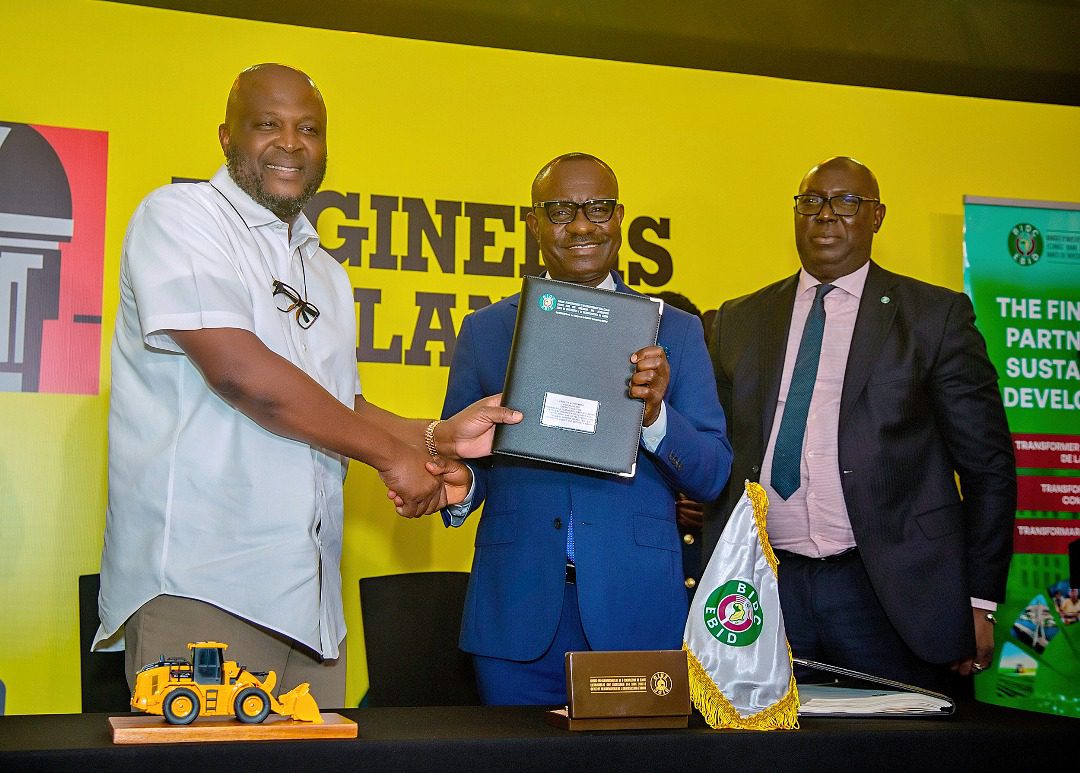
Following the agreement, a finance committee made up of E&P personnel was formed to raise funding using Azumah Australia’s books. Banson disclosed that the first engagement was with the ECOWAS Bank for Investment and Development (EBID), which E&P signed with to support the project.
“EBID wanted to be sure that the shareholders were aware and had approved this. The shareholders in Australia came to Ghana and then went to Lome, Togo. All of us met EBID, did the presentation, then EBID gave an approval in principle… to give the funding to develop the project.”
However, Azumah Australia’s struggling financial position meant their books could not be used to secure funding. E&P then offered to use its own books to raise the capital.
A Shift in Strategy: Full Upfront Payment
Banson noted that when E&P took on the financial responsibility, they proposed paying the full $100 million upfront instead of in instalments. This revised arrangement was captured in email correspondence and accepted by Azumah shareholders.
“There was even agreement to extend the first $50 million to 31st December 2024, instead of the originally agreed June 2024,” he said. According to him, things were going smoothly until the price of gold began to rise. That’s when tensions began.
When Gold Prices Rose, So Did the Tensions
Banson noted that a representative from Iberia Capital, Azumah’s equity capital partner, insisted that the rising gold prices meant the contract needed to be renegotiated. “We said this is a contract that has been signed with shareholders. We cannot just say that we are renegotiating, because there is no legal basis for it.”
To protect its legal position, E&P commenced arbitration at the International Chamber of Commerce in London, seeking specific performance of the contract. Azumah’s shareholders, in response, filed a counterclaim not to cancel the contract, but to demand interest on delayed payments.
Court Affirms E&P’s Rights
In parallel, E&P also went to court in Ghana to seek an injunction, asking the court to prevent any action by Azumah that could jeopardise the agreement.
“The judge essentially held that until the arbitration is determined, the contract has not been terminated between the parties,” Banson said. “E&P still has the sole responsibility to raise the funds for the project.”
According to him, this decision, delivered by the High Court of Ghana on 28th May 2025, reaffirms that the agreement with EBID is valid and enforceable.
Why the Silence from Azumah’s Directors?
Banson also took issue with recent press statements released in Azumah’s name. He questioned their credibility, noting that no director had signed them.
“You see that that statement… is not signed by any director of Azumah. Why is that?” he asked. “Because all the directors of Azumah are aware of the decision of the High Court. And so they know that signing any such documents will be tantamount to contempt of court.”
He accused Azumah of hiding behind PR agents and representatives of Iberia Capital who, he pointed out, are not even parties to the original agreement.
By Victor Wilson Lavor