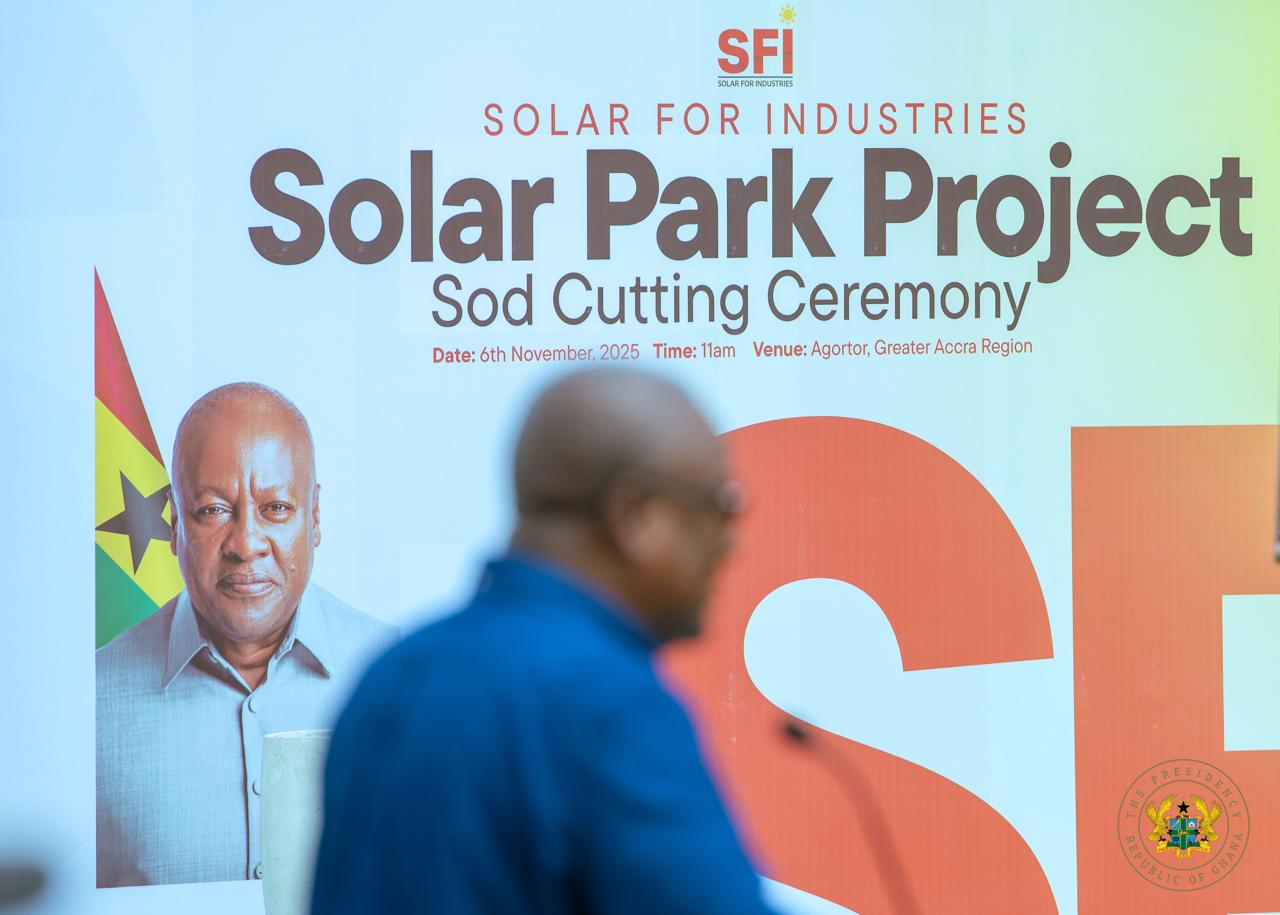
Solar For Industries Limited (SFI) has commenced work on a landmark solar energy project at Agortor near the Dawa Industrial Zone, in what is set to become one of the largest solar power installations in West Africa. The project targets a total capacity of 1,000 megawatts peak (MWp) by 2032.
The initiative begins with an initial 200 MWp utility-scale solar plant, which will be the largest private-sector solar farm in sub-Saharan Africa, excluding South Africa. Unlike typical power plants that feed into the national grid, the energy from this solar park will be supplied exclusively to the Enclave Power Company (EPC) to power industrial clients within Dawa City, the Tema Free Zones Enclave, and surrounding industrial hubs.
According to project timelines, the first 100 MWp installation is expected to be completed by December 2026, with the remaining 100 MWp of the initial phase scheduled to follow within nine months. The subsequent expansion to 1,000 MWp will incorporate utility-scale battery storage systems to enhance reliability and grid stability.
SFI is a subsidiary of Quarm Investments Limited, the Ghanaian company currently overseeing the redevelopment of the Seglemi Housing Estate. The company says the project reflects its guiding belief that “Ghanaians Can Do It.”
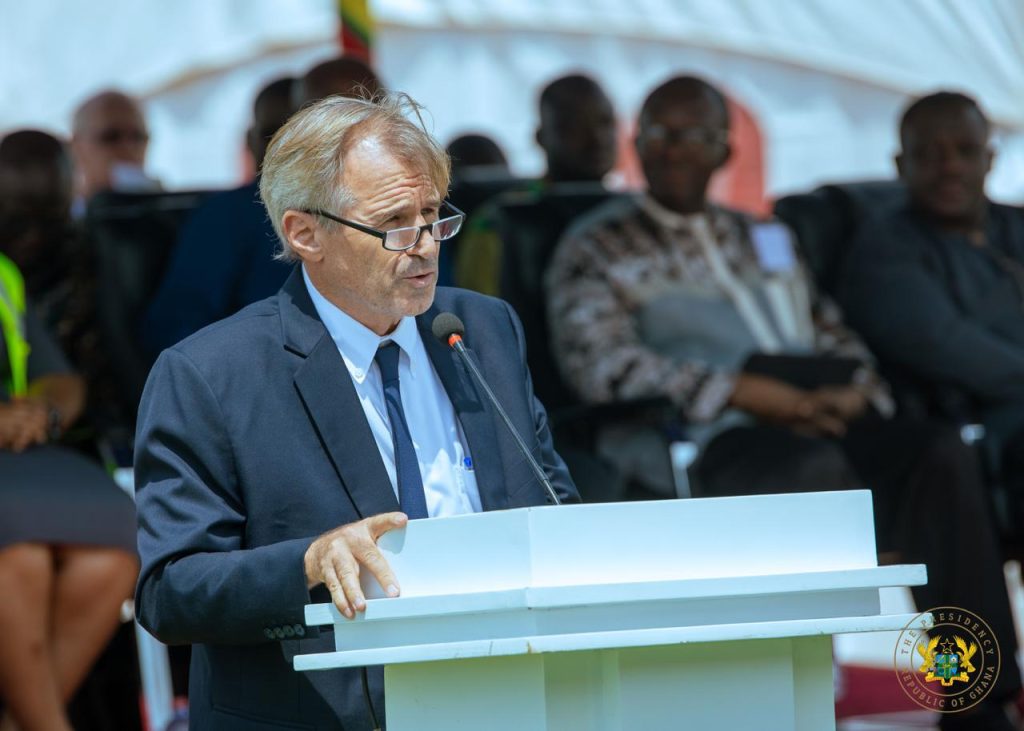
SFI aims to emerge as a leading renewable energy player in Ghana and the broader West African region, delivering reliable, cost-competitive and sustainable electricity for industry.
The project is also expected to enhance Environmental, Social and Governance (ESG) performance for companies operating in Ghana’s industrial zones, thereby attracting global partnerships and aligning businesses with international sustainability practices.
Power evacuation will be carried out through EPC’s 366 MVA substation at Dawa. The facility will use robotic panel cleaning systems, with water supplied by LMI’s Dawa Water Treatment Plant, which itself will be powered by the solar installation — establishing a circular and self-sustaining operating model.
Once completed, the 200 MWp phase will generate energy equivalent to 2.5% of Ghana’s current national electricity demand. The full 1,000 MWp capacity will supply over 10% of current electricity needs — enough to power the entire Dawa Industrial Zone and the rapidly developing Dawa City.
Currently, Ghana’s energy mix is dominated by oil and gas thermal plants, representing approximately 69% of installed capacity, while solar accounts for less than 3%, despite the country’s strong solar potential.
National policy frameworks such as the Renewable Energy Master Plan (2019) and the National Energy Transition Framework (2022–2070) aim to increase renewable energy penetration to at least 10% by 2030, in line with Ghana’s Paris Agreement commitments.
The Solar For Industries project is directly aligned with these national goals—diversifying Ghana’s energy mix, improving long-term energy security, and reducing carbon emissions.
The project is expected to deliver several key benefits, including:
Stable Power Supply: Reliable and uninterrupted electricity for industrial operations
Cost Efficiency: Predictable and competitive tariffs insulated from fluctuations in national energy pricing
Sustainability Advantage: Improved green credentials to help industries meet export and supply chain sustainability standards
Climate Impact: A measurable reduction in Ghana’s carbon footprint and contribution to global climate action efforts
Story: Patrick Asford Boadu