
The Deputy Minister for Communications, Digital Technology and Innovations, Hon. Mohammed Adams Sukparu, has described the launch of SSNIT’s Virtual Branch as a strategic national intervention that aligns squarely with President John Dramani Mahama’s 24-hour economy and national reset agenda, aimed at expanding access to essential public services through technology and innovation.
Delivering the keynote address at the launch in Accra, the Deputy Minister said the initiative reflects government’s commitment to building a digitally inclusive economy where workers can access critical services conveniently, efficiently, and with dignity, anytime and anywhere.
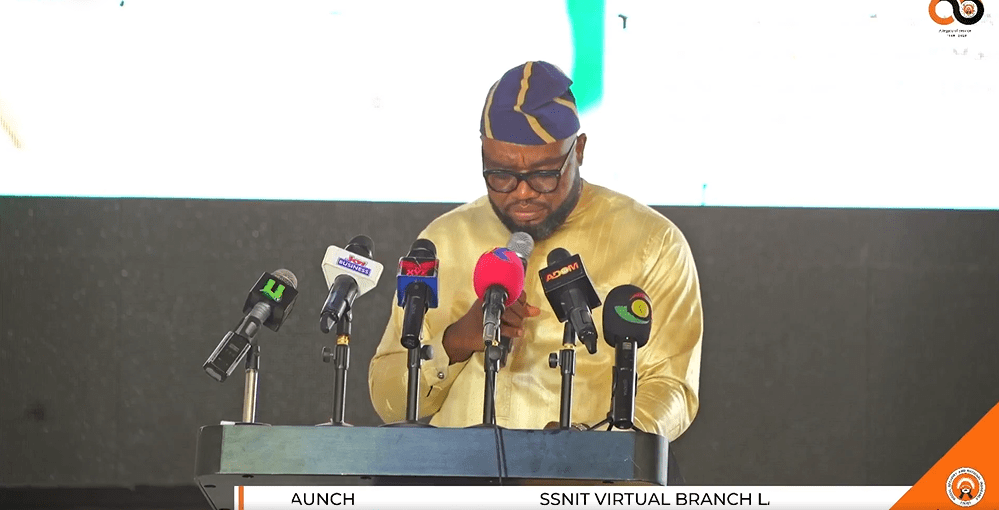
“At the heart of this vision is a simple principle: every worker in Ghana must have access to essential services conveniently, efficiently, and with dignity. The SSNIT Virtual Branch is a critical realization of this principle,” he said.
Hon. Sukparu noted that the successful rollout of platforms such as the SSNIT Virtual Branch is anchored in sustained government investment in digital infrastructure, including expanded broadband connectivity, strengthened cybersecurity systems, improved digital identification frameworks, and enhanced interoperability across public sector platforms.

According to him, these foundational investments enable public institutions to innovate, reduce operational costs, improve service delivery, and meet the rising expectations of a digitally aware workforce.
“Our government continues to strengthen the country’s digital infrastructure, enabling institutions like SSNIT to innovate and respond to the realities of today’s economy,” he stated.
The Deputy Minister highlighted the rapid transformation of Ghana’s labour market, noting the growing presence of gig workers, freelancers, remote professionals, digital creators, artisans, and small business owners who operate outside traditional employment structures.
He said these workers, many of them young, mobile, and digitally fluent, are expected to form a significant portion of Ghana’s pension contributors in the coming years, making it imperative for pension institutions to evolve.

“Our pension institutions must meet workers where they are, on their phones, on digital platforms, and across virtual spaces. The SSNIT Virtual Branch responds directly to today’s reality,” he said.
By providing remote access to pension services, the platform lowers barriers to participation and brings workers in non-traditional arrangements closer to the national pension system.

Hon. Sukparu said the Virtual Branch enhances transparency by making it easier for contributors to engage with SSNIT, ask questions, and see the value of their contributions, an expectation he said is increasingly common among modern workers.
He described a strong pension system as more than a retirement safety net, stressing its role in national stability, economic confidence, and social cohesion.

“It assures every worker in Ghana that their future is protected, and their contributions are managed responsibly,” he noted, adding that the Virtual Branch reinforces this assurance.
Commending SSNIT’s leadership and staff, the Deputy Minister praised the institution for embracing innovation and demonstrating that public service delivery can be modern, responsive, and forward-looking.

He called on labour unions, industry players, and the media to champion the initiative and encourage workers, especially those in the gig and informal sectors to enrol in the pension scheme as soon as they begin earning.
“The SSNIT Virtual Branch is more than just a digital platform. It represents the Ghana we are building—one where technology fosters trust, improves services, and broadens access for all,” he said.
Hon. Sukparu officially declared the Virtual Branch launched, expressing optimism that such initiatives will accelerate Ghana’s journey toward a more digital, inclusive, and prosperous economy.