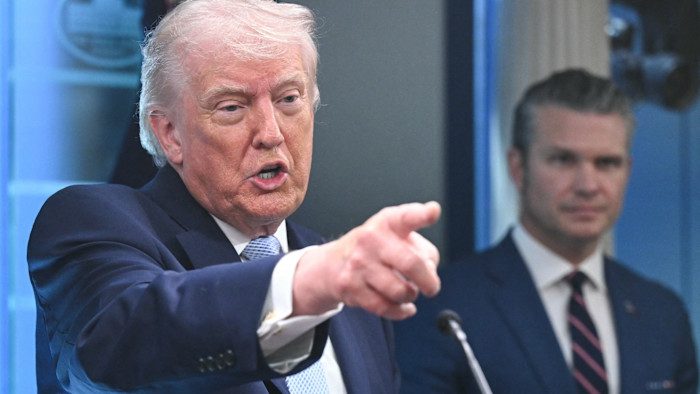
U.S. President Donald Trump has announced plans to impose a naval blockade on the Strait of Hormuz, escalating tensions with Iran despite the waterway already being effectively restricted by Iranian forces.
The move comes after 21 hours of failed peace talks between the United States and Iran in Islamabad, where negotiations broke down over Tehran’s nuclear ambitions and control of the strategic shipping lane.
A Strait Already Under Pressure
The Strait of Hormuz, a narrow passage between the Persian Gulf and the Arabian Sea, carries roughly 20% of the world’s oil supply. In recent weeks, Iran has tightened its grip on the route—reportedly laying mines, restricting access, and even charging tolls to selected vessels.
This has already disrupted global energy markets and driven up oil prices.
So Why a U.S. Blockade?
At first glance, Trump’s move appears redundant—blockading a waterway that Iran is already interfering with. But analysts say the U.S. strategy is fundamentally different.
Rather than shutting the strait entirely, the U.S. aims to:
- Target Iran’s economy by blocking ships going to and from Iranian ports
- Stop Iran from profiting through oil exports or toll collection
- Reassert control over global shipping lanes and restore access for U.S. allies
In effect, the U.S. is trying to turn Iran’s blockade back on Iran itself—denying Tehran the leverage it gained by disrupting the route.
Economic and Strategic Motives
Trump has also framed the move as a way to stabilize global oil markets and even boost U.S. energy exports, urging countries affected by the الأزمة to buy American oil instead.
By restricting Iranian exports while keeping the route open for others, Washington hopes to:
- Lower global supply uncertainty
- Shift energy demand toward the United States
- Pressure Iran into concessions
Risk of Escalation
However, the plan carries serious risks. Iran has warned that any enforcement of a U.S. blockade would be considered an act of war, raising fears of direct military confrontation.
Experts caution that enforcing such a blockade would be complex and could:
- Trigger retaliation from Iran or allied groups
- Further spike oil prices
- Draw other countries into the conflict
A “Blockade vs. Blockade” Standoff
The result is an unusual situation:
- Iran is restricting the strait to gain leverage
- The U.S. is proposing a counter-blockade to remove that leverage
Instead of duplicating Iran’s actions, Washington is attempting to reshape control of the strait, turning a global chokepoint into a tool of economic and military pressure.
What Happens Next
With both sides holding firm and diplomacy stalled, the Strait of Hormuz is becoming the focal point of a high-stakes standoff—one that could have global consequences for energy, trade, and security.