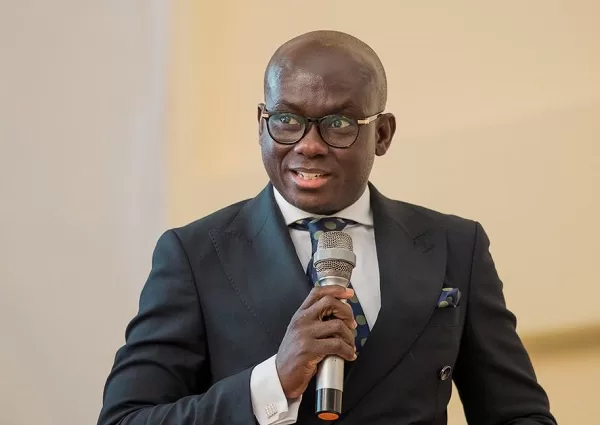
Former Minister for Lands and Natural Resources and Member of Parliament for Tamale Central, Inusah Fuseini, has called for a comprehensive review of criminal prosecutions undertaken during the tenure of former Attorney-General Godfred Yeboah Dame, arguing that recent appellate court decisions have raised serious questions about the conduct of some high-profile cases.
Speaking on Gold Morning Conversation, Mr Fuseini criticised former President Nana Addo Dankwa Akufo-Addo’s appointment of Mr Dame as Attorney-General, contending that the office departed from its constitutional duty to pursue justice and instead became a vehicle for prosecuting political opponents.
His remarks were in response to an article published by Mr Dame on August 1, 2026, in which the former Attorney-General defended the prosecution of former Microfinance and Small Loans Centre (MASLOC) Chief Executive, Sedina Christine Tamakloe-Attionu, following her acquittal and discharge by the Court of Appeal.
Mr Fuseini dismissed suggestions that Mr Dame could have been unaware of the appeal process in the MASLOC case, arguing that the timelines governing criminal appeals are clearly prescribed by law and well understood by every prosecutor.
According to him, any prosecutor who secures a conviction knows that an accused person has a statutory period within which to challenge the judgment, making claims of ignorance difficult to sustain.
He consequently called for a review of prosecutions initiated under Mr Dame’s tenure to determine whether justice was consistently pursued in accordance with the law.
Drawing a comparison with the prosecution of Minority Leader Dr Cassiel Ato Forson and businessman Richard Jakpa over the ambulance procurement case, Mr Fuseini argued that the outcome of several high-profile prosecutions during Mr Dame’s tenure warrants closer scrutiny.
He maintained that the Attorney-General’s constitutional obligation is not merely to secure convictions but to ensure that justice is done, insisting that prosecutorial decisions must always be guided by the evidence rather than political considerations.
“The Attorney-General’s duty is to seek justice, not convictions,” he said.
Mr Fuseini further alleged that, under Mr Dame’s leadership, the Attorney-General’s Office increasingly lost sight of that constitutional responsibility.
“When the Attorney-General turns into a political animal chasing political opponents, then we have a problem,” he stated.
He said a thorough review of the prosecutions handled during Mr Dame’s tenure would help restore public confidence in the administration of criminal justice and reinforce the principle that prosecutorial decisions should remain independent, impartial and evidence-driven.
Story by Ruth Quaye