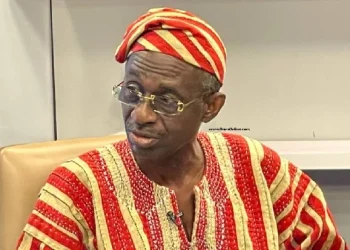
Professor of Finance at the University of Ghana, Professor Godfred A. Bokpin, has warned that economic growth without corresponding job creation will do little to improve the living conditions of Ghanaians.
He said Ghana and other African countries must pursue economic policies that deliver both sustainable growth and sufficient employment opportunities, particularly as the continent’s youthful population continues to expand.
Professor Bokpin made the remarks at SYPALA 2026, organised by the IMANI Center for Policy and Education under the theme “Africa’s Ascent: Forging Resilient Economies and Inclusive Governance.”
The event brought together students, young professionals, academics, entrepreneurs and policymakers to discuss Africa’s economic future, governance and development.
Professor Bokpin cautioned that an increase in Gross Domestic Product (GDP) does not necessarily translate into lower unemployment, stressing that economic growth must be deliberately linked to the creation of decent and sustainable jobs.
“Because you can have GDP growth, and unemployment will be going up in that way. In fact, that is what Ghana has celebrated over the years,” he said.
He noted that Ghana and other African countries were experiencing a significant increase in the number of people entering the labour market, creating an urgent need for policies capable of generating jobs at scale.
According to him, the growing working-age population presents both an opportunity and a challenge for African governments.
He therefore urged policymakers to design an economic system capable of absorbing the increasing number of young people entering the labour force and providing them with productive opportunities.
Professor Bokpin said the continent’s youthful population could become a major driver of economic transformation if governments were able to provide the necessary jobs, skills and opportunities.
Also speaking at the event, Founder and Executive Director of Mentoring Women Ghana, Brigitte Dzogbenuku, said Africa’s youthful population could either become a major development advantage or a source of instability, depending on how effectively young people were educated, employed and included in national development.
“The youthful population can become a dividend or a danger, depending on whether the people are educated, employed, included, and trusted with responsibilities,” she said.
Ms Dzogbenuku said Africa’s future was closely tied to the quality of leadership on the continent, particularly who leads, how they lead and whether leaders are prepared to take responsibility for national development.
She encouraged young Africans to aspire to leadership positions and play a greater role in shaping the future of their countries.
“Indeed, we should be striving to take up leadership of our country as a whole,” she said.
She also urged the younger generation to move beyond the bitterness and painful experiences of previous generations and focus on building a new future for Africa.
Ms Dzogbenuku argued that young people must be prepared to take responsibility for the continent’s development rather than allowing themselves to be defined by the challenges inherited from the past.
President of Imani Africa, Franklin Cudjoe, who also addressed the conference, called for greater policy discipline, institutional competence and responsible management of public finances and natural resources.
Mr Cudjoe argued that economic policies and fiscal laws would have limited impact if governments failed to respect and implement them effectively.
He also stressed then importance of balancing economic development with environmental protection, particularly in the exploitation of Africa’s natural resources.
The discussions at SYPALA 2026 highlighted the need for African countries to pursue economic growth that creates jobs, strengthens institutions and provides meaningful opportunities for the continent’s rapidly growing youth population.
The speakers said effective leadership, sound economic policies and greater inclusion of young people would be critical to transforming Africa’s demographic growth into a sustainable development advantage.
Story by Osman Issah Abadoo