Ghana has fully deployed a national cocoa traceability system across all cocoa-growing areas, positioning the country to meet the European Union’s deforestation requirements when they take effect on December 30, 2026, according to the Ghana Cocoa Board (COCOBOD).
COCOBOD Chief Executive Officer Dr Ransford Anertey Abbey says the Ghana Cocoa Traceability System will enable the country to demonstrate that cocoa supplied to the European market is traceable, deforestation-free, child-labour-free and legally produced.
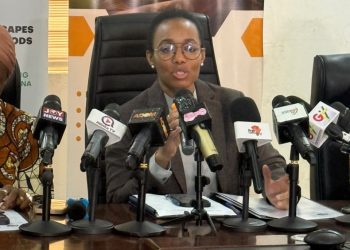
Dr Abbey disclosed this at the announcement of the 2026/2027 cocoa producer price at Cocoa House in Accra on Friday.
“We are also pleased to inform stakeholders that COCOBOD has fully deployed the Ghana Cocoa Traceability System across all cocoa-growing areas of the Republic of Ghana,” he said.
“Ghana is therefore ready to comply with the requirements of the European Union Deforestation Regulation, EUDR, which is expected to take off from the 30th of December 2026,” he added.
The development is significant for Ghana’s cocoa industry, with traceability and sustainability becoming increasingly important requirements for access to the European market.
According to Dr Abbey, the system covers raw cocoa beans as well as semi-processed and processed cocoa products, while strengthening transparency and sustainability throughout the cocoa value chain.
The traceability programme forms part of wider reforms being undertaken to reposition the cocoa industry and protect its long-term viability.
Dr Abbey said the newly enacted Ghana Cocoa Board Act, 2026 (Act 1182) introduces measures to protect cocoa farms from illegal small-scale mining and establish a new financing framework to support increased domestic value addition.
The law also prohibits COCOBOD from undertaking quasi-fiscal activities, as part of efforts to strengthen the institution’s financial and governance framework.
COCOBOD says the reforms are intended to improve returns to farmers while establishing stronger financial and institutional foundations for the industry.
Dr Abbey said the Board would continue working with farmers and other industry stakeholders to improve productivity, strengthen transparency and traceability, protect cocoa farms and promote domestic value addition.
The COCOBOD Chief Executive also called for broader national support in protecting the cocoa industry, particularly from activities that threaten farms and undermine the sustainability of cocoa production.
The announcement comes as Ghana prepares its cocoa industry for a regulatory environment in which the ability to establish the origin and production conditions of cocoa will become increasingly important for access to major international markets.