Borrowing conditions in Ghana have improved significantly, with commercial banks’ average lending rate falling to 15.8% in October 2026, helping to drive a sharp expansion in credit to businesses and the private sector.
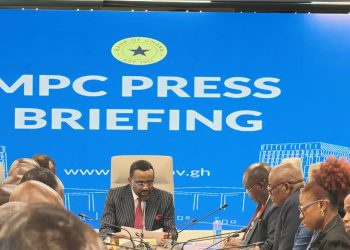
Bank of Ghana Governor Dr Johnson Pandit Asiama says the easing interest rate environment has strengthened demand for loans and contributed to increased economic activity.
Presenting the Monetary Policy Committee’s assessment of the economy on Wednesday, November 18, Dr Asiama disclosed that average bank lending rates had declined from 22.2% in October 2025 to 15.8% in October 2026.
Over the same period, annual private sector credit growth accelerated from 13.9% to 37.2%.
In real terms, private sector credit expanded by 30.0%, compared with 5.4% a year earlier.
The Governor said the improvement in credit conditions had supported economic activity, with the Bank’s Composite Index of Economic Activity recording year-on-year growth of 17.7% in September 2026, compared with 9.6% in September 2025.
Growth was driven largely by private sector credit, exports, tourist arrivals and construction activity.
Dr Asiama also reported improved performance in the banking industry. Total banking sector assets increased by 21.2% year-on-year to GH¢512.9 billion by October 2026, supported mainly by strong deposit growth.
The industry’s capital adequacy ratio improved from 17.9% to 18.5%, while the non-performing loans ratio declined substantially from 19.5% to 13.1%.
The Governor described the banking sector as solvent, profitable and liquid, with improving asset quality and stronger credit expansion.
However, the Bank’s October confidence survey revealed that consumer confidence had weakened due to higher petroleum prices and transport fares, even as business confidence remained broadly unchanged.
Dr Asiama expressed confidence that domestic economic activity would remain firm for the rest of 2026, supported by improved credit conditions and continued private sector lending.