Ghana’s economy continues to strengthen on the back of robust economic growth, sharply lower lending rates and a significant expansion in private sector credit, the Bank of Ghana has announced, while cautioning that external geopolitical shocks remain the biggest threat to the country’s economic outlook.
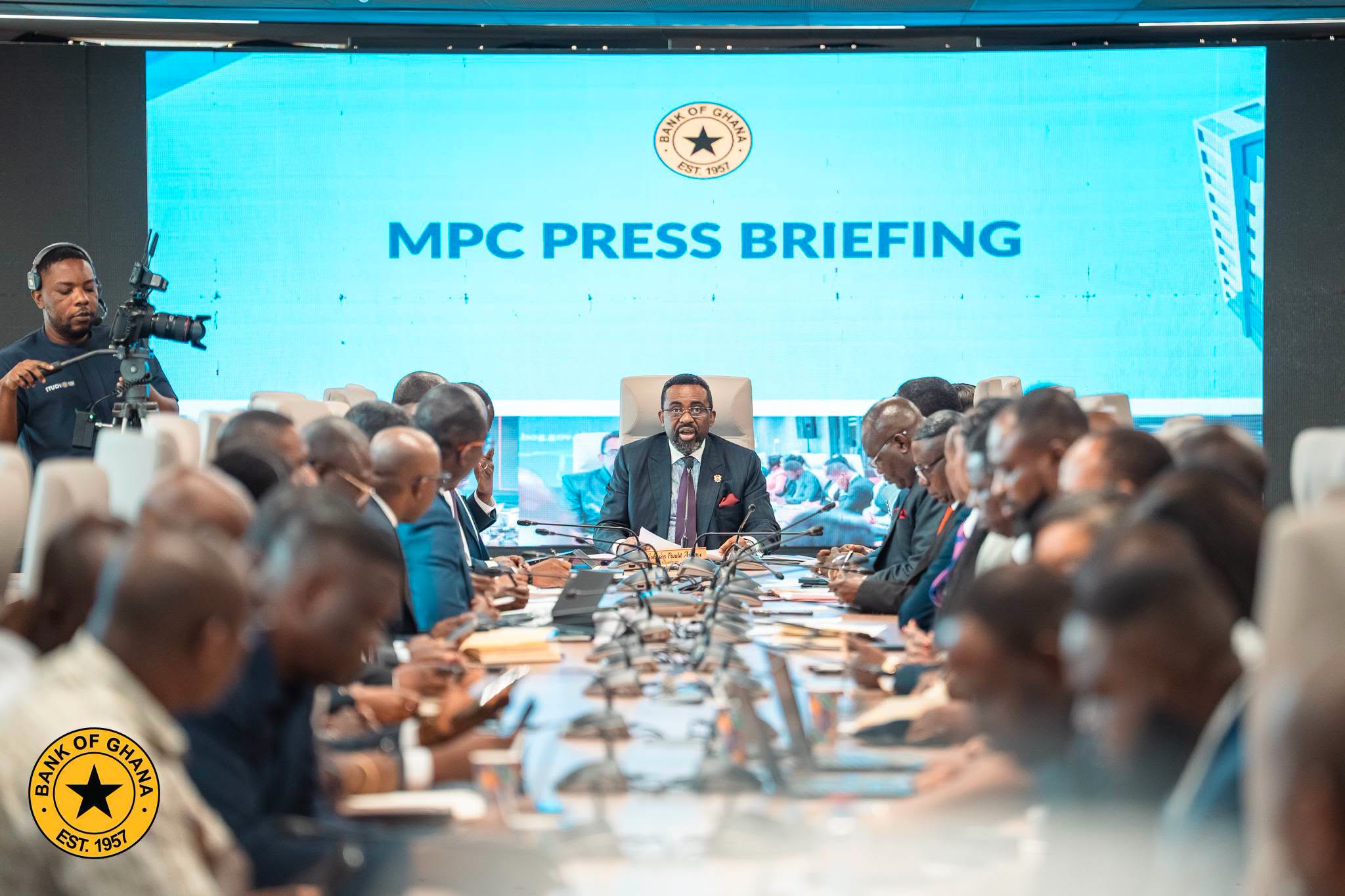
Presenting the outcome of the 131st Monetary Policy Committee meeting on Wednesday, Governor Dr. Johnson Pandit Asiama said the economy expanded by 6.4 % in the first quarter of 2026, driven mainly by the services and industrial sectors.
He said the Bank’s Composite Index of Economic Activity also pointed to sustained momentum, recording annual growth of 13.4 % in May 2026, compared with 4.4 % a year earlier.
According to the Governor, improved economic performance was supported by stronger private sector credit, increased industrial production, higher international trade activity and a rebound in tourism. Business and consumer confidence also strengthened, reflecting optimism about economic growth, subdued inflation and declining borrowing costs.
The Governor disclosed that average lending rates in the banking industry declined sharply to 15.6 % in June 2026 from 27 % a year earlier, while the Ghana Reference Rate eased to 10 % from 23.8 % over the same period.
As financing conditions improved, credit to the private sector expanded by 41.2 % year-on-year in June 2026, with real private sector credit growth reaching 34.1 %, signalling stronger business activity and increased demand for investment financing.
Dr. Asiama also reported continued improvements in the banking sector, with total industry assets rising by 30.7 % to GH¢502.4 billion. The sector’s Capital Adequacy Ratio strengthened to 20.4 %, while the Non-Performing Loan ratio declined significantly from 23.1 % to 16.1 %, reflecting improving financial sector stability.
On the external front, he said Ghana’s trade performance remained strong despite higher energy import costs arising from the Middle East conflict. The trade surplus widened to US$8.8 billion, while the current account surplus increased to US$5.1 billion, supported largely by higher gold and cocoa export earnings.
Gross international reserves stood at US$12.9 billion, equivalent to five months of import cover at the end of June 2026. Although reserves declined from the end of 2025 because of increased energy-related payments, the Governor said they remain adequate to cushion the economy against external shocks.
Nevertheless, the Governor warned that renewed tensions in the Middle East, rising crude oil prices and disruptions to global supply chains continue to pose risks to inflation and the broader economic outlook, requiring continued vigilance by policymakers.