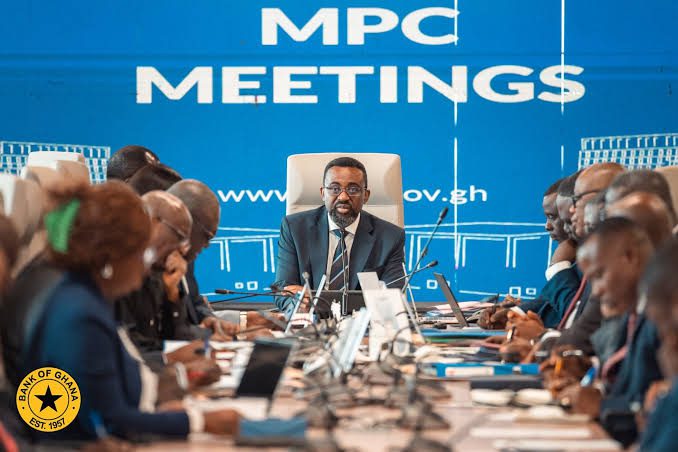
The Governor of the Bank of Ghana, Dr. Johnson Pandit Asiama, has cautioned that Ghana is entering a new phase of its inflation outlook, warning that rising global oil prices and renewed external uncertainty could test the country’s recent gains in macroeconomic stability.
Opening the 131st Monetary Policy Committee (MPC) meeting in Accra, Dr. Asiama said headline inflation had increased for three consecutive months, rising from 3.2% in March to 5.3% in June, largely driven by higher transport and haulage costs.
Although inflation remains well below the Bank of Ghana’s target ceiling and significantly lower than the 13.7% recorded a year ago, he said the prolonged period of disinflation has now ended.
“The central question for our meeting this week is whether this represents an orderly normalisation or the beginning of a more persistent shift in the inflation outlook,” he stated.
The Governor explained that the Committee would examine whether rising import-related energy costs, coupled with potential increases in utility tariffs and transport fares, could begin influencing inflation expectations and price-setting behaviour across the economy.
Dr. Asiama also highlighted growing geopolitical tensions around the Strait of Hormuz, noting that renewed hostilities had pushed Brent crude oil prices above US$85 per barrel, slowing global disinflation and prompting several central banks to reconsider the timing of interest rate cuts.
He observed that Ghana, as a commodity-exporting but energy-importing economy, remains vulnerable to such external cost pressures. Despite the risks, the Governor said the domestic economy continues to demonstrate resilience.
He disclosed that Ghana’s economy expanded by 6.4% in the first quarter of 2026, up from 6.2% a year earlier, while real private sector credit surged by 34.1%, reversing a 4.5% contraction recorded during the same period last year.
He further noted that the exchange rate has remained broadly stable through the first half of July and described the banking sector as sound and well-capitalised, although elevated non-performing loans continue to pose credit risks.
Dr. Asiama said the Committee would carefully weigh four major issues during the meeting: the evolving inflation outlook, the effectiveness of recent monetary policy reforms, changes in domestic liquidity conditions and the implications of renewed volatility in global oil markets.
He reaffirmed the Bank of Ghana’s commitment to maintaining a credible inflation-targeting framework, effective monetary policy transmission and disciplined liquidity management as it navigates an increasingly uncertain global economic environment.
The Governor also announced the launch of the Monetary Policy Committee Educational Observership Programme (MPC-EOP), an initiative that will allow selected University of Ghana students to observe aspects of the MPC process as part of efforts to deepen public understanding of monetary policy and strengthen transparency.