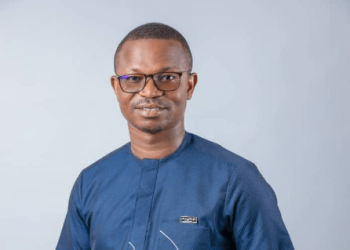
Development Bank Ghana (DBG) is pushing for a new financing model for Ghana’s technology sector, arguing that conventional short-term lending cannot adequately support the distinct capital needs of ICT and fintech businesses.
DBG Chief Executive Officer, Professor Dr Randolph Nsor-Ambala, said financial institutions must develop longer-term and more flexible funding solutions that reflect the different business models, growth cycles and risks within the technology industry.
Speaking on the sidelines of the ICT & Fintech Sector Financing Roundtable in Accra, Prof. Nsor-Ambala said the sector requires more than standard loan products if Ghana is to build competitive technology companies and deepen the digital economy.
“Ghana’s ICT sector is asking for a fair shot. Our job today is to figure out how to give it one,” he said.
Held under the theme “From Connectivity to Capital: Unlocking Finance for Ghana’s ICT and Fintech Sector,” the roundtable brought together technology companies, fintech operators, financial institutions and policymakers to examine obstacles preventing businesses from securing appropriate capital.
Prof. Nsor-Ambala said DBG’s assessment of the industry showed significant differences across the ICT value chain, making a uniform approach to financing unsuitable.
“The first point of call is that we need to segregate the sector into differences, because it’s not a one-size-fits-all solution that will work,” he explained.
According to him, improving access to capital must also address weaknesses that prevent otherwise promising businesses from attracting investment. These include corporate governance, business management and the ability of entrepreneurs to present commercially viable and investment-ready enterprises.
He also rejected suggestions that available resources should be concentrated on a small number of established technology companies. Prof. Nsor-Ambala said DBG’s mandate requires the Bank to promote a competitive and inclusive private sector, with financing opportunities extending across the technology ecosystem.
Minister for Communications, Digital Technology and Innovations, Samuel Nartey George, similarly called on financial institutions to rethink the use of short-term credit for technology businesses.
He argued that many Ghanaian technology entrepreneurs possess strong technical capabilities but require additional support in areas such as financial management, corporate governance and cash-flow planning to build sustainable businesses.
The Minister said government is also working to create a more predictable regulatory environment for investors, including efforts to advance the Startup Bill and review legislation governing the digital sector.
He stressed that the benefits of Ghana’s digital transformation should extend beyond Accra and Kumasi, creating economic opportunities for young people, women and businesses across the country.
The roundtable also saw DBG, Opportunity International and GIRSAL unveil “Boa Mi,” an artificial intelligence-powered agricultural advisory platform designed to improve access to finance for smallholder farmers.
Operating through WhatsApp, the platform allows farmers and agricultural extension officers to obtain agronomic guidance through text and voice messages without installing a separate application.
Beyond providing farming advice, the technology is designed to supply lenders with information on crop cycles and emerging production risks, helping financial institutions make better-informed lending decisions in a sector traditionally considered high-risk.
A three-month pilot generated more than 8,500 queries and recorded user satisfaction above 75%, according to information presented at the event. Developers are also introducing voice functionality in Twi, Dagbani, Ewe and Ga to make the service more accessible to rural users.
The discussions underscored the need for a stronger financing ecosystem for Ghana’s digital economy, with patient capital, tailored funding and business support to help promising ICT and fintech enterprises grow sustainably.
Story by: Errah Salifu Razak