President John Dramani Mahama has declared an end to the era of automatic government bailouts for underperforming public institutions, demanding that State-Owned Enterprises (SOEs) align executive compensation with financial productivity and deliver tangible public value to the Ghanaian people.
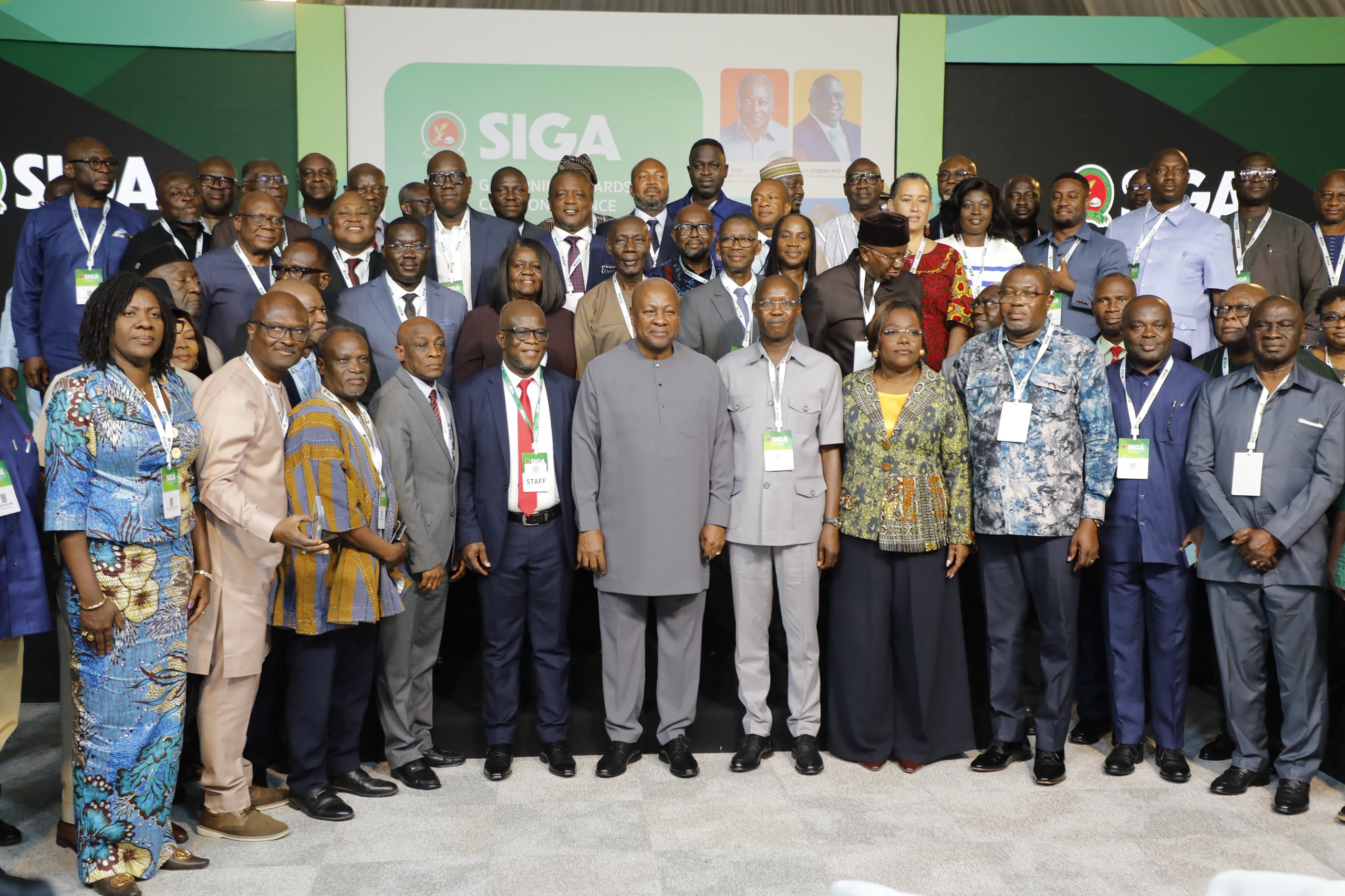
Addressing board chairs and chief executives at the State Interests and Governance Authority (SIGA) Governing Boards and CEOs Conference, President Mahama emphasized that state assets belong strictly to the public rather than political appointees or corporate management.
”Public ownership must produce public value. These assets do not belong to any government, a board, or a chief executive,” he said. “Persistent losses will no longer be quietly absorbed into the national budget.”
Reviewing the newly released 2025 State Ownership Report which analyzed 162 specified entities and utilized a record 108 audited financial statements, President Mahama highlighted a dramatic rebound in aggregate portfolio performance.
Combined SOE revenues rose from ₵137.71 billion in 2024 to ₵176.43 billion in 2025, representing a 28.12% growth. More significantly, state-owned enterprises posted a net profit of ₵19.8 billion in 2025, reversing an aggregate net loss of ₵2.26 billion recorded in 2024. Return on assets improved from 1.3% to 6.31%, while return on equity rebounded from negative 1.6% to 15.7%.
He noted that while favorable macroeconomic conditions including ₵11.72 billion in net foreign exchange gains and a 42.5% reduction in aggregate finance costs provided substantial relief, institutions must now translate external stability into long-term operational efficiency.
President Mahama announced structural reforms to executive remuneration, revealing that the transition from the Fair Wages and Salaries Commission to the proposed Independent Public Emoluments Commission will directly tie leadership compensation to verified institutional performance.
”We must progressively establish a system in which remuneration reflects the enterprise’s financial health, its productivity, achievement of agreed targets, quality of service delivered, and fiscal sustainability,” President Mahama sated. “It is not fair to your shareholders to have salaries and allowances systematically increased even in chronically loss-making enterprises.”
The President also cautioned board chairs against interfering in day-to-day administrative matters, reminding executives that “boards govern and management manages.” He instructed SIGA to enforce a standardized, written reporting framework for all government representatives serving on Joint Venture Company (JVC) boards.
Despite notable balance sheet gains, President Mahama raised concern over persistent compliance gaps across the portfolio. Out of 148 target entities, only 72 signed performance contracts in 2025, while just 37 of 177 expected entities held Annual General Meetings.
Highlighting balance sheet exposures, the President noted that while SOEs held total assets of ₵407.85 billion against liabilities of ₵282 billion, Other State Entities (OSEs) held liabilities of ₵382.75 billion against assets of ₵341.6 billion, creating an asset-liability deficit exceeding ₵41 billion alongside an aggregate operational deficit of ₵10.48 billion.
On financial governance, the President commended an 85.6% drop in Auditor-General recoverable irregularities from ₵15.57 billion in 2024 down to ₵2.24 billion in 2025,demanding that remaining irregularities be completely eliminated or brought to the barest minimum in subsequent reports.
State Entity Performance Cards
Consistent Performers (5-Year Consecutive Profitability: 2021–2025)
Ghana National Petroleum Corporation (GNPC): Top overall performer with an average annual profit of approximately ₵2.25 billion.
Ghana Ports and Harbours Authority (GPHA): Second highest performer, averaging ₵1.41 billion in annual net profits.
Minerals Income Investment Fund (MIIF): Generated an average annual net profit of ₵773.9 million.
BOST Energies: Averaged ₵348.1 million annually over five years; expanded net profit from ₵3.98 million in 2024 to ₵6.84 million in 2025 while declaring immediate state dividends.
Other Consistently Profitable Entities: Bui Power Authority, Ghana Exim Bank, Ghana National Gas Company, TDC Company Limited, Ghana Supply Company Limited, and the Venture Capital Trust Fund.
Turnaround Entities (2025 Recovery Milestones)
Tema Oil Refinery (TOR): Achieved its first net profit in nearly a decade, moving from a net loss of approximately ₵745 million to a net profit of ₵1.09 billion.
Ghana Water Company Limited (GWCL): Reversed a net loss of ₵3.06 billion in 2024 to record a net profit of approximately ₵635 million in 2025.
Ghana Cocoa Board (COCOBOD): Rebounded from a net loss of ₵5.73 billion in 2024 to post a net profit of ₵5.11 billion in 2025.
Gold Board: Highlighted in the report’s spotlight after expanding net profits from ₵8.5 million in 2024 to approximately ₵896.5 million in 2025.
Story by: Eugenia Ewoenam Osei