President John Dramani Mahama has called for stronger efforts to create jobs, improve public services, build infrastructure and expand opportunities for young people, as countries in the Global South confront mounting debt pressures and a rapidly changing international order.
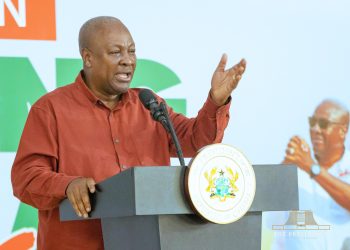
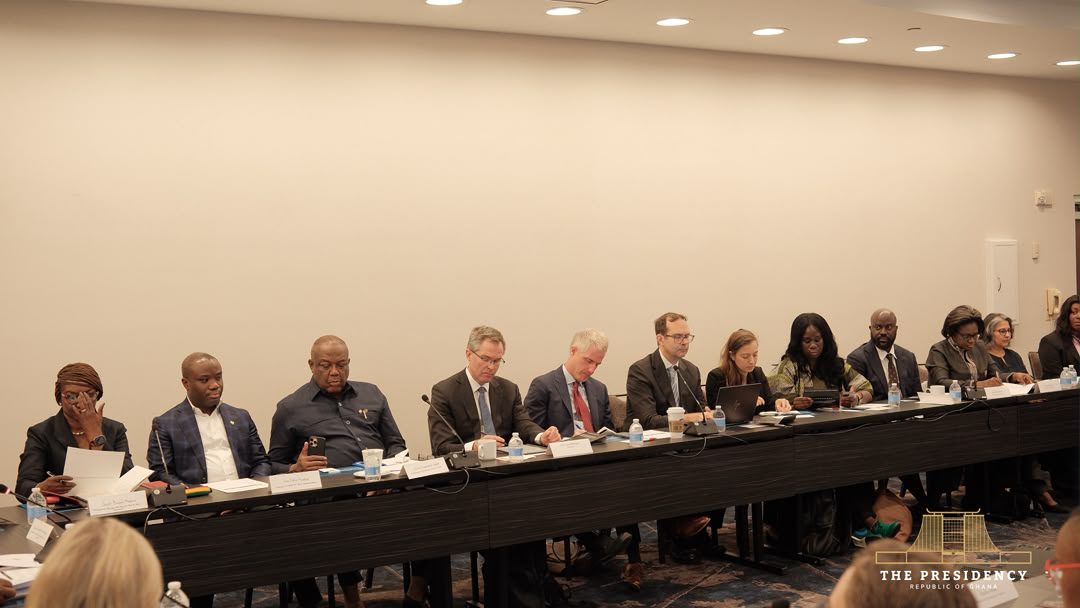
President Mahama made the call on Monday, September 21, 2026, at a presidential roundtable organised by the Open Society Foundation (OSF) in New York on the sidelines of the 81st United Nations General Assembly.
The roundtable brought together presidents and chief executives of major global foundations, including representatives from the Gates, Ford, Open Society, Hewlett Packard, Hilton, Rockefeller, Humanity United, Anglo American, Chandler and UBS Optimus foundations.
Addressing the gathering, President Mahama said the disruption confronting the global development system also presented opportunities for innovation and new partnerships.
“In all the disruption and chaos are born new ideas and partnerships.”
He said the priority should be to translate those opportunities into tangible improvements in people’s lives.
“This is when we must create jobs for our people, improve public services, build infrastructure, and expand opportunity, especially for our young people.
The President said Ghana’s challenge was to strengthen its capacity to pursue these priorities with greater confidence and continuity despite changes in the international environment.
Africa must strengthen its capacity
President Mahama pointed to the African Union’s Agenda 2063 as the continent’s long-term strategic framework, focused on productive economies, strong institutions, deeper regional integration and a stronger African voice in global affairs.
He said African countries must now strengthen the institutions, financing mechanisms and delivery systems required to turn those ambitions into reality.
He also used the discussion to explain the thinking behind the Accra Reset, which seeks a more sustainable and balanced approach to international development cooperation.
“The Accra Reset asks what countries need to act with urgency in a changing world, and what a more balanced relationship with international partners could look like.”
According to President Mahama, sovereignty in this context should be understood as a country’s capacity to act effectively.
“When I speak about sovereignty in this context, I am speaking about the capacity to act.
A country needs to be able to set its priorities, negotiate effectively, mobilise resources, and follow through on its decisions.”
Ghana must strengthen domestic capacity
The President acknowledged that Ghana still has work to do to achieve greater ownership of its development trajectory.
He identified stronger coordination across government, better preparation of programmes and projects, increased domestic resource mobilisation, sound financial management and institutions capable of demonstrating measurable results as key requirements.
“We must also leverage capabilities outside government, including civil society, business, academia, and local communities. We must carry our share of the responsibility if we want greater room to lead.”
Call for long-term development partnerships
President Mahama also urged international partners and philanthropic organisations to move away from short-term interventions towards programmes that strengthen national and local capabilities.
He questioned whether international cooperation could increasingly work through local systems that meet required standards while reducing duplication and maintaining accountability.
“Can international cooperation do more to build national capability and work through local systems when they meet required standards? Can we reduce unnecessary duplication while protecting accountability?”
The President said philanthropic foundations were particularly well placed to support areas where conventional commercial financing might not be suitable, including public goods, institutional development, early-stage programmes, health, education, governance and research.
“Foundations have room to operate differently because they can support institutional capability, early programme development, public goods and social priorities.”
He added that successful initiatives should ultimately be incorporated into public systems and local delivery institutions and supported through sustainable long-term financing models.
“Where an approach proves successful, the next step should be its adoption into public systems, local delivery institutions, and long-term financing models.”
The roundtable formed part of President Mahama’s engagements at the 81st UN General Assembly. His New York programme also includes the high-level Accra Reset event, a side event on reparatory justice, meetings with international leaders and institutions, and Ghana’s official statement at the UN General Debate on September 24.
Story: Patrick Asford Boadu