The Ghana Free Zones Authority (GFZA) has celebrated its 30th anniversary with a renewed commitment to reposition itself as a leading driver of industrial transformation, investment promotion, and export-led growth in Africa.
Enacted under Act 504 on 31st August 1995 during the leadership of the late President Jerry John Rawlings, the Free Zones programme began modestly in a small office near the Ministry of Trade and Industry. Today, it has grown into a major national economic engine, supporting thousands of jobs, attracting foreign investment, and expanding Ghana’s export base.

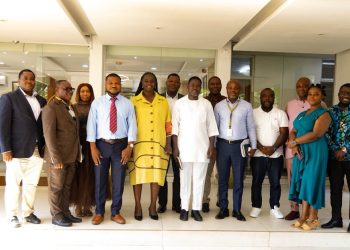
Speaking at the launch in Accra, Chief Executive Officer of the GFZA, Dr. Mary Awusi, described the three-decade journey as one defined by “resilience, adaptability, and progress.” She emphasized that the Authority remains central to Ghana’s industrialization drive.
The Authority, which started with three designated Export Processing Zones, now manages five, including the fully developed Tema Export Processing Zone. It has also expanded its reach with regional offices in Tema, Kumasi, and Takoradi, with new offices soon to be established in the Northern and Bono Regions.

Since inception, the GFZA has licensed 339 enterprises, of which 306 are active, comprising wholly Ghanaian, wholly foreign, and joint ventures. These companies have transformed Ghana’s export landscape, with non-traditional exports rising from $145.4 million in 1997 to $2.25 billion by the end of 2024. In the first quarter of 2025 alone, exports hit $1 billion.
Capital investment has also surged from $117 million in 1997 to $354.8 million in 2024, with an additional $70 million already recorded in 2025. Employment has expanded from just 3,483 direct jobs in 1997 to over 40,000 today, with thousands more created indirectly through suppliers and service providers.
Despite these successes, the Authority acknowledged challenges such as funding constraints, raw material shortages affecting agro-processing and metal fabrication, and the need for further enclave development.
Launching the celebration, the Minister of Trade and Industry, Hon. Elizabeth Ofosu-Adjare, highlighted the programme’s role as a key pillar of Ghana’s economic development.

“Over the past 30 years, the Free Zones programme has attracted foreign direct investment, promoted technology transfer, created jobs, and boosted non-traditional exports,” she said, stressing its contribution to foreign exchange earnings and industrial growth.
Looking ahead, the Minister announced that government and the Authority are advancing plans to transition from Export Processing Zones to Special Economic Zones (SEZs) – a more modern and inclusive model of industrial development.
Under this model, Ghana will develop industrial cities designed to attract strategic investment in sectors such as agribusiness, pharmaceuticals, renewable energy, ICT, and logistics.

As part of this ambitious agenda, the GFZA intends to expand its enclaves into full-fledged SEZs nationwide. Strengthen infrastructure, utilities, logistics, and internet connectivity to support 24-hour industrial operations.
Leverage digitalization to link foreign investors with local enterprises. And drive strategic investment into agribusiness, pharmaceuticals, ICT, and other high-growth sectors.
“On behalf of the board and management, the Minister formally declared the 30th anniversary celebrations of the Ghana Free Zones Authority duly launched.”
Story by Osman Issah Abadoo