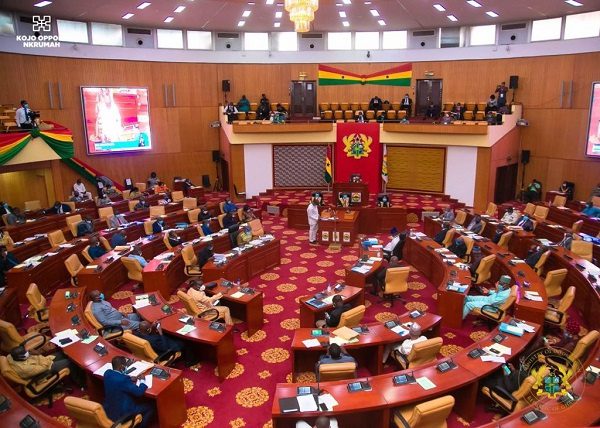
A troubling trend of political rivalry between Members of Parliament (MPs) and their District, Municipal, and Metropolitan Chief Executives (MMDCEs) is hampering development projects across Ghana. This acrimonious relationship, often driven by personal ambitions and party affiliations, is causing significant harm to the very citizens both officials are meant to serve.
Deductions from recent meetings of the Committee on Local Government and Rural Development with Metropolitan, Municipal, and District Chief Executives (MMDCEs) indicate that MMDCEs frequently exclude their respective Members of Parliament (MPs) from developmental projects in their constituencies. This exclusion is often rooted in a desire by some MMDCEs to position themselves as alternative leaders, with aspirations of challenging the incumbent MP in future elections.

In other instances, the friction is a direct result of the officials belonging to different political parties, leading to a breakdown in communication and collaboration.
The lack of cooperation between these key figures has created a silo effect, where development initiatives are planned and executed without a unified vision. This disconnect results in a number of negative consequences for constituents.
Projects may be duplicated, resources may be misallocated, and the overall pace of development is significantly slowed. The absence of a collaborative approach means that the needs of the community, as expressed by their elected MP, may be overlooked in favour of projects championed by the MMDCE, or vice versa.
Ultimately, this trend of political sabotage is a disservice to the Ghanaian public. The rivalry between officials prioritizes personal gain and party loyalty over the welfare of the people.
It undermines the democratic process and erodes public trust in local governance. To address this issue, there is a pressing need for a framework that encourages and, where necessary, mandates cooperation between MPs and MMDCEs.
While there is no legal ban to prevent Metropolitan, Municipal, and District Chief Executives (MMDCEs) from contesting their Members of Parliament (MPs), a political party can establish its own internal guidelines to address this issue. The national Constitution allows any eligible citizen to contest an election; however, a party is within its rights to set internal rules for its members.
The New Patriotic Party’s (NPP) directive on this matter serves as a clear example of a party-based measure.
The dynamic between MPs and MMDCEs has also fuelled a broader national debate about whether MMDCEs should be elected by the people rather than appointed by the president. Advocates for an elected MMDCE system argue that it would ensure greater accountability to the public and clearly delineate the roles of MMDCEs from those of MPs, thereby reducing potential conflict.
The focus must be on shared goals and tangible progress for the community, rather than on political one-upmanship. The constituents, whose lives are directly impacted by these decisions, are the true losers in this ongoing political battle.
By: Eugenia Ewoenam Osei