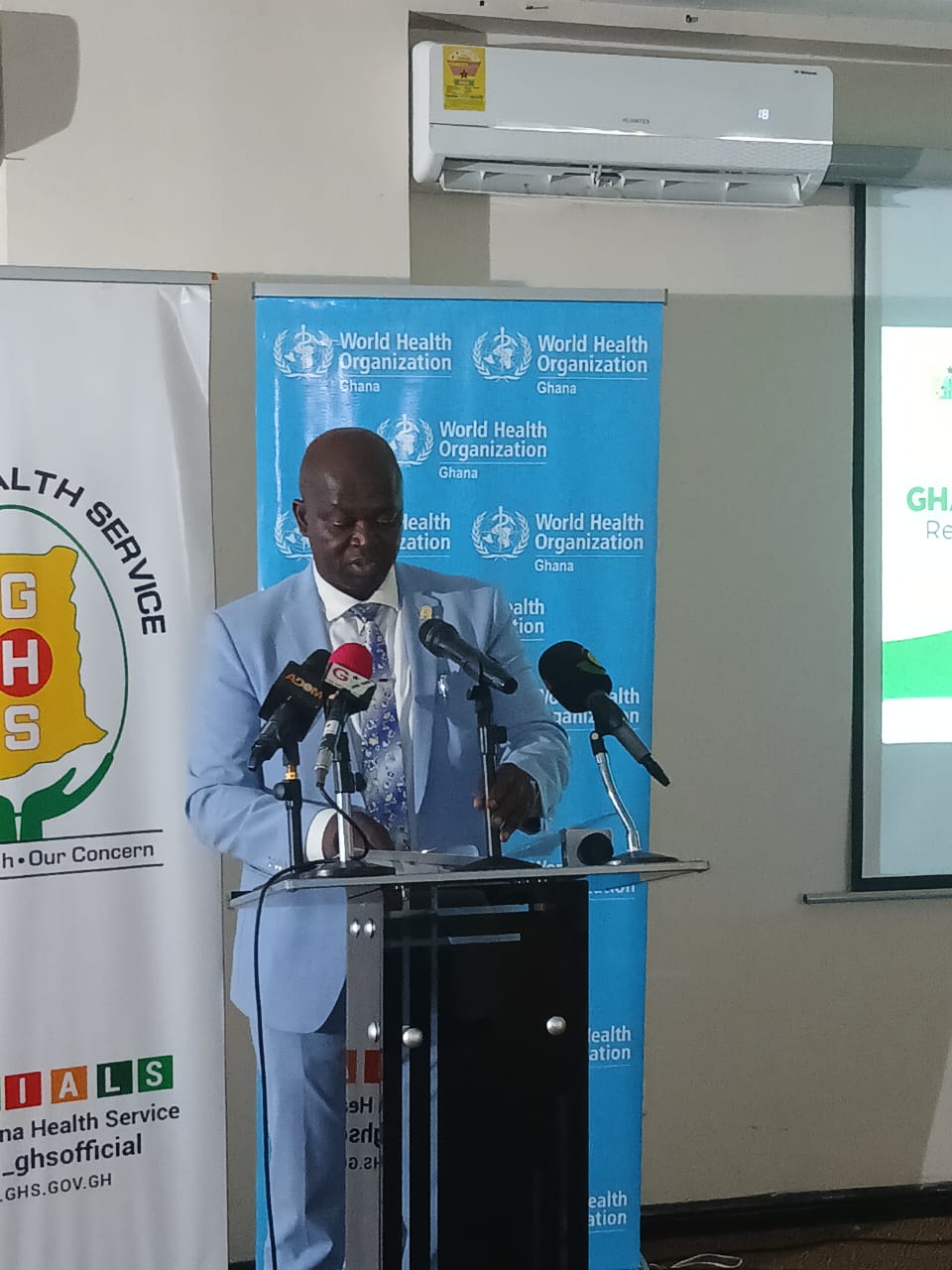
Ghana has taken a significant step toward improving healthcare delivery with the launch of its first Quality of Care Records Review Survey Results, a national assessment designed to measure whether clinical standards are being consistently applied across the health system. The launch, attended by government officials, development partners, regional and district health directors, and frontline health workers, marks a major milestone in the country’s pursuit of safer, equitable, and people-centered health services
Speaking at the launch, the Director-General of the Ghana Health Service (GHS), Dr. Samuel Kaba Akoriyea said the assessment reflects Ghana’s renewed commitment to strengthening health systems and improving outcomes for all citizens.
He noted that the review provides credible, nationally representative evidence of how clinical standards are adhered to at facility level, adding that consistent supervision, improved documentation, and adherence to standard treatment guidelines are key to raising the quality of care delivered in communities across Ghana.
He emphasized that quality care is both a professional obligation and a national responsibility, urging stakeholders to translate the findings into actionable reforms.
Delivering a statement on behalf of the Minister for Health, Hon. Kwabena Mintah Akandoh, Chief Director of the GHS, Mr. Desmond Boateng said the launch marks a significant advancement in Ghana’s health sector reforms.
He recalled that Ghana’s quality agenda gained momentum following the WHO Regional Director’s endorsement of the Harmonized Health Facility Assessment (HHFA). The Minister said the Quality of Care Records Review now moves the process “beyond inputs” by assessing whether Ghana’s health facilities deliver interventions at the right time, according to established clinical standards.
The findings revealed strong performance in HIV, TB care, and adherence to treatment guidelines, but also exposed gaps in antenatal care, malaria case management, and clinical documentation, especially in primary-level facilities.
He further linked the assessment to major government reforms, including the Free Primary Health Care initiative and the Ghana Medical Trust Fund under MahamaCare, stressing that the success of these flagship programs depends on strengthened clinical governance, reliable documentation and uncompromising quality.
He assured stakeholders that the government will continue reinforcing clinical governance structures, enhancing digital health systems, strengthening supervision, and ensuring a well-distributed workforce supported through training and mentorship.
WHO Representative to Ghana, Dr. Fiola Braka praised Ghana for taking bold, coordinated steps to assess and improve the quality of health service delivery.
He noted that the HHFA and the Quality of Care Records Review taken together give Ghana “the most holistic national picture ever produced” on system capacity and frontline service quality.
Dr. Braka acknowledged progress in HIV care, antibiotic use, and guideline adherence but emphasized that disparities remain across regions and facility types. He stressed that quality should not depend on where someone lives or which facility they visit.
“Our responsibility is to ensure that this evidence does not sit on shelves,” she said. “It must drive improvement in every facility, every district, and every region.”
The WHO, he assured, will continue supporting Ghana to harmonize policies, strengthen referral systems, and operationalize reforms that build resilience and accountability.
Representing the UK Foreign, Commonwealth and Development Office (FCDO), Terri Sarch also commended Ghana for its leadership and evidence-based approach to improving health outcomes.
She highlighted areas of strong performance, including:
Correct antimalarial prescriptions for almost all confirmed malaria cases
High rates of HIV result return
Very strong TB treatment adherence
High client satisfaction and accurate primary diagnosis, as shown in the World Bank Service Delivery Indicator Survey
However, she noted that challenges persist, including:
Low uptake of antenatal services, gaps in severe malaria diagnosis, loss to follow-up in HIV care, and shortages of essential maternal commodities like iron and folic acid
“These two surveys give clear recommendations on where to target efforts to improve quality,” she said. “It is essential that this evidence informs your priorities as Ghana advances the National Healthcare Quality Strategy and strengthens primary healthcare.”
She reaffirmed the UK’s readiness to continue supporting Ghana through technical partnerships, system strengthening, and innovations in primary healthcare delivery.
The launch unified commitment from government, partners, and health leaders to ensure that the findings lead to measurable improvements in patient care and accelerate Ghana’s journey toward a high-performing, equitable, and resilient health system.
Story by Osman Issah Abadoo