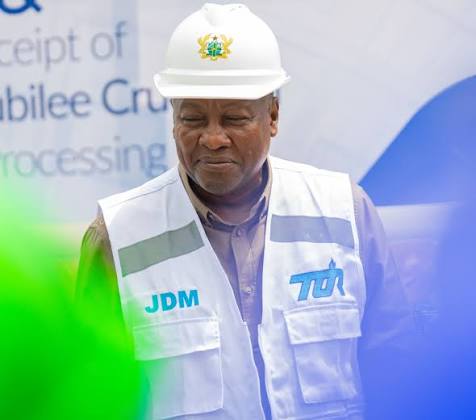
The government is targeting approximately 70 percent of Ghana’s domestic fuel demand through local refining by 2028, as the Tema Oil Refinery (TOR) prepares for a major expansion of its crude oil processing capacity.
The Managing Director of TOR, Edmond Kombat, disclosed that the government intends to progressively increase the refinery’s processing capacity to 100,000 barrels per day, with a longer-term ambition of reaching 200,000 barrels daily.
According to Mr. Kombat, the expansion programme would be implemented in phases to strengthen domestic petroleum production and improve Ghana’s energy security.
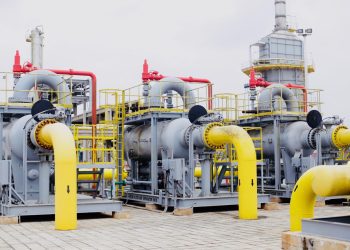
He revealed that the refinery currently processes approximately 28,000 barrels per stream day, with ongoing engineering works expected to restore capacity to between 45,000 and 55,000 barrels per stream day.
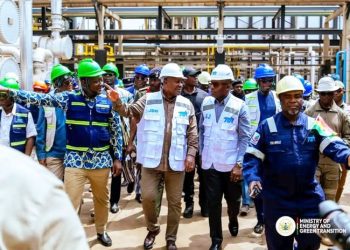
He noted that engineers from Verga Engineering are collaborating with TOR’s technical team to complete the installation connections and commissioning of the F-61 Crude Heater in October.
The next phase will involve installing a new air cooler to increase processing capacity to 60,000 barrels per stream day.
Management also intends to replace the existing 6,500-barrel-per-day catalytic reformers with a 10,000-barrel-per-day continuous catalytic reformer.
Mr. Kombat disclosed that a new 120-ton boiler had already been installed, while rehabilitation of the Residue Fluid Catalytic Cracking Unit and work on the refinery’s Supervisory Control and Data Acquisition system were continuing.
He explained that President John Dramani Mahama, during the commissioning of the refurbished Crude Distillation Unit on August 1, 2026, directed the Energy Minister, TOR’s Board and management to develop a strategic roadmap for the proposed expansion.
Beyond infrastructure investment, the Managing Director revealed that the government was considering measures to address the refinery’s legacy financial obligations.
He said the Ministry of Finance was working with TOR on a proposal to either write off approximately US$120 million in debt owed to the government or convert the amount into equity.
Mr. Kombat further indicated that plans were underway to restructure the refinery to operate on commercially sustainable principles, with reduced political interference.
The proposed expansion forms part of the government’s broader strategy to increase domestic petroleum processing, reduce dependence on imported refined products and strengthen Ghana’s long-term fuel supply security.