Ghana’s Minister for Energy and Green Transition has outlined sweeping reforms and ambitious interventions across the energy and petroleum sectors, positioning the country for long-term energy security, sustainability, and economic transformation.
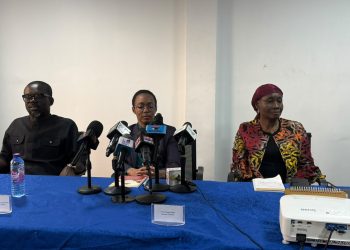
Speaking at the Government Accountability series at the Presidency in Accra, the Minister detailed the challenges inherited in January 2025 and emphasized the strides made in stabilizing power supply, reducing debts, boosting gas production, and steering Ghana towards a low-carbon future.
“When we took office, the energy sector was at a crossroads. From mounting debts to declining crude production and poor investor confidence, we faced a crisis.
But we saw these challenges as an opportunity to rebuild and transition to a greener, more resilient energy landscape,” the Minister stated.
Power Sector Reforms Yield Results
As of December 2024, Ghana faced a 720-megawatt power deficit, threatening nationwide supply. Today, the Minister says the situation has significantly improved:
Persistent power outages have declined sharply.
Emergency repairs, transformer replacements, and aggressive feeder mapping have been undertaken.
ECG’s billing system has transitioned to the new ZEOS platform, reducing anomalies and improving transparency.
347 non-performing supply contracts are under review, with 202 already terminated — saving millions in public funds.
“We’ve introduced Key Performance Indicators (KPIs) and rationalized procurement. These reforms have increased ECG revenue by 47.3% compared to last year,” he noted.
Shift to Renewables and Green Transition
With the Ministry now renamed the Ministry of Energy and Green Transition, Ghana is making bold moves toward renewable energy:
$85 million Ghana Scaling-Up Renewable Energy Programme (SREP) launched in May 2025.
Deployment of 12,000 net-metered solar PV systems and 35 mini-grids for 47 island communities.
Installation of 25–30 MW floating solar projects at Bui and Pong dams.
450,000 LPG cookstoves to be distributed nationwide to promote clean cooking.
23,500 solar-powered streetlights covering 700 kilometers to reduce grid dependence.
“Streetlights alone consume over 200 megawatts during peak periods. Shifting them to solar helps us conserve critical power for essential services,” the Minister emphasized.
Petroleum Sector Revival and Gas Expansion
Crude oil production fell from 71 million barrels in 2019 to 48 million in 2024. The Minister revealed that production is stabilizing due to new discoveries and policy certainty:
Commercial discoveries declared at Afina, Eban, and Akoma fields.
Gas supply ramped up: ENI increased to 270 mmscfd, N-Gas to 100 mmscfd, and Jubilee by 30 mmscfd.
A second gas processing plant is underway, with a strategic report submitted.
Ghana Gas directed to refocus on pipeline infrastructure after years of stagnation.
“We aim to transition to a ‘gas-to-power’ era where local gas drives our power generation and economic stability,” the Minister said.
Petroleum Refinery and Strategic Stocks
The Tema Oil Refinery (TOR), burdened with over $517 million in debt and inactive since 2019, is undergoing a turnaround:
Internal revenue is being used to restart operations.
Audits from 2019–2024 have been initiated.
Ghana Cylinder Manufacturing is being retooled to meet local production needs.
Strengthening Local Content and Global Partnerships
Ghana is collaborating with the International Solar Alliance and will host its 7th Africa Regional Committee in September 2025. Local capacity is being built through training in solar technologies and expansion of local manufacturing.
In addition, strategic engagement with Shell, ENI, ExxonMobil, and Chevron is attracting fresh upstream investment.
“We are not just reforming policy. We are creating jobs, securing investment, and building resilience,” the Minister added.
Accountability, Procurement & Transparency
A task force, including the Ministry of Finance and National Security, is being constituted to track and reconcile ECG containers stuck at the ports. A bonded warehouse will be created for proper audit and redistribution of materials for rural and urban electrification.
“We cannot allow critical materials to rot while spending more to import new ones. Efficiency and transparency will guide everything we do,” he stressed.
Conclusion: A Sector on the Mend
Summing up, the Minister said Ghana is witnessing a “remarkable recovery” in the energy sector.
“We’re not out of the woods yet, but we are seeing real, measurable progress. If we stay this course, Ghana’s energy sector will become the cornerstone of our economic future.”