A growing health crisis is unfolding quietly across Ghana, leaving families financially devastated, children out of school, and thousands of patients struggling to access life-saving treatment.
While the effects may not always make headlines, the consequences are being felt in homes and communities across the country.
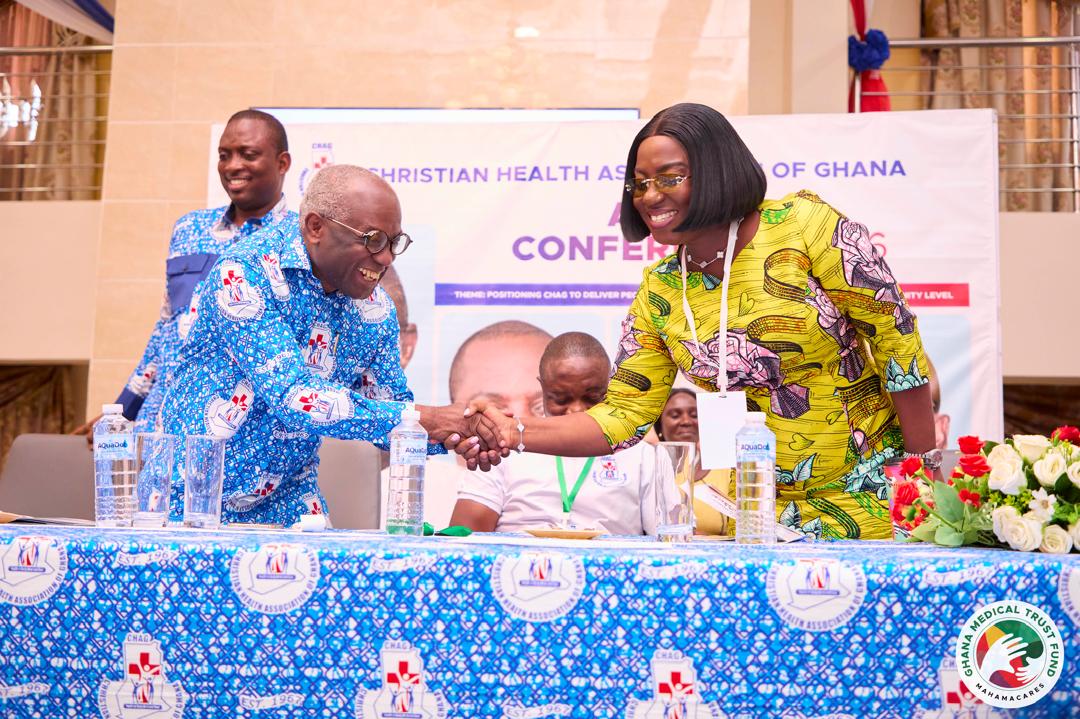
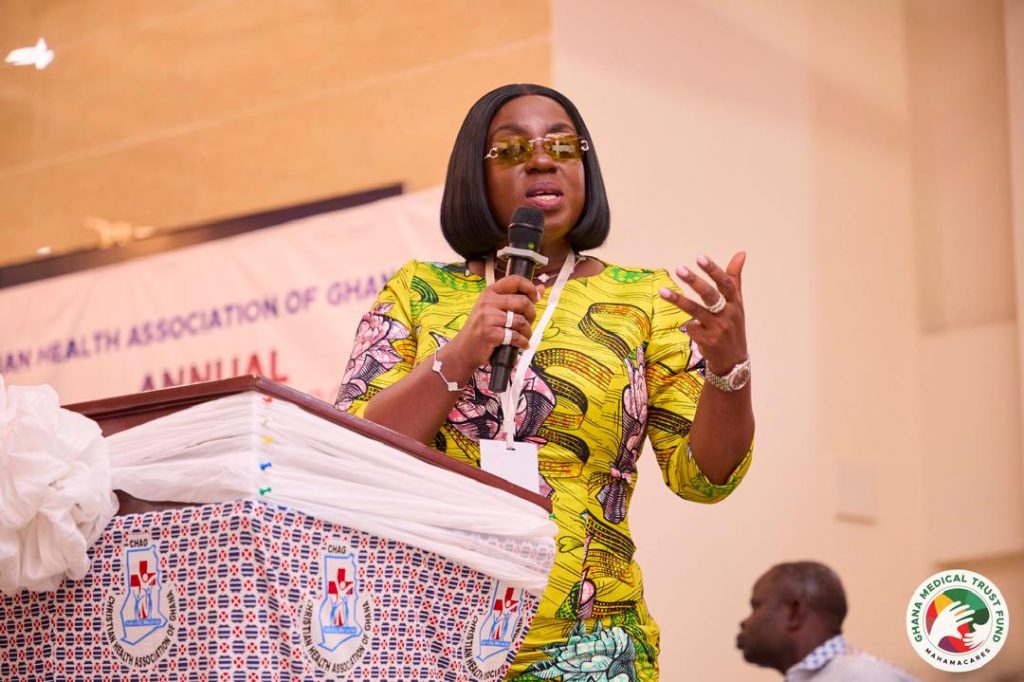
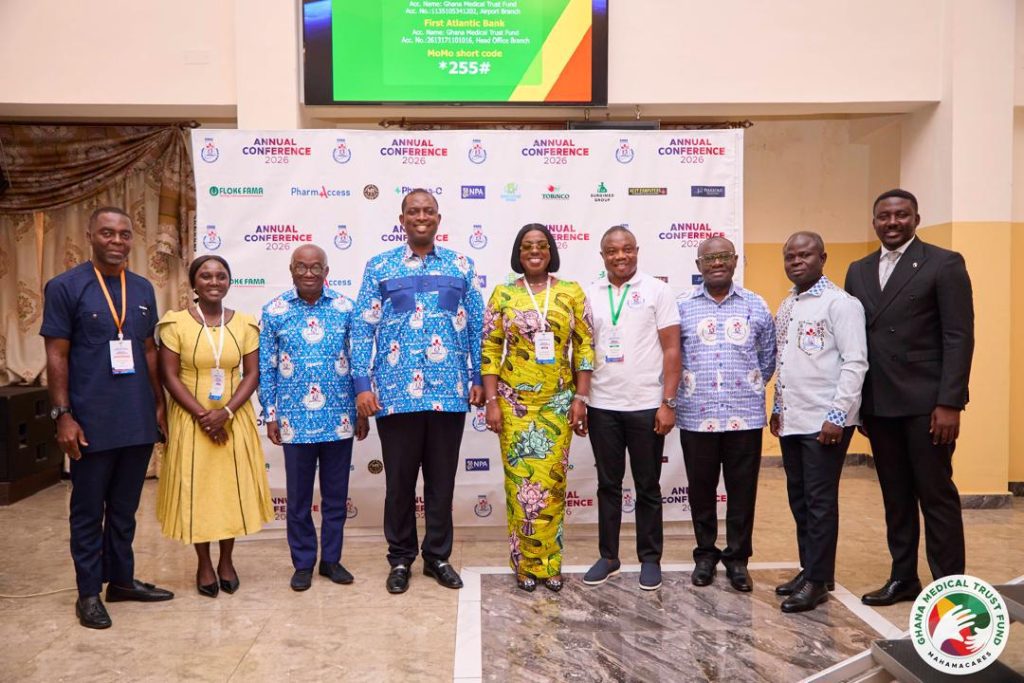
This was the stark picture painted by the Administrator of the Ghana Medical Trust Fund (GMTF), Adjoa Obuobia Darko-Opoku, as she addressed healthcare leaders at the 2026 Annual Conference of the Christian Health Association of Ghana (CHAG) in Koforidua.
Speaking under the conference theme, “Positioning CHAG to Deliver People-Centered Free Primary Healthcare at the Community Level,” Ms. Darko-Opoku described chronic diseases as one of the greatest threats facing Ghana today, arguing that conditions such as cancer, kidney failure, stroke, cardiovascular diseases, diabetes, sickle cell disease and chronic respiratory illnesses have evolved into a national emergency.
“These conditions are no longer diseases affecting only a few. They have become a national challenge, a social challenge, an economic challenge and, perhaps most importantly, a human challenge,” she told an audience made up of medical directors, health professionals, development partners and healthcare administrators.
Her remarks placed a spotlight on what she described as a silent crisis unfolding behind hospital walls and within households across the country, where many families are being forced to make impossible choices between medical care and their economic survival.
According to the GMTF Administrator, healthcare workers continue to witness patients postponing treatment because they simply cannot afford it. Others exhaust their life savings, sell valuable assets, or withdraw children from school in desperate attempts to keep loved ones alive.
“For far too many Ghanaians, illness does not only threaten life. It threatens livelihoods. It threatens dignity. It threatens the future of entire families,” she stressed.
Against this backdrop, Ms. Darko-Opoku outlined the vision behind the Ghana Medical Trust Fund, an intervention established by President John Dramani Mahama to bridge the financing gap confronting patients living with chronic illnesses.
She explained that the Trust Fund was created to ensure that no Ghanaian is denied life-saving healthcare because of financial hardship and that no family is pushed deeper into poverty simply because a loved one falls seriously ill.
The Trust Fund’s work, she noted, is anchored on four key pillars: providing financial support to patients with chronic diseases, investing in medical equipment and healthcare infrastructure, strengthening specialist healthcare training, and supporting research and innovation to improve treatment outcomes.
Ms. Darko-Opoku revealed that extensive consultations have already been undertaken with healthcare institutions, professional associations, the Ministry of Health, the National Health
Insurance Authority, development partners, patient advocacy groups and patients themselves to shape the implementation of the Fund.
A nationwide needs assessment, she disclosed, exposed significant gaps in specialist equipment, infrastructure and workforce capacity, while also revealing the extraordinary resilience of healthcare professionals working under difficult conditions.
Perhaps the most powerful moments of the Trust Fund’s journey, she said, have come from direct encounters with patients battling life-threatening conditions. She recounted meeting mothers determined to survive long enough to see their children grow, fathers fighting to remain
providers for their families, and young people refusing to surrender their dreams despite overwhelming medical challenges.
“These encounters have reinforced one important truth. Healthcare is ultimately about people; not systems, not budgets, not policies. Behind every diagnosis is a human story. Behind every hospital folder is a family,” she said.
In a major appeal to stakeholders gathered at the conference, the GMTF Administrator called for a stronger partnership between the Ghana Medical Trust Fund and CHAG, describing collaboration as essential to ensuring equitable access to specialised healthcare services across the
country.
She praised CHAG for its longstanding contribution to Ghana’s healthcare delivery system, noting that for many communities, CHAG facilities represent the first and most reliable point of care throughout every stage of life. “In some communities, the first cry of a newborn child is
heard in a CHAG facility. The first vaccination is received in a CHAG facility.
The first treatment during illness is received in a CHAG facility, and for many, their final moments of care and comfort are also experienced within a CHAG facility,” she observed.
Ms. Darko-Opoku outlined a future where access to specialised healthcare is not determined by a patient’s income level or geographical location, where modern medical equipment is available where it is most needed, and where families no longer live in fear of financial ruin when illness trikes.
She emphasized that achieving such a future would require unprecedented collaboration among government institutions, faith-based healthcare providers, development partners, academia, civil society organisations and local communities.
While acknowledging that the Ghana Medical Trust Fund remains in its early stages, she highlighted several encouraging milestones, including a successful pilot programme that supported fifty patients while testing operational systems and strengthening stakeholder
engagement.
“The journey ahead remains long. The challenges remain significant. But our determination remains stronger,” she declared.
As Ghana continues to grapple with the rising burden of chronic diseases, she noted that tackling the crisis will require more than medical expertise alone. It will demand sustained partnerships, innovative financing, and a collective national commitment to ensuring that no
Ghanaian is left behind because they cannot afford the care needed to stay alive.
Story By: Eric Boateng