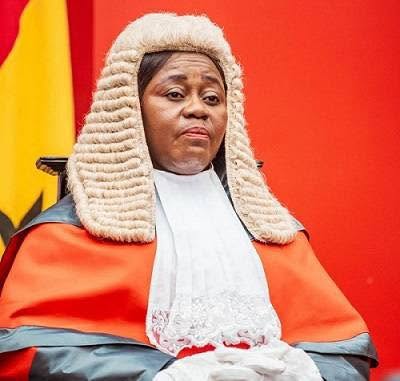
The ECOWAS Court has dismissed former Chief Justice Gertrude Torkornoo’s human rights claim against Ghana, a decision former Lands and Natural Resources Minister Alhaji Inusah Fuseini says came as no surprise.
Speaking on Radio Gold’s Gold Morning Conversation with Sena Nombo on Wednesday, June 25, 2026, the former Tamale Central MP argued that concerns raised over the proceedings leading to Torkornoo’s removal did not amount to a breach of Article 146 of the Constitution, which outlines the procedure for the removal of a Chief Justice.
“The decision of the ECOWAS Court does not come as a surprise to me,” Fuseini said. “None of the concerns raised during the proceedings showed that the constitutional provisions under Article 146 were breached.”
Fuseini maintained that for the ECOWAS Court to have ruled in Torkornoo’s favour, the former Chief Justice needed to demonstrate that the removal process had been conducted in a manner that violated her constitutional right to a fair hearing.
“In my view, she needed to provide concrete evidence, not mere perception,” he said.
He also observed that previous Chief Justices who left office did not challenge their removal through the courts, suggesting that Torkornoo could have adopted a similar approach.
The former MP further disclosed that the Constitutional Review Committee intends to address what he described as the “loose ends” in Article 146 to minimise similar disputes in the future.
Background
President John Dramani Mahama suspended Chief Justice Gertrude Torkornoo in April 2025 after three petitions alleging misconduct were filed against her. It marked the first time in Ghana’s history that a sitting Chief Justice had been suspended. The Supreme Court subsequently upheld the suspension in May 2025.
Torkornoo, who was appointed by former President Nana Addo Dankwa Akufo-Addo, became Ghana’s third female Chief Justice.
On July 4, 2025, she filed a suit at the ECOWAS Community Court of Justice in Abuja, Nigeria, challenging her suspension. She alleged violations of her rights to a fair hearing, dignity, and fair working conditions under Articles 5, 7, and 15 of the African Charter on Human and Peoples’ Rights.
According to a TV3 report published on September 3, 2025, her application also cited the Attorney-General’s failure to file a response within the stipulated period.
Story by: Ruth Quaye