The Government has intensified efforts to strengthen food production and advance the Feed Ghana Programme, with the Ministry of Food and Agriculture distributing 40,000 bags of inorganic fertiliser and advanced agricultural drones to the Peasant Farmers Association of Ghana.
The initiative is designed to boost food production, modernise farming practices, and provide farmers with the tools and resources needed to drive Ghana’s agricultural transformation.
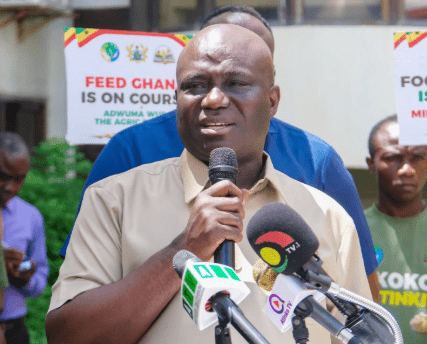
Announcing the initiative, the Minister for Food and Agriculture, Hon. Eric Opoku, described the investment as a demonstration of government’s commitment to empowering farmers and recognising their critical role in driving economic growth and national development.

He disclosed that the fertiliser distribution marks the beginning of a larger nationwide exercise that will see approximately one million bags of fertiliser distributed across all 276 agricultural constituencies to support crop production and improve yields.
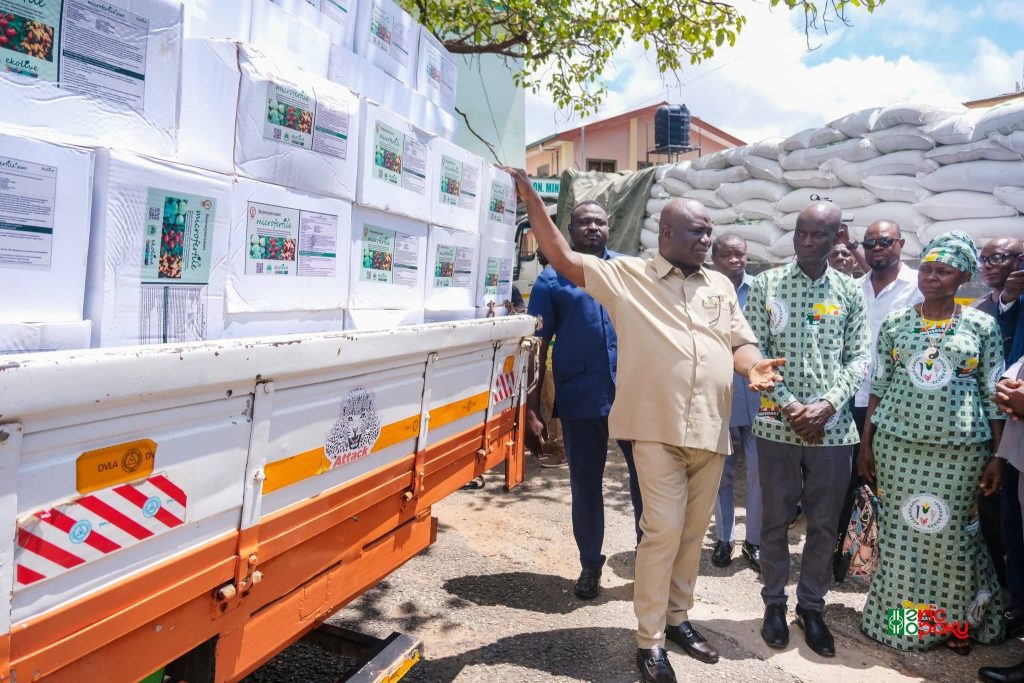
In addition to the inorganic fertiliser support, the Ministry has allocated 8,000 cartons of organic fertiliser to farmer groups, vegetable producers, and irrigation schemes across the country to promote sustainable agricultural practices and increase productivity.
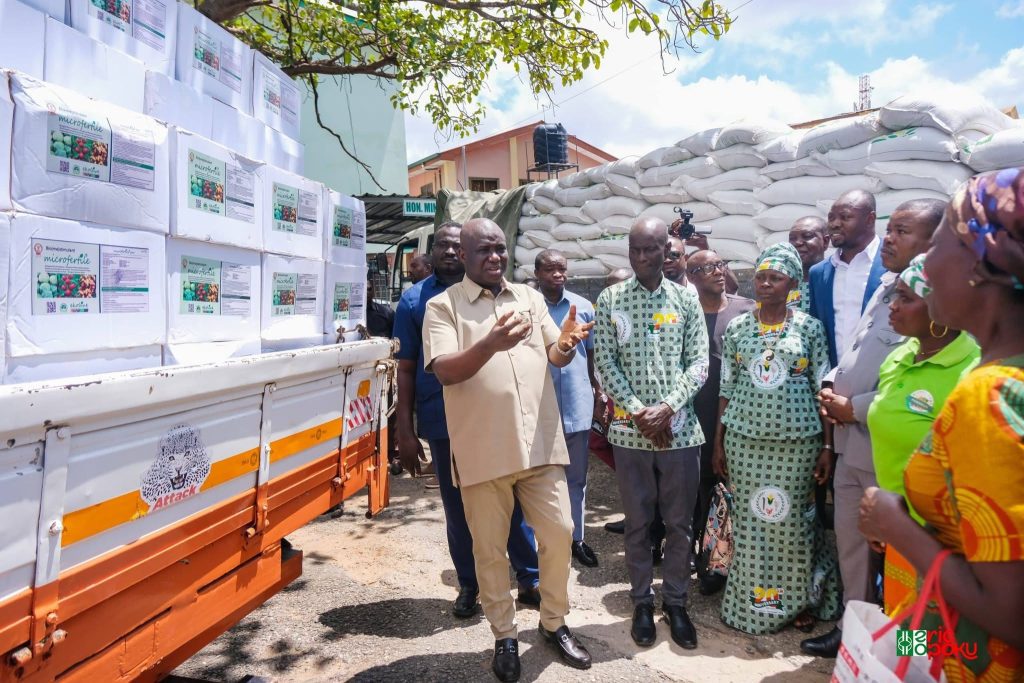
Beneficiary organisations include the Abokobi Vegetable Production Cooperative, FarmMate Vegetable Production, Michel Camp Co-operative Women Farmers Society Limited, Adenta Vegetable Production Cooperative, and the ICOUR Tono Irrigation Scheme, among others.
The introduction of advanced agricultural drones is also expected to modernise farming operations by improving efficiency, supporting precision agriculture, and helping farmers optimise the use of inputs.
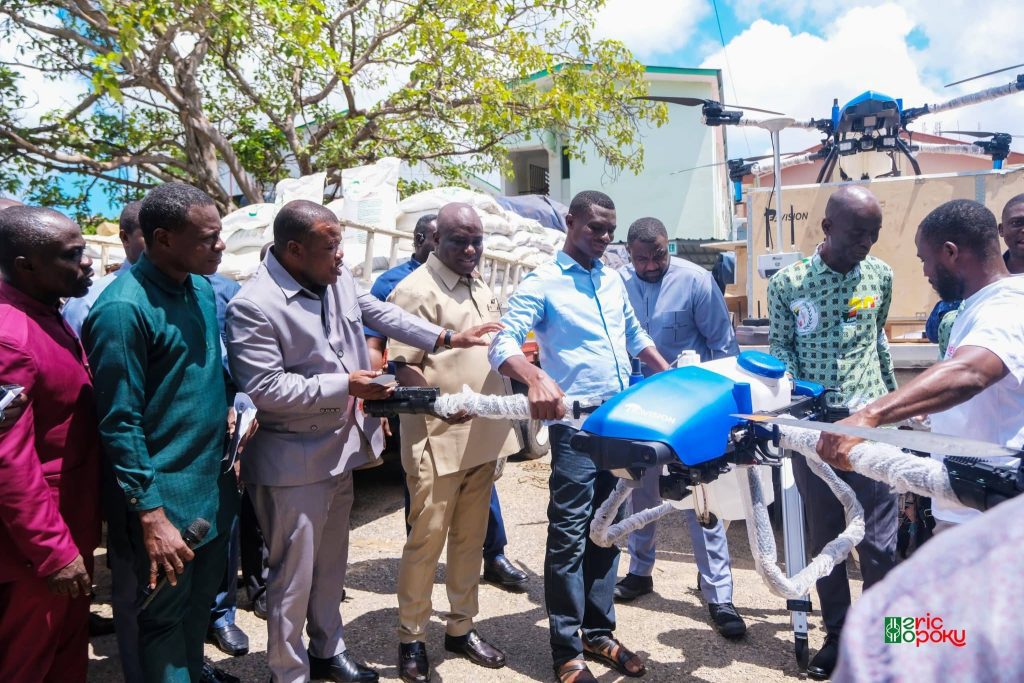
Hon. Opoku expressed confidence that with sustained support and collective effort, Ghana can achieve the objectives of the Feed Ghana Programme and realise the broader Agriculture for Economic Transformation Agenda envisioned by President John Dramani Mahama.
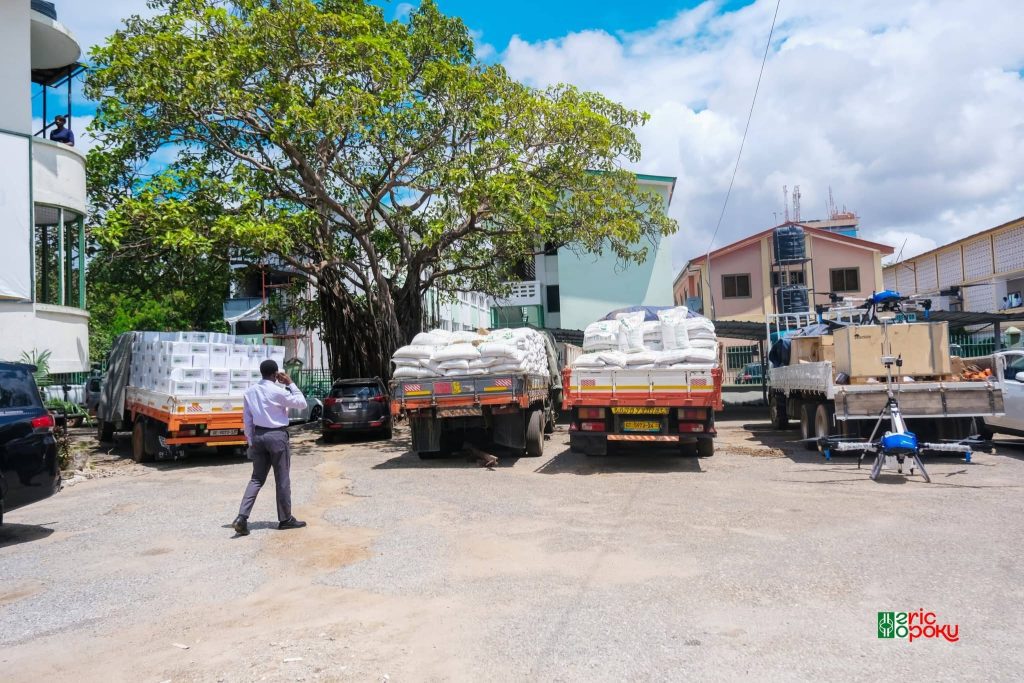
The latest intervention underscores government’s determination to build a more productive, technology-driven, and resilient agricultural sector capable of ensuring food security while creating jobs and improving livelihoods across the country.