The Ministry of Communications, Digital Technology and Innovations has initiated a major overhaul of Ghana’s rural connectivity infrastructure, introducing policy changes and technical upgrades to transition all rural telephony sites from 2G and 3G to a minimum standard of 4G capability.
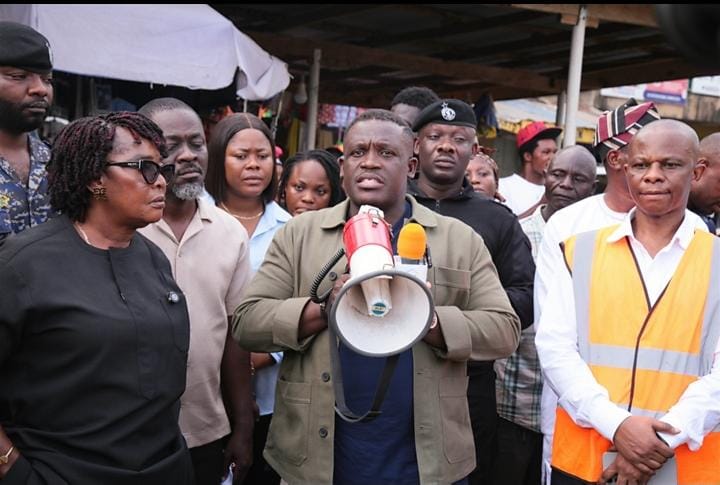
Speaking during a nationwide site inspection and community engagement tour, the Minister, Samuel Nartey George, announced that the ministry is taking a new policy framework to Cabinet to modernize rural telephony and prepare national networks for future 5G deployment.
”In today’s day and age, we cannot continue connecting communities with only 2G and 3G while the world moves toward 5G and 6G,” the Minister stated. “We must make a firm decision as a country to invest in telecom infrastructure just as we do for roads and health. Our policy now requires a minimum of 4G capability across all rural telephony sites.”
As part of the reforms, the Ministry has issued a policy directive to resolve pricing inequities affecting rural subscribers. Previously, standard data bundles were non-functional on certain rural telephony sites, forcing rural consumers to pay higher out-of-bundle rates. The National Communications Authority (NCA) is currently collaborating with mobile network operators to complete technical integrations and eliminate these pricing barriers.
To support immediate network restoration and equipment upgrades, government is allocating funding through the Ghana Investment Fund for Electronic Communications (GIFEC). Out of a $3 million (GHS 30 million) GIFEC allocation dedicated to rural telephony this year, $400,000 has been set aside to repair damaged radio equipment and upgrade cabling across 20 priority sites affected by power surges and design modifications by equipment manufacturers.
The nationwide network enhancement is backed by significant private sector capital expenditure. Mobile network operators are executing their largest cell site expansion in over a decade, with MTN deploying 800 new sites and Telecel building approximately 350 sites this year.
Accompanied on the tour by senior representatives from the NCA, GIFEC, and mobile network engineering leads, including MTN Ghana’s Chief Technical Officer, Sam George confirmed that nearly 180 new sites have already been completed. Up to 400 sites are expected to go live by the end of the year, with full rollout targeted for completion by mid-2027.
He also noted that as primary operators erect full-scale towers in expanding areas, existing rural telephony equipment will be decommissioned and redeployed to unserved remote communities. Of the initial 2,016 planned rural sites, approximately 1,400 are currently carrying active traffic, 300 are awaiting connection to donor sites, and the remaining 300 are under active construction.
Beyond rural connectivity, the Ministry is shifting focus toward “peri-urban” expansion to address severe network congestion caused by rapid urbanization in peripheral areas such as Amasaman, Dawhenya, and Community 25. High-density urban areas like Madina are also slated for micro-site deployments to bypass space constraints for traditional masts.
Addressing public concerns regarding the health impact of mobile masts, the Minister reassured the public that telecom towers meet all safety guidelines enforced by the Radiation Protection Institute, the Ghana Standards Authority, and the NCA.
”Cell sites do not produce radioactive waste; they emit low-level non-ionizing radiation similar to standard household electronics, Bluetooth devices, and microwaves,” Sam George clarified, urging local communities and traditional authorities to support site acquisition and construction rather than delaying deployment.
Eugenia Ewoenam Osei