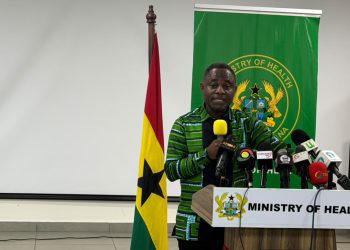
The Minister of State in charge of Government Communications has clarified that the Government does not cover maintenance or servicing costs for the private jet (Dzata) owned by businessman Ibrahim Mahama and used by his brother, President John Dramani Mahama, for some official trips in the absence of a suitable presidential aircraft.
According to Felix Kwakye Ofosu, responsibility for maintaining the aircraft, including paying the pilot and other crew members, rests solely with its owner, while the state covers only operational expenses, such as fuel and landing charges, when the President uses the jet for official travel.
Under similar circumstances in the past, former President Nana Akufo-Addo chartered a luxury executive jet from Europe for overseas trips, at a cost that has remained undisclosed to Ghanaian taxpayers. At the time, the then Defence Minister, Dominic Nitiwul, remarked that the President needed to bathe in the air in preparation for official assignments.
Officials in the previous administration had also cited limitations of the existing presidential jet, including its passenger capacity, its inability to undertake long-haul flights, and reported technical challenges, including concerns about engine reliability.
The chartered aircraft used during that period reportedly offered enhanced comfort, including sleeping and bathroom facilities for the President on extended journeys.
Samuel Okudzeto Ablakwa, now Minister for Foreign Affairs and Member of Parliament for North Tongu, had estimated the cost of hiring a luxury jet at between US$15,000 and US$17,000 per hour.
Speaking on Citi FM’s Eyewitness News yesterday, Thursday, March 12, Mr Kwakye Ofosu said the current arrangement helps the Government avoid the higher costs associated with chartering aircraft for presidential travel.
“The President does not rent the aircraft; he only fuels it. The aircraft belongs to somebody, so the owner retains the services of the pilot and other personnel who work on it,” he explained.
He added that chartering an aircraft would require the Government to pay rental fees in addition to fuel and maintenance costs during the period of use.
“When the President rents an aircraft, apart from paying the rent, he would also have to cover fuel and all the costs associated with maintaining that aircraft during the time he is using it. By not doing so, the President is saving public funds,” he said.
His clarification follows concerns raised by the Minority in Parliament and policy think tank IMANI Africa over the President’s use of the privately owned jet for official trips, including his recent visit to South Korea.
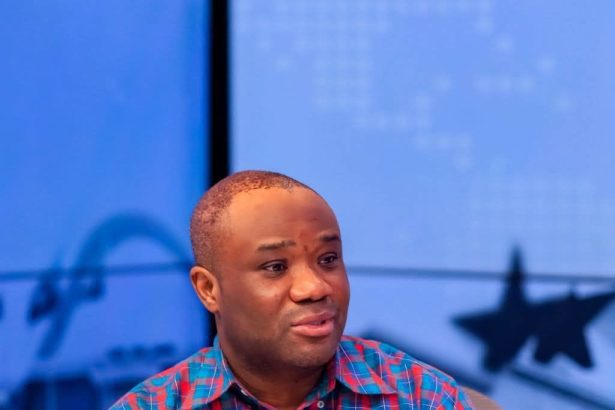
The Deputy Ranking Member on Parliament’s Foreign Affairs Committee, Nana Asafo-Adjei Ayeh, has criticised the arrangement, warning that it could create potential conflicts of interest and impose hidden costs on the state.
Speaking on the same programme, he argued that the practice risks creating what he described as a “false sense of free”, questioning claims that the President’s use of the aircraft comes at no cost to the nation.
“You say the President is travelling with his brother’s jet at no cost to the nation. Have you ever heard anything like a free lunch before?” he asked.
“You tell your ministers not to receive gifts in any form or shape from anybody. Yet you are taking a jet from your brother. What then is the basis for telling your appointees not to receive gifts?”
He further contended that such an arrangement could create expectations of favours in return.
“When a contractor gives you a gift today, tomorrow he takes it from somewhere else. When Ibrahim Mahama, who is a businessman, gives his jet for his brother to travel, tomorrow he may be given contracts or concessions,” he cautioned.
“This is the price we are paying as a country. If you are telling me today that it is for free, you are deceiving yourself. It can never be free,” Nana Asafo-Adjei added.
The debate has reignited wider discussions about the cost, transparency and ethical considerations surrounding presidential travel arrangements and the use of private assets in the conduct of official state business.